
01 · Overview
The short version
The difference is impact and persistence
Brief nerves before a test or big decision can be normal. Anxiety becomes more concerning when it does not settle down, happens often, or starts disrupting sleep, work, school, or relationships.
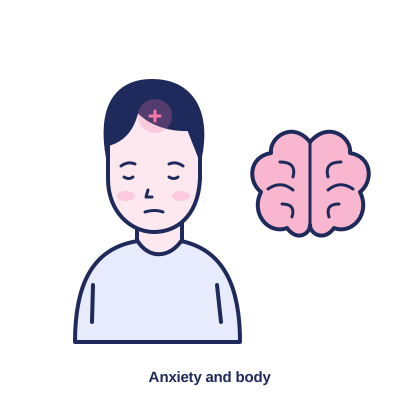
Anxiety can feel very physical
A rapid heartbeat, shakiness, shortness of breath, dizziness, sweating, and stomach upset can all happen with anxiety. Those symptoms can still need medical review if they are new, severe, or do not fit your usual pattern.
Avoidance can quietly shrink daily life
Skipping driving, social events, crowded places, or even leaving home may bring short-term relief, but it often keeps the fear pattern going and can make life smaller over time.
Treatment is usually a plan, not a single fix
Therapy is a main treatment, and medicine may also help. The right plan depends on the type of anxiety, other health issues, side effects, and whether another cause needs to be ruled out first.
02 · Care guidance
When to get help
Emergency help
- Call 911 or local emergency services now if anxiety comes with chest pain, fainting, severe trouble breathing, stroke-like symptoms, confusion, or if you might hurt yourself or someone else.
- If you are thinking about suicide or self-harm, call or text 988 in the US right away for immediate support. If there is immediate physical danger, call 911.
Get advice promptly
- Get prompt medical advice if new anxiety starts after a medicine change, substance use, or a health problem such as thyroid symptoms, racing heart, or unexplained weight loss.
- Contact a clinician soon if worry is lasting most days, panic attacks are recurring, sleep is badly affected, or you are avoiding normal activities because of fear.
For non-urgent anxiety, make an appointment with a primary care clinician or mental health professional. They can sort out the type of anxiety, rule out other causes, and help you choose therapy, medicine, or both.
03 · Anxiety Disorders
When worry is more than a bad week
An anxiety disorder is not just feeling nervous. It is fear or worry that keeps returning, is hard to control, and starts getting in the way of normal life.
Anxiety is a normal response to pressure. It can show up before a test, an interview, a big decision, or a difficult problem at work. In those moments, it may even help you focus or prepare. The line starts to shift when the fear keeps showing up after the stressful moment has passed, or when it seems to appear without a clear reason.
In an anxiety disorder, the worry is not temporary. It can last, recur, or grow stronger over time. That difference matters because people often try to push through normal nerves, but ongoing anxiety may need a different kind of help. The goal is not to never feel anxious again. The goal is to keep anxiety from taking over daily life.
- Normal stress usually points to a specific situation.
- Anxiety disorders often persist beyond the situation that triggered them.
- Function matters: sleep, work, school, and relationships can all be affected.
04 · Anxiety Disorders
The body, thoughts, and habits anxiety can change
Anxiety often shows up in three places at once: how you think, what your body feels, and what you start avoiding.
People often expect anxiety to feel like fear in the mind, but it can look very physical. A pounding or rapid heartbeat, sweating, trembling, dizziness, shortness of breath, unexplained aches and pains, and stomach upset can all happen. Some people feel restless or tense most of the time. Others notice trouble concentrating, irritability, or a constant sense that something bad is about to happen.
Behavior changes can be just as important as the physical symptoms. Someone may stop going to social events, avoid driving, skip crowded places, or avoid things that used to feel ordinary. That avoidance may lower fear in the moment, but it can also teach the brain that the situation is dangerous, which keeps the cycle going.
New or intense symptoms should not be waved off automatically as anxiety. The same body feelings can happen with medical problems too, which is why clinicians often ask about the exact symptoms, when they began, and whether they fit your usual pattern.
- Track what the symptom feels like and how long it lasts.
- Notice whether you are changing plans because of fear.
- Bring up new chest symptoms, breathing symptoms, or dizziness promptly.
05 · Anxiety Disorders
Different anxiety patterns point to different diagnoses
The label matters because panic, generalized worry, social fear, and phobias do not all look the same.
Generalized anxiety disorder is marked by excessive worry about everyday issues such as health, money, work, or family. Panic disorder is different. It involves repeated panic attacks, which are sudden bursts of intense fear that can come on quickly and last several minutes or more. A person can have both patterns, but the treatment plan may need to address each one.
Phobias are strong fears of things or situations that pose little or no real danger, such as flying, heights, animals, blood, or crowded places. Social anxiety can look like a fear of being watched, judged, or embarrassed in ordinary social situations. Agoraphobia involves fear of places or situations where escape might feel difficult or help might not be available.
These patterns can overlap, and they may begin early in life. A careful evaluation helps sort out whether the main problem is generalized worry, panic attacks, a specific phobia, social fear, agoraphobia, or more than one of these.
- Panic attacks are sudden and intense.
- Generalized anxiety is more about frequent, wide-ranging worry.
- Phobias and social anxiety often lead to specific avoidance patterns.
06 · Anxiety Disorders
How clinicians figure out what is driving the symptoms
Evaluation is usually a conversation plus a physical check, because anxiety symptoms can overlap with medical problems and other mental health conditions.
A clinician usually starts by asking when the symptoms began, what they feel like, how often they happen, and what makes them worse or better. They may ask about sleep, mood, panic attacks, substance use, trauma, caffeine, medicines, and supplements. The point is to understand the pattern, not to dismiss it.
A physical exam and sometimes lab tests may be used to look for other causes. Thyroid problems and arrhythmias are examples that can look like anxiety. If no other medical problem explains the symptoms, a psychological evaluation may help identify the anxiety disorder or related conditions such as depression.
This step matters because treatment should match the cause. If anxiety started after a medicine change, after substance use, or alongside a medical symptom such as weight loss or a racing heart, those details should be brought up early.
- Bring a list of medicines, supplements, caffeine, and substances.
- Write down examples of what you avoid because of fear.
- Mention new physical symptoms, especially if they began recently.
07 · Anxiety Disorders
Therapy, medicine, and the habits that support both
Treatment often works best when it fits the specific anxiety pattern and is adjusted over time.
Psychotherapy is a main treatment for anxiety disorders. Cognitive behavioral therapy, or CBT, helps people notice unhelpful thought patterns and change the behaviors that keep fear going. Exposure therapy, which is often part of CBT, can be especially useful when avoidance has taken over. Acceptance and commitment therapy may also help some people.
Medicine can also be part of treatment. Anti-anxiety medicines and certain antidepressants are used for anxiety disorders, but the right choice depends on the person and the type of anxiety. A clinician weighs side effects, other health conditions, and other medicines before recommending a plan. Some people need more than one try before the best fit is found.
Daily habits can support recovery. Sleep, regular meals, physical activity, and cutting back on caffeine if it worsens jitteriness or sleep problems may help. These steps are supportive, not a substitute for treatment when symptoms are intense or persistent.
- Therapy is often tailored to the specific fear or worry pattern.
- Medicine can help, especially when symptoms are severe or stubborn.
- Do not stop a prescribed medicine abruptly without medical guidance.
08 · FAQ
Questions people ask
Can caffeine make anxiety worse?
Yes, for many people. Caffeine can increase jitteriness, heart pounding, and sleep problems, which may make anxiety feel stronger. If you notice that pattern, reducing caffeine may help, but it is usually only one part of the larger plan.
Do anxiety disorders go away on their own?
Sometimes symptoms ease for a while, but anxiety disorders often persist or return, especially under stress. Therapy, medicine, or both can lower symptoms and help you function better, so it is safer to treat the problem than to wait and hope it disappears.
What happens if avoidance starts taking over?
Avoidance often brings short-term relief, but it can make the fear pattern stronger over time. If you are skipping tasks, places, or people because of anxiety, that is a sign to bring up sooner with a clinician or therapist because treatment often targets avoidance directly.
Can anxiety and depression happen together?
Yes. Anxiety disorders can overlap with depression and other mental health conditions. That is one reason clinicians ask about mood, sleep, and daily functioning during evaluation, because the treatment plan may need to address more than one problem.
What should I tell a clinician at the first visit?
Bring a list of your symptoms, when they started, what sets them off, what you avoid, and any medicines, supplements, caffeine, alcohol, or recreational drugs you use. Those details help the clinician sort out the type of anxiety and look for other causes.
Can anxiety start after a medicine or substance change?
Yes. New anxiety can happen after a medicine change or with substance use, and that should be reviewed promptly. A clinician may want to know what changed first so they can tell whether the symptoms are likely to be anxiety, a side effect, or another medical issue.
09 · References
References and supporting evidence
These sources support the points identified below. Source checking is not clinical approval.
- S1: AnxietyMedlinePlus / U.S. National Library of Medicine
Explains that anxiety can be a normal stress reaction and describes common physical symptoms such as restlessness, tension, sweating, and rapid heartbeat.
- S2: PhobiasMedlinePlus / U.S. National Library of Medicine
Explains what phobias are and gives examples of fear-based anxiety conditions, including avoidance and physical symptoms.
- S3: Mental DisordersMedlinePlus / U.S. National Library of Medicine
Supports the point that mental health conditions, including anxiety disorders, are not signs of weakness and may need medical and psychological evaluation.
General information, not a diagnosis. This guide is not a substitute for care from a qualified healthcare professional. For an emergency, call 911 in the US or your local emergency number. Illustrations are conceptual and are not diagnostic images.