
01 · Overview
The short version
A stone that blocks bile causes the trouble
Many gallstones never cause symptoms. Problems usually start when a stone blocks the flow of bile.
Attacks often follow eating
Gallstone pain often starts after meals, including fatty meals, because the gallbladder squeezes bile out after you eat.
Pain can spread beyond the right side
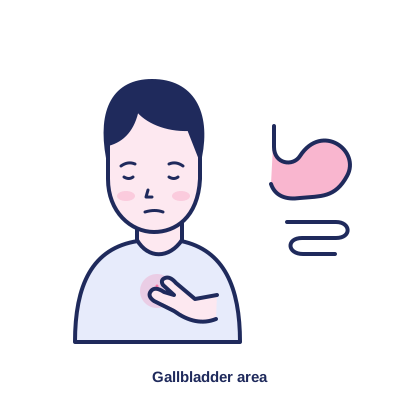
Gallstone pain may be felt in the upper right abdomen, the middle upper abdomen, the back, or under the right arm or shoulder area.
Some symptoms need emergency care
Severe constant pain, fever, yellow skin or eyes, repeated vomiting, chest pain, fainting, or trouble breathing can point to a complication.
02 · Care guidance
When to get help
Emergency help
- Call 911 or go to the ER now for severe constant upper abdominal pain with fever, yellow skin or eyes, confusion, fainting, repeated vomiting, chest pain, or trouble breathing.
- Get urgent emergency care if the pain is sudden and severe, the belly is swollen, or the pain feels like a heart problem or a severe infection.
Get advice promptly
- Contact a clinician promptly if you have repeated attacks of right upper abdominal pain, pain after eating, nausea or vomiting, or pain that keeps coming back over days or weeks.
- Arrange prompt medical care if you have gallstone symptoms and are pregnant, older, have diabetes, or have been told you may have bile duct disease.
If gallstones were found by chance and you have no symptoms, ask a clinician what follow-up, if any, is appropriate. If symptoms are mild but recurring, make an appointment to discuss testing and treatment options.
03 · Gallstones
What a gallstone does inside the gallbladder
Gallstones are hardened material in the gallbladder. They matter most when they block bile flow.
The gallbladder is a small pear-shaped organ under the liver. It stores bile, which is a digestive fluid made by the liver. After you eat, the gallbladder squeezes bile through the bile ducts into the small intestine to help break down fat.
Gallstones form when substances in bile harden. A stone that stays in the gallbladder may not cause any symptoms. A stone that blocks the outlet or a bile duct is more likely to cause pain and other problems.
This is why the same diagnosis can feel very different from person to person. One person may never know a stone is there, while another has repeated attacks that begin soon after eating.
- Gallstones are not the same as gallbladder cancer.
- The main problem is blockage of bile flow.
- Many stones are found on imaging done for another reason.
04 · Gallstones
How gallstone pain usually feels
Gallstone pain often starts after meals and may spread to the back or shoulder area.
A gallstone attack often causes pain in the upper right part of the abdomen, though some people feel it in the middle upper abdomen instead. The pain can also spread to the back or under the right arm. Nausea or vomiting may happen during the attack.
Meals matter because the gallbladder squeezes after you eat. If a stone is in the way, that squeeze can trigger pain. Fatty meals are a common example, but food triggers are not the same for everyone.
Pain pattern helps, but it does not prove the cause. Stomach, liver, pancreas, and heart problems can all overlap with upper abdominal pain, so repeated attacks deserve medical evaluation rather than guesswork.
- Pain may be in the right upper abdomen, middle upper abdomen, back, or shoulder area.
- Nausea and vomiting can happen with an attack.
- Pain after meals is a clue, not a diagnosis.
05 · Gallstones
When gallstone symptoms stop being a wait-and-see problem
Severe or persistent symptoms can mean blockage or infection and need urgent care.
Seek urgent care if the pain is severe and constant, if it comes with fever, if the skin or eyes turn yellow, or if vomiting keeps you from keeping fluids down. These can point to a blocked duct or an infection in the gallbladder or bile ducts.
Emergency care is also safer if the pain is new and intense and you feel weak, faint, short of breath, or as if you might be having a heart problem. Gallstone pain can overlap with other emergencies, and waiting at home can delay treatment for a different serious cause.
The goal is not to overreact to every stomachache. It is to catch the pattern that suggests a complication instead of a simple attack that passes on its own.
- Fever with upper abdominal pain is more concerning than pain alone.
- Yellow skin or eyes is not a mild gallstone symptom.
- Repeated vomiting can lead to dehydration and needs prompt care.
06 · Gallstones
Who is more likely to have gallstones
Some factors make gallstones more likely, but they do not predict who will get them.
Gallstones are more common in older adults, women, overweight people, Native Americans, and Mexican Americans. These patterns help explain risk, but anyone can develop gallstones.
Risk factors do not tell you whether a stone is causing your current pain. Someone with several risk factors may never have symptoms, while another person with no obvious risk factors may have repeated attacks.
Because gallstones can be silent, a person may only learn about them after an imaging test done for a different problem.
- Risk is higher in some groups, but gallstones can happen to anyone.
- Having a risk factor does not confirm the diagnosis.
- Silent stones are often found by chance.
07 · Gallstones
How doctors decide between watching and treating
Treatment depends on symptoms and complications, not just on seeing a stone.
If gallstones cause no symptoms, treatment is often not needed. If they cause repeated attacks or complications, the most common treatment is removal of the gallbladder. Many people can live without a gallbladder because bile still has other ways to reach the small intestine.
An appointment for possible gallstones usually starts with a history of the pain, when it happens, whether it follows meals, and whether there has been nausea, vomiting, fever, or yellowing of the skin or eyes. A clinician may also do an exam and order imaging if the pattern fits.
The point of treatment is not just pain relief. It is also to lower the risk of repeated blockage or infection if the stones are clearly causing trouble.
- No symptoms often means no treatment is needed.
- Repeated attacks or complications make treatment more likely.
- Gallbladder removal is the most common treatment when needed.
08 · Gallstones
What food changes and symptom tracking can do
Food changes may help you notice triggers, but they do not remove stones.
Some people notice that fatty meals seem to trigger attacks because the gallbladder squeezes after eating fat. Keeping a simple note of what you ate, when pain started, where it was felt, and how long it lasted can help show a pattern.
That record matters because it gives a clinician a clearer picture of whether the pain fits gallstones or something else. It can also help separate a one-time upset stomach from a recurring problem.
Diet changes may reduce symptoms for some people, but they are not a reliable fix for gallstones themselves. If attacks keep coming back, the next step is medical evaluation rather than trying to manage it only with food changes.
- A symptom diary can help spot food triggers.
- Fatty meals may trigger pain in some people.
- Diet may ease symptoms but does not dissolve stones.
09 · Gallstones
What life can be like after gallbladder removal
People can live without a gallbladder, but new severe symptoms after surgery need review.
After gallbladder removal, bile still reaches the intestine, so most people can digest food without major long-term problems. Some people notice temporary digestive changes while their body adjusts.
If pain, fever, worsening nausea, yellowing of the skin or eyes, or ongoing vomiting happens after surgery, that is not something to brush off as routine recovery. It needs prompt medical review.
If you are having surgery soon, it helps to ask what symptoms are expected during recovery and which ones mean you should call right away.
- Most people can digest food without a gallbladder.
- Temporary bowel changes can happen after surgery.
- Severe or worsening symptoms after surgery need prompt evaluation.
10 · FAQ
Questions people ask
Can gallstones go away on their own?
Small stones may stay quiet for a long time, but gallstones usually do not simply disappear. If they are not causing symptoms, they may be left alone. If they keep causing attacks or blocking bile flow, treatment is more likely to be needed.
Can gallstones cause nausea or vomiting?
Yes. Nausea and vomiting can happen during a gallstone attack, especially when the gallbladder is irritated or blocked. If vomiting is repeated or you cannot keep fluids down, seek medical care promptly.
How do doctors tell gallstones from indigestion?
They look at the pattern of pain, what triggers it, and whether there are signs of blockage or infection. Imaging is often used because gallstones can look like other causes of upper abdominal pain.
Can I prevent gallstones with diet?
Diet may affect symptoms for some people, but it cannot reliably prevent all gallstones. If you notice that certain foods repeatedly trigger pain, that information can help guide your next steps with a clinician.
When should I call about possible gallstones?
Call promptly if you have repeated upper abdominal pain after meals, especially if it spreads to the back or right shoulder area. Also seek urgent care if pain comes with fever, yellowing, or repeated vomiting.
Can gallstones be found by accident?
Yes. Gallstones are often found during imaging tests done for other health conditions. If they are not causing symptoms, they often do not need treatment right away.
11 · References
References and supporting evidence
These sources support the points identified below. Source checking is not clinical approval.
- S1: GallstonesMedlinePlus / U.S. National Library of Medicine
Explains what the gallbladder does, how bile relates to digestion, that gallstones can block bile flow, that attacks usually happen after eating, that pain may be in the abdomen or back, that many gallstones are found on imaging, and that symptom-free stones often do not need treatment.
- S2: Gallbladder DiseasesMedlinePlus / U.S. National Library of Medicine
Explains the blockage mechanism, that gallbladder problems may improve with gallbladder removal, and that bile can still reach the intestine without a gallbladder.
- S3: Bile Duct DiseasesMedlinePlus / U.S. National Library of Medicine
Explains that bile duct blockage can cause gallbladder attacks, that pain can last from one to several hours, and that the bile duct system is part of the pain pattern and complication discussion.
General information, not a diagnosis. This guide is not a substitute for care from a qualified healthcare professional. For an emergency, call 911 in the US or your local emergency number. Illustrations are conceptual and are not diagnostic images.