
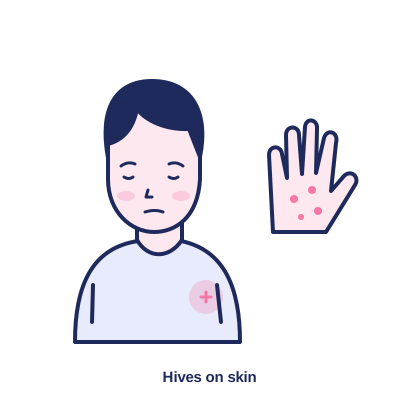
01 · Overview
The short version
Hives usually move or fade quickly
A hive is often a raised, itchy welt that can change size, shape, or location within hours. A spot that stays fixed in one place for days is less typical.
Triggers are often ordinary things
Food, medicines, infections, skin products, and sometimes stress can set off hives. In many cases, no single cause is found right away.
Swelling or breathing trouble changes the level of concern
Hives with lip, tongue, or throat swelling, wheezing, fainting, or trouble breathing can be a serious allergic reaction and need emergency care.
The next step depends on the pattern
Cool compresses and gentle skin care may ease itching, but recurring hives, severe itching, or hives linked to a new medicine need a medical review.
02 · Care guidance
When to get help
Emergency help
- Call 911 or local emergency services now if hives come with trouble breathing, throat tightness, wheezing, fainting, severe dizziness, or swelling of the lips, tongue, or face.
Get advice promptly
- Contact a clinician soon if hives keep returning, last more than a few days, follow a new medicine or food exposure, or come with fever, joint pain, or widespread illness.
- Get prompt medical advice if itching is severe, sleep is being affected, or the rash is not clearly hives and is lasting in one spot for more than about a day.
If hives are mild and you feel otherwise well, watch for patterns, avoid likely triggers, and arrange a non-urgent visit if the problem keeps coming back or you cannot explain it.
03 · Hives
How hives behave on the skin
Hives are usually raised, itchy welts that do not stay in one exact place for long.
Hives, also called urticaria, are usually red, pink, or skin-colored bumps or patches that rise above the skin. They may be tiny and scattered, or several may join together into a larger area. The itching can be strong, and some people also notice burning or stinging.
The moving pattern is one of the most useful clues. A hive may appear on one arm, then fade and show up somewhere else a few hours later. That is different from rashes that stay fixed in the same spot, peel, blister, or become painful. If one spot stays put for days, hives are less likely.
- Hives often appear and disappear within hours.
- The itch is often stronger than the pain.
- A fixed rash pattern should make you think about another skin problem.
04 · Hives
What often sets off hives
Food, medicines, infections, and irritation are common triggers, but a cause is not always obvious.
Many hives begin after a food exposure, a new medicine, an insect sting, or a recent illness. Skin products, cosmetics, and other irritating substances can also make the skin more reactive or itchy. Stress may play a part for some people, but it is usually not the only explanation.
A trigger is not always easy to pin down. Some people notice a clear pattern, such as hives after a certain food or after starting a new product. Others have repeated flares without a single obvious cause. That does not mean the problem is minor; it means the pattern has to be looked at carefully over time.
- Recent infection can be a clue.
- Think about new foods, skin products, and exposures.
- A short symptom log can help spot repeats.
05 · Hives
When a medicine may be involved
A new prescription, over-the-counter drug, or supplement can trigger hives or another drug reaction.
Medicines can cause side effects, drug interactions, and allergic reactions. Hives are one of the common skin signs of a drug allergy. The timing can vary, so a reaction may start soon after a new medicine begins or after repeated exposure.
This is why the exact name of the medicine matters. Bring the package, a photo of the label, or a written list of everything you took, including over-the-counter pain relievers, cold medicines, and supplements. That helps a clinician sort out whether the hives fit a drug reaction, a side effect, or something else entirely.
Do not assume a medicine is harmless because it does not need a prescription. Over-the-counter products can still cause reactions or interact with other medicines or health conditions.
- Write down the medicine name and when the hives started.
- Include supplements and nonprescription products.
- Get emergency help if swelling or breathing symptoms happen.
06 · Hives
When itching is not just hives
A rash or itch that does not fit the usual hive pattern may point to another skin or body-wide problem.
Not all itching is hives. Eczema, dry skin, psoriasis, insect bites, and contact irritation can all cause itching or a rash that looks similar at first glance. Sometimes a product reaction is mistaken for hives because the skin is red and irritated.
Widespread itching without a clear rash can also be related to other health problems. Pregnancy, liver disease, kidney disease, thyroid disease, some cancers, and nervous system conditions can cause itching. Those causes are more likely to matter when the itching is persistent, spreads beyond one area, or comes with feeling ill overall.
That is why a rash that does not behave like hives deserves closer review. Photos help, but they cannot replace an exam when the pattern is unclear.
- A fixed rash is less typical for hives.
- Itching without a clear rash has a broader cause list.
- Persistent symptoms should not be brushed off.
07 · Hives
What can ease hives while you watch for warning signs
Cooler skin care and avoiding irritation can reduce itching, but they should not delay care if symptoms are severe.
Cool compresses, lukewarm baths, and gentle fragrance-free skin care may make the itching more bearable. Hot showers, rough fabrics, and scratching often make the skin angrier. If a new product seems linked to the rash, stop using it and keep the packaging so you can show it at a visit.
Over-the-counter antihistamines may help some people, but they are not right for everyone. Read the label carefully and ask a pharmacist or clinician if you take other medicines, are pregnant, are older, or have another health condition. The goal is to avoid problems from drowsiness or interactions while still treating the itch.
Home care makes sense only when you feel otherwise well. If the hives are frequent, severe, or not improving, it is time for a medical evaluation rather than more guessing at home.
- Use cool compresses instead of hot water.
- Avoid scratching, heat, and rough clothing.
- Check for medicine interactions before using an antihistamine.
08 · Hives
When hives need a clinician’s help
Returning, persistent, or hard-to-explain hives deserve a closer look, especially when other symptoms are present.
Make an appointment if hives keep coming back, last more than a few days, or seem linked to a new medicine, supplement, or food exposure. A clinician will usually ask about the timing of the rash, any swelling, recent illnesses, skin products, and any medicines you started recently. Photos from a flare can help because hives may fade before the visit.
Seek prompt care if the hives come with fever, joint pain, severe itching that disrupts sleep, or a feeling of being generally unwell. Those features do not automatically mean something dangerous, but they make a simple skin-only explanation less likely.
If the rash is not clearly hives, or a spot stays in one place for more than about a day, the visit matters even more. That pattern can point to another condition that needs a different kind of treatment.
- Bring photos if the rash comes and goes.
- Note fever, joint pain, or general illness.
- A clinician may help sort out whether it is really hives.
09 · FAQ
Questions people ask
Can stress cause hives?
Stress can sometimes make hives worse or make them seem more frequent, but it is rarely the only explanation. If stress seems involved, it still makes sense to look for other triggers such as infection, medicines, foods, or skin products.
When are hives an emergency?
Hives are an emergency if they come with trouble breathing, wheezing, throat tightness, fainting, severe dizziness, or swelling of the lips, tongue, or face. Those signs can mean a serious allergic reaction and need immediate help.
What should I bring to an appointment for hives?
Bring photos of the rash if you have them, plus a list of recent foods, medicines, supplements, skin products, and illnesses. Timing matters because the cause is often easier to spot from the pattern than from one snapshot of the skin.
Why do hives keep coming back?
They may keep returning if the trigger is still present, if the body keeps reacting to repeat exposures, or if no single cause has been identified yet. A short symptom log can help reveal a pattern that is easy to miss day to day.
Are over-the-counter antihistamines safe for everyone?
Not always. They can cause drowsiness and may interact with other medicines or health conditions. Read the label and ask a pharmacist or clinician if you are pregnant, older, or take other medicines before using one.
Can hives happen without a rash that looks obvious?
Yes. Sometimes itching is the main symptom, or the welts are brief and fade before they are noticed. If the itching is severe, widespread, or not clearly tied to hives, another cause should be considered.
10 · References
References and supporting evidence
These sources support the points identified below. Source checking is not clinical approval.
- S1: HivesMedlinePlus / U.S. National Library of Medicine
Explains the basic appearance of hives and that they are a skin rash with itch. Explains that drugs and foods are common causes of hives, while still allowing for other causes. Explains that infections and stress can also be related to hives. Explains why breathing trouble or airway swelling makes hives an emergency.
- S2: Drug ReactionsMedlinePlus / U.S. National Library of Medicine
Explains that hives are a common skin sign of drug allergy. Explains why medicines, foods, and supplements should all be reviewed when hives start after a new product. Explains the need to ask a clinician or pharmacist about possible medicine-related reactions and interactions.
- S3: ItchingMedlinePlus / U.S. National Library of Medicine
Explains that cool compresses can help ease itching. Explains practical ways to reduce itching and skin irritation. Explains when persistent or unexplained itching deserves medical evaluation.
General information, not a diagnosis. This guide is not a substitute for care from a qualified healthcare professional. For an emergency, call 911 in the US or your local emergency number. Illustrations are conceptual and are not diagnostic images.