
01 · Overview
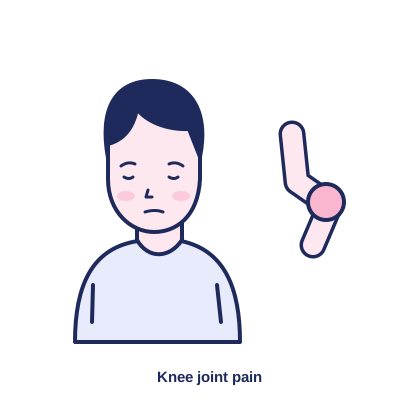
The short version
The pattern of pain points to the cause
Pain after a twist, fall, or sports move raises concern for a ligament or meniscus injury. Gradual pain with stairs, standing up, or getting up from a chair often fits wear-and-tear or overuse.
Swelling, warmth, and stiffness are clues
A swollen or stiff knee can mean inflammation, fluid in the joint, arthritis, or injury. A hot, very swollen knee is more urgent, especially if you also have fever.
Most treatment starts without surgery
Care often begins with activity changes, ice or heat, exercises, bracing, or pain-relief medicine. Surgery is usually considered only when other treatment has not helped enough.
Some symptoms need immediate care
A deformed knee, inability to bear weight, a cold or numb foot, severe bleeding, fever with a hot swollen knee, chest pain, or trouble breathing are not routine knee pain symptoms.
02 · Care guidance
When to get help
Emergency help
- Call 911 or local emergency services now if knee pain follows a major injury with obvious deformity, severe bleeding, a cold or numb foot, or you cannot move the leg.
- Get emergency help for a hot, very swollen knee with fever, confusion, or feeling very ill, or if the knee pain comes with chest pain, trouble breathing, or signs of a blood clot.
- Seek immediate care for sudden severe knee pain with inability to bear weight after a twist, fall, or sports injury, especially if the joint locks or the leg gives way.
Get advice promptly
- Contact a clinician soon if knee pain lasts more than a few days, keeps returning, wakes you from sleep, or makes walking, stairs, or sitting difficult.
- Make an appointment if the knee is repeatedly swollen, unstable, clicking with pain, or numb, or if pain started after a new exercise, job task, or change in footwear.
- If you have arthritis, discuss worsening pain, reduced range of motion, or loss of function, since treatment may need to be adjusted.
For mild pain without red flags, start with relative rest, ice after activity, gentle motion, and a short period of avoiding the movement that clearly worsens symptoms. If it does not improve within 1 to 2 weeks, or if it keeps coming back, schedule a non-urgent visit.
03 · Knee Pain
What the pain pattern can tell you
Knee pain is a symptom, not a diagnosis. The timing, location, and added symptoms help separate a minor strain from a problem that needs faster care.
The knee is built from bone, cartilage, ligaments, tendons, and fluid. If any of those parts are hurt or diseased, pain can show up when you walk, climb stairs, kneel, or stand up from a chair. That is why the same body part can hurt in very different ways depending on the cause.
A clear twist, fall, or sports move makes a ligament injury or meniscus problem more likely. Pain that builds slowly without one clear injury often fits arthritis or overuse. Swelling, stiffness, weakness, and reduced motion help narrow it down, but they do not point to one single diagnosis.
- Pain with motion can come from mechanical strain or arthritis.
- Swelling or warmth suggests inflammation or fluid in the joint.
- A twisting injury is a classic setup for ligament or meniscus damage.
04 · Knee Pain
Common causes and how they usually feel
The most likely cause depends on whether pain came on slowly, followed a twist, or comes with arthritis-type stiffness and swelling.
Osteoarthritis is a frequent cause of knee pain, especially when symptoms develop gradually and make stairs, squatting, or rising from a chair harder. It happens as cartilage wears down over time, which can lead to pain and swelling.
Ligament injuries often happen during a sudden twist, quick stop, or sports movement. Tendon problems and overuse injuries tend to show up after repeated activity such as running, climbing, kneeling, or squatting. Inflammatory arthritis can affect one or both knees and may also cause pain, redness, warmth, or problems in other joints.
- Gradual pain and stiffness often point to osteoarthritis.
- A sudden twist or pop raises concern for ligament or meniscus injury.
- Other joint symptoms can point toward inflammatory arthritis.
05 · Knee Pain
Symptoms that make knee pain more urgent
Swelling, warmth, locking, instability, numbness, or fever can turn a routine knee problem into one that needs faster medical attention.
A knee that swells quickly after injury may have bleeding inside the joint or a more serious structural injury. A very warm, red, and tender knee can come from inflammation, but infection also has to be considered, especially if fever is present.
If the knee gives out, locks, or cannot fully bend or straighten, the problem may be mechanical. Numbness, a cold foot, or very severe pain after injury can mean blood flow or nerve function is affected, which is not something to watch and wait on.
- Fever plus a hot swollen knee is a same-day problem.
- Locking or giving way suggests a structural issue.
- A cold or numb foot after injury is an emergency warning sign.
06 · Knee Pain
What you can do while the knee settles down
Simple changes can lower pain without making the joint stiffer or more irritated.
Short-term rest from the exact movement that triggers pain can help, but staying still for too long can make the knee stiffer. Gentle motion, walking as tolerated, and a gradual return to activity are often more useful than stopping all movement.
Ice is often helpful after activity, especially if the knee is sore, swollen, or feels hot. Heat may feel better when stiffness is the main problem. A brace, cane, or shoe change can reduce strain in some situations. Pain medicine may help, but it is not a good fit for everyone, especially people with kidney disease, stomach ulcers, blood thinners, or high blood pressure.
- Use ice after activity if the knee is swollen or hot.
- Use heat if stiffness is the main complaint and it feels better.
- Avoid repeated deep squats, kneeling, or twisting until symptoms improve.
07 · Knee Pain
Why movement and physical therapy matter
The right exercises can reduce strain on the knee and improve how the joint moves during daily tasks.
Many knee problems improve when the muscles around the joint get stronger and the joint moves more smoothly. A physical therapist can look for weak hip, thigh, or calf muscles and for movement patterns that put extra stress on the knee.
The best exercise plan depends on the cause. Low-impact activities such as walking, biking, or swimming are often easier on an arthritic knee than running or jumping. After an injury, exercise may need to start with protected movement and then progress as pain and swelling settle.
- Strength can lower stress on the joint.
- Low-impact exercise is usually easier on arthritic knees.
- Rehab should match the specific cause, not just the symptom.
08 · Knee Pain
Medicines, injections, and when surgery enters the picture
Pain relief can be part of care, but surgery is usually reserved for severe damage or pain that has not improved enough with other treatment.
Pain-relief medicine may be part of treatment, depending on the cause and your health history. Some people use topical anti-inflammatory medicine or short-term oral pain medicine, but these choices should be matched to your other conditions and medicines.
Some people ask about injections such as hyaluronic acid or platelet-rich plasma. These are not the answer for every knee problem, and the best choice depends on what is actually causing the pain. Knee replacement is considered when cartilage damage, usually from osteoarthritis or another arthritis type, causes severe pain and daily limitation and other treatments have not helped enough.
After knee replacement, the goal is less pain and better movement, not a brand-new natural knee. Recovery usually includes exercises, walking support if needed, and time for healing. A knee replacement can still feel stiff or swollen while it heals, and it still needs ongoing care.
- Medicines help symptoms but do not fix every cause.
- Injection choices depend on the diagnosis, not just on pain level.
- Knee replacement is usually for severe pain that limits daily life after other care fails.
09 · FAQ
Questions people ask
Why does my knee hurt at night or wake me from sleep?
Night pain can happen with arthritis, inflammation, irritation from an old injury, or a nerve-type problem. If the pain is new, keeps returning, or comes with swelling, warmth, fever, or numbness, it deserves a medical visit rather than only home care.
What does it mean if my knee clicks or pops?
Small noises can happen without a serious problem, especially if there is no pain or swelling. Clicking, catching, or popping that comes with pain, swelling, or a locked feeling can point to a meniscus or cartilage problem and should be checked.
Can I keep exercising if my knee hurts?
Sometimes yes, but the activity may need to change. Low-impact movement is often easier on the knee than running, jumping, or twisting. If pain is sharp, swelling gets worse, or the knee feels unstable, stop that activity and get assessed.
Why does my knee swell up after activity?
Swelling usually means fluid is building up in or around the joint. It can follow injury, overuse, arthritis, or inflammation. A hot, very painful, or feverish swollen knee needs prompt medical attention because infection is a possibility.
Could knee pain be coming from something other than the knee?
Yes. Pain can be felt in the knee even when the main problem is somewhere else in the leg or hip. That is one reason a clinician looks at movement, swelling, stability, and your injury history instead of only the painful spot.
If I have arthritis, when should I bring up knee pain to my clinician?
Bring it up if the pain is getting worse, your range of motion is shrinking, daily tasks are harder, or the knee is swelling more often. Those changes can mean the treatment plan needs to be adjusted.
10 · References
References and supporting evidence
These sources support the points identified below. Source checking is not clinical approval.
- S1: Knee Injuries and DisordersMedlinePlus / U.S. National Library of Medicine
Explains basic knee anatomy, that injury or disease in these structures can cause knee problems, and that pain and walking difficulty are common features. Supports identifying osteoarthritis as a common cause of gradual knee pain and swelling. Supports the statement that a sudden twist or sports move raises concern for ligament injury. Supports the guide's emphasis that treatment choices depend on the underlying cause rather than on pain alone.
- S2: Knee ReplacementMedlinePlus / U.S. National Library of Medicine
Supports when surgery is considered for severe pain and functional limitation after other treatment has not helped enough. Supports the explanation that knee replacement aims to reduce pain and improve movement, not create a perfectly normal joint. Supports recommending low-impact activity after knee replacement and for joint-friendly exercise choices.
- S3: ArthritisMedlinePlus / U.S. National Library of Medicine
Supports the description of arthritis symptoms that can include warmth, swelling, redness, stiffness, and pain. Supports the idea that arthritis care should match the specific type and symptoms rather than using one fixed plan.
General information, not a diagnosis. This guide is not a substitute for care from a qualified healthcare professional. For an emergency, call 911 in the US or your local emergency number. Illustrations are conceptual and are not diagnostic images.