
01 · Overview
The short version
They still deliver nicotine
Nicotine pouches do not contain tobacco leaf, but they can still cause dependence and withdrawal when you cut back or stop.
Mouth irritation is a real issue
A pouch that sits in the same place over and over can irritate the gum or lining of the mouth.
Nicotine can affect the whole body
Dizziness, nausea, palpitations, shakiness, or a dry mouth can happen, especially with more frequent use or stronger products.
Some situations need medical advice sooner
Pregnancy, breastfeeding, chest pain, fainting, severe confusion, trouble breathing, or a child who may have swallowed a pouch need prompt action.
02 · Care guidance
When to get help
Emergency help
- Call 911 now if someone has severe confusion, trouble breathing, fainting, chest pain, a seizure, or a fast worsening reaction after using a nicotine pouch.
- Get urgent help right away for sudden weakness, trouble speaking, or one-sided facial droop, because those can be stroke symptoms.
- If a child may have swallowed a pouch, call Poison Control now at 1-800-222-1222 in the U.S. or seek emergency help if the child is very sleepy, vomiting repeatedly, or hard to wake. If a pet may have swallowed a pouch, contact a veterinarian or an animal poison hotline right away.
Get advice promptly
- Contact a clinician soon if you have repeated dizziness, palpitations, nausea, mouth sores, gum pain, or a white or red mouth patch that lasts more than 2 weeks.
- Make an appointment if you use pouches to get through the day, have trouble cutting back, or feel withdrawal when you stop.
- Talk with a clinician promptly if you are pregnant, trying to become pregnant, breastfeeding, or have high blood pressure, heart disease, or anxiety that seems tied to nicotine use.
For non-urgent questions, bring the product name, nicotine strength if known, and how often you use it to your primary care clinician, dentist, or pharmacist. They can help you compare nicotine pouch use with other nicotine-replacement or quit options.
03 · Nicotine Pouches
What a nicotine pouch changes, and what it does not
A nicotine pouch may avoid smoke, but it is still a nicotine product that can create dependence.
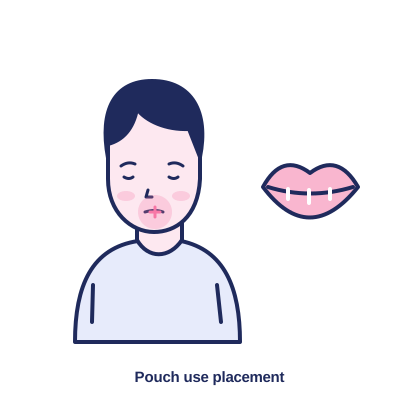
Nicotine pouches are placed between the lip and gum so nicotine can be absorbed without burning tobacco. That lower-odor, no-smoke setup is one reason people reach for them instead of cigarettes or chewing tobacco. The practical question is not just how they are used, but what the nicotine does once it is in the body.
Nicotine is highly addictive. The MedlinePlus source on smokeless tobacco says nicotine makes it hard to stop once you start, and it also notes that smokeless tobacco can contain more nicotine than cigarettes. Nicotine pouches do not contain tobacco leaf, so they are not the same product, but they still deliver the drug that drives dependence.
That is why a pouch can feel useful in the moment and still be part of the problem. If you start needing it for routine tasks, stress, or concentration, the product may be doing more than replacing a cigarette habit. It may be locking nicotine into your day.
- Not having smoke exposure does not make the product harmless.
- More frequent use can make nicotine effects and dependence more likely.
- A stronger pouch can feel different from a weaker one even if the package looks similar.
04 · Nicotine Pouches
Side effects you can feel in your mouth or in the rest of your body
The most common problems are irritation where the pouch sits and nicotine effects like nausea or dizziness.
Some effects show up quickly. People may notice mouth tingling, a dry mouth, hiccups, nausea, stomach upset, dizziness, shakiness, or a faster heartbeat. These effects can be more noticeable when a pouch is stronger than expected, used more often than intended, or used when you have not eaten much.
The gum or lining under the lip can also get irritated. Repeated contact in the same spot can leave the tissue sore or sensitive. That matters because the mouth is not supposed to stay inflamed for long. A new sore spot may be from irritation, but a white patch, red patch, or sore that does not improve should be checked.
Not every symptom means poisoning, and not every dizzy spell means the pouch caused it. Still, if symptoms happen soon after use or keep returning in the same pattern, the timing is a clue worth bringing to a clinician or dentist. That helps separate nicotine effects from other problems that may need different treatment.
- Symptoms can be stronger when the pouch is used on an empty stomach.
- Mouth irritation that keeps coming back should not be brushed off.
- A patch or sore lasting more than 2 weeks needs an exam.
05 · Nicotine Pouches
When the pouch starts running your day
Needing nicotine to feel normal is a sign of dependence, not a personal failure.
People often notice dependence first in their routines. Maybe the first pouch comes right after waking, during a drive, after meals, or whenever stress spikes. That pattern matters because it shows the product is tied to habit, not just a one-time choice.
When nicotine levels drop, withdrawal can bring cravings, irritability, restlessness, trouble focusing, low mood, or sleep changes. Those symptoms can feel uncomfortable enough that people reach for another pouch just to feel steady again. The short-term relief can make it hard to see that the product is also keeping the cycle going.
If you use a pouch to get through the workday, to calm down, or to avoid feeling bad when you stop, that is useful information. It does not mean you have to quit on your own. It does mean a cut-back plan is more likely to work if it matches your triggers and timing instead of relying on willpower alone.
- Cravings that show up at the same time each day often point to habit-linked use.
- Withdrawal can start when nicotine drops, even if nothing else has changed.
- A quit plan works better when it accounts for your real routines.
06 · Nicotine Pouches
Mouth, gum, and tooth changes that should not be ignored
A pouch can irritate oral tissue, and long-lasting mouth changes need a dental or medical check.
A pouch sits against one area of the mouth for a while, and that repeated contact can irritate the tissue. People sometimes assume that because the product is spit-free, it must be gentle on the mouth. That is not a safe assumption. The gum can become sore, inflamed, or sensitive where the pouch rests.
The MedlinePlus source on smokeless tobacco warns about gum pulling away from the teeth, decay of exposed tooth roots, and white patches or red sores in the mouth. Nicotine pouches are not identical to chewing tobacco, so long-term pouch risk is not fully defined by this source, but the mouth should still be watched closely for changes that do not settle down.
What matters most is persistence. A sore spot that clears after you stop using a pouch is different from a patch or ulcer that stays. Any white patch, red patch, gum pain, or sore that lasts more than 2 weeks deserves an exam, especially if it keeps coming back in the same place.
- Move the pouch location only if irritation is mild and short-lived.
- Do not keep using a product that is clearly making the mouth worse.
- A lasting white or red mouth patch should be checked by a dentist or clinician.
07 · Nicotine Pouches
Pregnancy, breastfeeding, and why nicotine still deserves attention
Tobacco-free does not mean pregnancy-safe, and nicotine exposure should be reviewed early.
No nicotine product should be assumed safe in pregnancy. The concern is not only whether the product has tobacco leaf. Nicotine itself is the issue, and the safest plan depends on the whole situation, including whether the person is already using nicotine to avoid smoking.
If someone is pregnant and using pouches, that exposure should be discussed with a prenatal clinician as soon as possible. The goal is to find the lowest-risk option, not to judge the person using the product. A structured stop plan may be better than continuing the same routine without guidance.
Breastfeeding people should also ask about nicotine use. A clinician can help compare quitting, reducing exposure, or using a different nicotine-replacement or quit strategy. The key point is that the choice should be made with medical advice, not by guessing that the product is automatically safe because it does not contain smoke.
- Bring up nicotine use early in prenatal care.
- Do not assume a nicotine pouch is safe just because it is tobacco-free.
- Ask for a plan if quitting is hard.
08 · Nicotine Pouches
What to do if a child or pet gets into a pouch
Swallowing a pouch can be dangerous, and children need quick guidance while pets need veterinary advice.
Nicotine products should be stored where children and pets cannot reach them, and used pouches should be thrown away safely. A child may think a pouch is candy or gum, while a pet may pick up a dropped pouch from the floor or trash. Even one pouch can cause concerning symptoms in a small body.
Signs of nicotine poisoning can include vomiting, drooling, sweating, agitation, confusion, sleepiness, or a racing heartbeat. The important point is not to wait for a long list of symptoms before acting. If a child may have swallowed one, call Poison Control right away in the U.S. If the child is very sleepy, vomiting repeatedly, hard to wake, or having trouble breathing, get emergency help.
Pets are different. If a pet may have swallowed a pouch, contact a veterinarian or an animal poison hotline right away instead of using the human Poison Control number as the only contact. The right next step depends on the animal, the amount, and how it is acting.
- Keep pouches in the original container with the lid closed tightly.
- Do not leave used pouches where a child or pet can find them.
- Severe symptoms need emergency care.
09 · FAQ
Questions people ask
Can nicotine pouches cause anxiety-like feelings?
They can make some people feel jittery, on edge, or keyed up because nicotine stimulates the body. That does not mean it treats anxiety. If the pouch seems to calm you only because it relieves withdrawal or keeps you from feeling bad between uses, the nicotine may be part of the problem.
Should I stop using a pouch if my mouth hurts?
If the soreness is mild and goes away quickly, the pouch may simply be irritating one spot. If the pain keeps coming back, gets worse, or turns into a white patch, red patch, or sore that lasts more than 2 weeks, it should be checked. Persistent mouth changes need an exam, not just a change in placement.
Can I use nicotine pouches while I am trying to quit smoking?
Some people do use them to avoid cigarettes, but they can also keep nicotine dependence going. If quitting smoking is your goal, it helps to have a plan that is more specific than just swapping one nicotine product for another. A clinician or pharmacist can help compare quit options and withdrawal symptoms.
Why do I feel dizzy after a pouch?
Dizziness can happen when nicotine affects the body too strongly, especially with stronger pouches, repeated use, or use on an empty stomach. If it happens once and passes, note the timing and product strength. If it keeps happening or comes with chest pain, fainting, or trouble breathing, get medical care.
Do nicotine pouches have the same risks as chewing tobacco?
Not exactly. They are different products, and this source does not prove the same long-term risk profile for pouches. What is clear is that nicotine pouches still deliver nicotine and can irritate the mouth, and smokeless tobacco products are linked with oral and whole-body harms.
What should I bring to an appointment about nicotine pouch use?
Bring the brand name, the nicotine strength if you know it, and about how often you use it. That gives the clinician or dentist enough detail to talk about withdrawal, mouth irritation, heart symptoms, and whether a quit plan or another nicotine-replacement approach would fit better.
10 · References
References and supporting evidence
These sources support the points identified below. Source checking is not clinical approval.
- S1: Smokeless TobaccoMedlinePlus / U.S. National Library of Medicine
Explains that nicotine itself drives dependence, which is why nicotine pouches can lead to cravings and withdrawal. Explains the oral warning signs and gum/tooth concerns that justify checking lasting mouth changes. Explains that nicotine-related smokeless products can have body-wide health concerns, so symptoms like palpitations, chest pain, or stroke signs should not be ignored. Explains that a structured quit plan is useful when someone wants to cut back or stop using nicotine.
General information, not a diagnosis. This guide is not a substitute for care from a qualified healthcare professional. For an emergency, call 911 in the US or your local emergency number. Illustrations are conceptual and are not diagnostic images.