
01 · Overview
The short version
Pain pattern matters
Severe upper abdominal pain that may spread to the back, especially with nausea or vomiting, is a classic pancreatitis pattern, but other conditions can cause similar symptoms.
Acute and chronic are not the same
Acute pancreatitis starts suddenly and may improve with treatment. Chronic pancreatitis is long-term damage that does not heal and can lead to weight loss, greasy stools, and diabetes.
Gallstones and alcohol are common causes
Gallstones often trigger acute attacks, while heavy alcohol use is a common cause of chronic pancreatitis. Very high triglycerides, high calcium, some medicines, and autoimmune or inherited conditions can also play a role.
Severe symptoms need fast care
Trouble breathing, fainting, confusion, yellow skin or eyes, repeated vomiting, or signs of dehydration can mean a serious attack or another urgent problem.
02 · Care guidance
When to get help
Emergency help
- Call 911 now if severe upper belly pain comes with trouble breathing, fainting, confusion, blue lips, chest pain, or signs of shock such as cold clammy skin.
- Get emergency care right away for sudden severe upper abdominal or back pain with repeated vomiting, fever, yellow skin or eyes, or inability to keep fluids down.
Get advice promptly
- Contact a clinician promptly for new upper abdominal pain, especially if it spreads to the back or comes with nausea, vomiting, fever, or a bloated belly.
- Seek urgent same-day advice if you have known gallstones, heavy alcohol use, very high triglycerides, or recently started a new medicine and then developed these symptoms.
If symptoms are mild and improving, still arrange a medical visit soon to find the cause and lower the chance of another attack. If you already have chronic pancreatitis, follow up regularly for nutrition, pain control, and blood sugar checks.
03 · Pancreatitis
What pancreatitis is, and why it can affect more than pain
Pancreatitis is inflammation of the pancreas, and that can interfere with digestion, cause pain, and affect blood sugar.
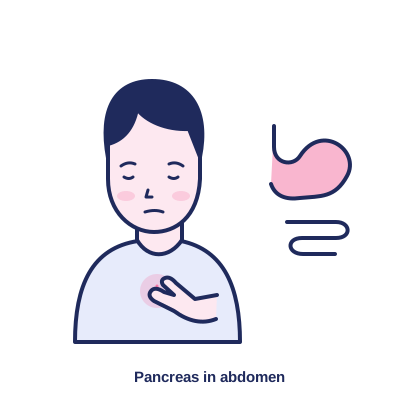
The pancreas sits behind the stomach and in front of the spine. It sends digestive juices into the small intestine and also makes hormones such as insulin and glucagon that help control blood sugar. When the pancreas becomes inflamed, those jobs can be disrupted.
Pancreatitis happens when digestive enzymes start digesting the pancreas itself. That is why it can feel intense and why it can become serious quickly. The inflammation may stay limited to one attack, or it may keep coming back and cause lasting damage.
Acute pancreatitis starts suddenly and often improves in a few days with treatment. Chronic pancreatitis lasts longer, does not heal, and tends to get worse over time. The difference matters because the follow-up plan is different for each type.
- The pancreas has both digestive and hormone-related jobs.
- Acute pancreatitis is sudden and may improve with treatment.
- Chronic pancreatitis is permanent damage that can worsen over time.
04 · Pancreatitis
Symptoms that fit pancreatitis, and the ones that point to a different problem
The usual pattern is deep upper belly pain, often with nausea or vomiting, but no symptom alone proves pancreatitis.
People often describe severe pain in the upper middle or upper left abdomen. It may spread straight through to the back, and it can feel worse after eating or when lying flat. Nausea and vomiting are common, and the belly may feel tender or bloated.
That pattern can raise concern for pancreatitis, especially if the pain is intense and does not settle. Still, upper belly pain can also come from gallbladder disease, stomach ulcers, bowel problems, liver problems, or even a heart-related condition. The symptom pattern helps guide the workup, but it is not a diagnosis by itself.
Chronic pancreatitis can look a little different. Some people have ongoing pain, weight loss, greasy or oily stools, or trouble absorbing food. Those symptoms can build up slowly, which makes them easier to miss.
- Upper abdominal pain that spreads to the back is a common warning pattern.
- Nausea, vomiting, tenderness, and bloating can go along with it.
- Greasy stools and weight loss raise concern for chronic pancreatitis.
05 · Pancreatitis
What usually triggers it, and what clinicians look for
Gallstones and alcohol are common causes, but medicines and metabolic problems matter too.
Gallstones are a common cause of acute pancreatitis because they can block the flow of digestive juices. Heavy alcohol use is a common cause of chronic pancreatitis, and alcohol can also trigger acute attacks. Those are the causes many people hear about first, but they are not the only ones.
Very high triglycerides, high calcium, some medicines, autoimmune conditions, cystic fibrosis, and inherited disorders can also be involved. Sometimes no cause is found right away, which is why the review is often broader than a single blood test.
A medication review matters because the timing can give a clue. If symptoms started after a new medicine, the clinician may want to look closely at that change along with the rest of the history.
- Gallstones can block pancreatic drainage.
- Heavy alcohol use is a common chronic cause.
- Medicines, triglycerides, calcium, and autoimmune or inherited causes may also be involved.
06 · Pancreatitis
How doctors check for pancreatitis
Diagnosis usually combines symptoms, blood tests, and imaging, because one test alone is not enough.
A clinician may order blood tests such as lipase when pancreatitis is suspected. Imaging may be used to look for gallstones, swelling, fluid collections, or other causes of the pain. The test results matter most when they are interpreted along with the symptoms and the physical exam.
This combined approach helps because many conditions can look similar at first. A person with upper abdominal pain may need evaluation for gallbladder disease, stomach ulcers, bowel problems, liver disease, or a heart-related issue, depending on the story and exam.
If the cause seems unclear, the workup may also look at bile duct blockage, alcohol exposure, triglycerides, calcium levels, and the medicine list. The goal is not just to name the problem, but to lower the chance of another attack.
- Lipase is helpful but not enough on its own.
- Imaging may look for gallstones or complications.
- The cause matters because it changes prevention and treatment.
07 · Pancreatitis
What treatment usually focuses on
Treatment aims to keep the person stable, control pain, support hydration and nutrition, and treat the cause.
Many people with acute pancreatitis need hospital care for IV fluids, pain medicine, and close monitoring. Some hospital summaries also mention antibiotics, but the key point for patients is that treatment is tailored to the cause and the severity of the illness, not just the pain.
If gallstones are the trigger, treatment may include a procedure to clear the blockage or later treatment of the gallbladder. If alcohol is involved, stopping alcohol is an important part of recovery and preventing another episode. For people who drink heavily, that should be handled with medical guidance because withdrawal can be dangerous.
Chronic pancreatitis often needs longer-term support. Some people need pancreatic enzymes to help digest food, nutrition support, and treatment for pain, weight loss, or vitamin problems. Blood sugar may also become harder to control if the pancreas is damaged.
- IV fluids and pain control are common early treatments.
- Treating the cause helps prevent repeat attacks.
- Chronic disease may need enzymes, nutrition support, and diabetes care.
08 · Pancreatitis
When this should be treated as urgent
Severe pain, vomiting, fever, jaundice, breathing trouble, confusion, or shock signs need fast care.
Do not wait at home if the upper belly pain is severe, keeps getting worse, or comes with repeated vomiting. Inability to keep fluids down can lead to dehydration fast, and pancreatitis can sometimes become severe enough to affect other organs.
Yellow skin or eyes can suggest a bile duct problem, especially if gallstones are involved. Fever, confusion, fainting, trouble breathing, or cold clammy skin are all warning signs that the situation may be more serious than a simple stomach upset.
If you have had pancreatitis before, a new episode still needs attention. Recurrent attacks can signal an ongoing blockage, alcohol-related injury, a medicine problem, or another cause that needs a different plan.
- Repeated vomiting and severe pain are urgent.
- Yellow skin or eyes can point to bile duct blockage.
- Trouble breathing, fainting, or confusion need emergency care.
09 · FAQ
Questions people ask
Can pancreatitis go away on its own?
Some mild acute cases can improve with treatment, but it should not be treated as harmless or ignored. The cause still matters because a blocked duct, gallstones, alcohol use, or a medicine trigger can make it come back. Chronic pancreatitis does not fully heal and usually needs ongoing management.
Can food make pancreatitis worse?
During an acute attack, eating can worsen symptoms for some people, which is why hospital treatment may include IV fluids and temporary bowel rest. After the attack, food advice depends on the cause and how well the person is recovering. In chronic pancreatitis, some people need enzymes and nutrition support rather than broad food restriction.
What tests are usually ordered?
Clinicians often use blood tests such as lipase and may order imaging like ultrasound or CT depending on the situation. These tests help confirm inflammation and look for causes such as gallstones or complications. The results are read together with symptoms and the physical exam.
Why does pancreatitis pain sometimes spread to the back?
The pancreas sits deep in the upper abdomen near the back, so inflammation can cause pain that feels like it goes straight through. That pattern can happen in pancreatitis, but it is not enough to confirm the diagnosis. Other abdominal and back problems can feel similar.
Is pancreatitis the same as stomach pain?
No. Pancreatitis is inflammation of the pancreas, not the stomach. It can cause upper belly pain, nausea, and vomiting, but ulcers, gallbladder disease, and bowel problems can cause similar symptoms. A medical exam and tests are often needed to tell them apart.
What happens after the cause is found?
The next step depends on the trigger. Gallstone-related pancreatitis may need treatment to clear the blockage and prevent another one. Alcohol-related pancreatitis may need medical help to stop drinking safely. If a medicine is suspected, the clinician usually reviews safer options before changing it.
10 · References
References and supporting evidence
These sources support the points identified below. Source checking is not clinical approval.
- S1: PancreatitisMedlinePlus / U.S. National Library of Medicine
Explains what pancreatitis is and why it damages the pancreas.
- S2: Pancreatic DiseasesMedlinePlus / U.S. National Library of Medicine
Explains that the pancreas affects blood sugar control and helps justify monitoring for diabetes in chronic disease.
- S3: Bile Duct DiseasesMedlinePlus / U.S. National Library of Medicine
Explains that gallstones can block bile flow, which is relevant to gallstone-related pancreatitis and jaundice concerns.
General information, not a diagnosis. This guide is not a substitute for care from a qualified healthcare professional. For an emergency, call 911 in the US or your local emergency number. Illustrations are conceptual and are not diagnostic images.