
01 · Overview
The short version
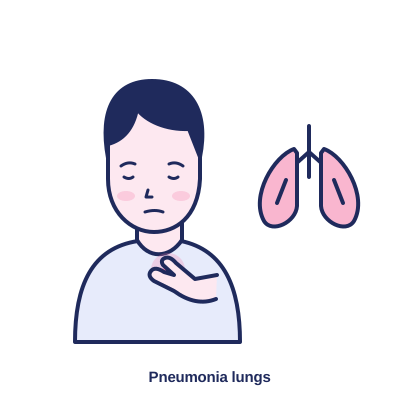
Pneumonia affects the lungs, not just the throat
It fills the air sacs with fluid or pus, which can make breathing harder and lower oxygen levels.
The cause changes the treatment
Bacterial, viral, and fungal pneumonia all exist, and medicines that help one type may not help another.
Some people show different symptoms
Older adults and people with weak immune systems may have less fever or cough and more confusion, weakness, or sleepiness.
Getting worse is the main warning sign
A cough that is not improving, breathing that is harder, or chest pain with breathing should not be watched at home for long.
02 · Care guidance
When to get help
Emergency help
- Call 911 now if breathing is severely hard, lips or face look blue or gray, there is chest pain that feels like pressure or tightness, severe confusion, fainting, or a child is too sleepy to wake normally.
- Get immediate emergency help for signs of sepsis or severe illness, such as very fast breathing, a high fever with shaking chills, extreme weakness, or a sudden worsening of symptoms after seeming to improve.
Get advice promptly
- Contact a clinician promptly if you have a cough with fever, worsening shortness of breath, chest pain when breathing, coughing up rust-colored, green, or bloody mucus, or symptoms that are not improving after a few days.
- Seek prompt medical advice if you are pregnant, age 65 or older, have COPD, heart disease, diabetes, cancer, HIV, a transplant, or take medicines that weaken the immune system.
If symptoms are mild and you are otherwise well, arrange a non-urgent visit if the cough or fatigue lingers, if you need confirmation of the diagnosis, or if you want help preventing future lung infections.
03 · Pneumonia
What pneumonia changes inside the lungs
Pneumonia is an infection in one or both lungs that can make oxygen exchange harder.
Pneumonia is not just a bad cough. It is an infection that reaches the lung air sacs, where oxygen normally moves into the blood. When those air sacs fill with fluid or pus, breathing can feel harder and the person may feel weak, tired, or short of breath.
The illness can affect one lung or both, and it can be mild or severe. A simple cold usually stays in the nose and throat, while pneumonia reaches the lungs. That is why chest pain with breathing, shortness of breath, and a deeper cough matter more than a runny nose alone.
- Pneumonia is a lung infection, not an upper-airway infection.
- It can range from mild to severe.
- Breathing symptoms matter because the lungs are where oxygen moves into the body.
04 · Pneumonia
Different germs can cause it, and that affects treatment
Bacteria, viruses, and fungi can all cause pneumonia, so the right medicine depends on the cause.
Bacteria are the most common cause, but viruses and fungi can also lead to pneumonia. Some bacterial pneumonia starts after a cold or the flu, which is one reason a person may seem to be getting better and then get worse again.
Some forms deserve special attention. Legionnaires' disease is a serious type caused by Legionella bacteria, and it is linked to man-made water systems such as hot tubs, fountains, and large-building plumbing. Pneumocystis pneumonia is most likely to matter in people with HIV, cancer, transplant history, chronic lung disease, or medicines that weaken the immune system.
- Bacterial pneumonia may respond to antibiotics.
- Viral pneumonia may be mild or may still need hospital care.
- Pneumocystis pneumonia is mainly a concern when the immune system is weakened.
- Legionnaires' disease is a specific serious type of pneumonia.
05 · Pneumonia
Symptoms that fit pneumonia, and the ones that can be easy to miss
Fever, cough, shortness of breath, and chest pain are common, but some people mainly show fatigue, confusion, or weakness.
The usual symptoms are fever, chills, cough with phlegm, shortness of breath, and chest pain that gets worse when breathing or coughing. Nausea, vomiting, and diarrhea can also happen. In Legionnaires' disease, stomach symptoms and mental changes can stand out more than the cough.
Babies, older adults, and people with weakened immune systems may not look like the classic picture. An older adult may seem confused, sleepy, or weaker than usual rather than having a strong fever. That is why a “small” change in behavior can be an important warning sign.
- Chest pain with breathing is more concerning than chest soreness alone.
- Confusion can be a pneumonia symptom in older adults.
- GI symptoms can happen, especially with Legionnaires' disease.
06 · Pneumonia
Who needs a lower threshold for care
Age, smoking, chronic illness, and immune suppression raise the chance of pneumonia and complications.
Anyone can get pneumonia, but the risk is higher in children age 2 and under, adults 65 and older, smokers, people with heavy alcohol use, and people with poor nutrition. Recent cold or flu, lung disease, trouble coughing or swallowing, and hospital or ICU care also raise the risk.
People with weakened immune systems need quicker attention because they can get more serious infections or unusual causes of pneumonia. That includes people with HIV, cancer, transplant history, autoimmune disease, or medicines such as chemotherapy and steroids.
- Older age and young age both raise risk.
- Smoking and chronic lung disease matter.
- Immune suppression can change both the cause and the speed of illness.
07 · Pneumonia
What happens when pneumonia is checked in the office or hospital
A clinician looks at symptoms, listens to the lungs, checks oxygen, and may order imaging or lab tests.
Pneumonia can look like flu, COVID-19, bronchitis, or another respiratory illness at first, so diagnosis is not based on one symptom alone. A clinician usually starts with the history and a lung exam, then may check oxygen levels and order a chest X-ray to look for infection in the lungs.
If the illness is severe, unusual, or not improving, other tests may be needed. These can include blood tests, blood cultures, sputum testing, or special tests for Legionella. People at risk for Pneumocystis pneumonia may need a lung sample because the diagnosis can be hard to confirm from symptoms alone.
- A chest X-ray is commonly used.
- Oxygen checks help show how hard the lungs are working.
- Extra tests are more likely when the illness is severe or the cause is unclear.
08 · Pneumonia
Treatment and what recovery can look like
Treatment depends on the germ and how sick the person is, and recovery can take longer than the fever does.
Bacterial pneumonia is often treated with antibiotics. Viral pneumonia may improve with supportive care, and some viral infections have antiviral medicine. Fungal pneumonia and Pneumocystis pneumonia need different drugs. If oxygen is low or symptoms are severe, hospital care may be needed.
Recovery is uneven. Some people feel better within a week, while others need a month or more to get their energy back. Cough and fatigue can linger after the infection starts improving. What matters is the trend: symptoms should slowly improve, not keep getting worse.
- The cause guides the medicine.
- Low oxygen or severe symptoms may require hospital care.
- Cough and tiredness can last after the infection begins to improve.
09 · Pneumonia
When pneumonia turns urgent
Breathing trouble, confusion, fainting, or signs of sepsis need immediate care.
Pneumonia becomes dangerous when it starts affecting oxygen levels or spreads beyond the lungs. That is why severe shortness of breath, blue or gray lips, chest pressure, severe confusion, fainting, or a child who is too sleepy to wake normally are emergency signs.
Very fast breathing, shaking chills, extreme weakness, or a sudden worsening after seeming to improve can also point to a serious infection such as sepsis. People with risk factors should not wait to see if the illness will pass on its own.
- Breathing worse than expected is the biggest red flag.
- Confusion or fainting can mean the illness is severe.
- A sudden setback after improvement is not a normal recovery pattern.
10 · Pneumonia
Lowering the chance of getting it again
Vaccines, hand hygiene, smoke avoidance, and safe water-device habits can lower risk.
Flu and pneumococcal vaccines can help prevent some pneumonia cases. Good hand hygiene, not smoking, and overall health maintenance also lower the chance of respiratory infections that can lead to pneumonia.
Legionella prevention is different because it involves water systems. Follow manufacturer and local public-health guidance for hot tubs, humidifiers, plumbing, and other water-related devices, and avoid poorly maintained water sources. If you use a nasal rinse, use only sterile, distilled, or previously boiled water.
- Vaccines help, but they do not prevent every case.
- Smoke exposure increases risk.
- Water-device care matters for Legionella.
- Nasal rinses need safe water.
11 · FAQ
Questions people ask
Can pneumonia go away on its own?
Some mild viral cases improve without specific medicine, but pneumonia can also become serious quickly. If you have fever, worsening cough, shortness of breath, or chest pain, it is safer to get checked rather than assume it will pass.
Why does pneumonia sometimes cause stomach symptoms?
Nausea, vomiting, and diarrhea can happen with pneumonia, and they are especially known with Legionnaires' disease. Those symptoms do not prove pneumonia by themselves, but when they show up with fever, cough, or breathing trouble, they can fit the picture.
Can an older adult have pneumonia without a fever?
Yes. Older adults and people with weaker immune systems may have fewer classic symptoms and sometimes a lower-than-normal temperature. Confusion, sleepiness, weakness, or a sudden change from usual behavior can be the clue that matters most.
Why might a clinician order more than one test?
Pneumonia can be hard to tell apart from flu, COVID-19, bronchitis, or other breathing problems. More than one test can help confirm that the lungs are infected and, when needed, point to a specific cause such as Legionella or Pneumocystis.
Is Legionnaires' disease contagious from person to person?
Usually no. The main issue is exposure to contaminated man-made water systems, not catching it from another person in everyday contact. That is why water sources and maintenance matter so much for prevention.
Why can recovery take weeks even after the fever is gone?
The infection may start improving before the lungs and body feel back to normal. Cough and fatigue can last for weeks, and some people need a month or more to regain stamina. What should improve is the trend, not just one symptom.
12 · References
References and supporting evidence
These sources support the points identified below. Source checking is not clinical approval.
- S1: PneumoniaMedlinePlus / U.S. National Library of Medicine
Explains what pneumonia is and why it can interfere with breathing and oxygen exchange.
- S2: Pneumocystis InfectionsMedlinePlus / U.S. National Library of Medicine
Explains that Pneumocystis pneumonia can develop with cough, fever, breathing trouble, chest pain, chills, and fatigue, especially in people with weakened immune systems.
- S3: Legionnaires' DiseaseMedlinePlus / U.S. National Library of Medicine
Explains that Legionnaires' disease can look like other pneumonia but may also include stomach symptoms and confusion.
General information, not a diagnosis. This guide is not a substitute for care from a qualified healthcare professional. For an emergency, call 911 in the US or your local emergency number. Illustrations are conceptual and are not diagnostic images.