
01 · Overview
The short version
TSH is usually the first blood test
TSH is the pituitary signal that tells the thyroid how hard to work. It is often the first test ordered because it gives the quickest clue about underactive or overactive thyroid function.
T3 and T4 add detail
T3 and T4 measure thyroid hormone in the blood. They help confirm the pattern when TSH is abnormal or when symptoms do not match the first result.
Antibodies can point to autoimmune disease
Thyroid antibody tests may help show whether Hashimoto's disease or Graves' disease is part of the picture, but they do not explain every symptom by themselves.
Pregnancy and iodine exposure matter
Pregnancy, recent illness, medicines, and iodine from supplements or seaweed products can change thyroid function or affect how results are interpreted. Radioactive iodine is not used in pregnancy or while breastfeeding.
02 · Care guidance
When to get help
Emergency help
- Get emergency help now for chest pain, severe shortness of breath, fainting, confusion, a very fast or irregular heartbeat, or extreme weakness with trouble staying awake.
- Seek emergency care if thyroid symptoms are severe and come on suddenly, especially with fever, agitation, or worsening confusion.
Get advice promptly
- Contact a clinician promptly if you have ongoing fatigue, unexplained weight change, new heat or cold intolerance, tremor, constipation, diarrhea, a swollen neck, or symptoms after starting or changing thyroid medicine.
- Seek urgent medical advice if you are pregnant and have known or suspected thyroid disease, because thyroid levels matter for both parent and baby.
If symptoms are mild and there is no urgent red flag, schedule a routine visit to review whether thyroid testing is appropriate and which tests fit your situation.
03 · Thyroid Function Tests
What these tests are trying to answer
Thyroid testing is meant to show how well the gland is working and, when needed, why it is misfiring.
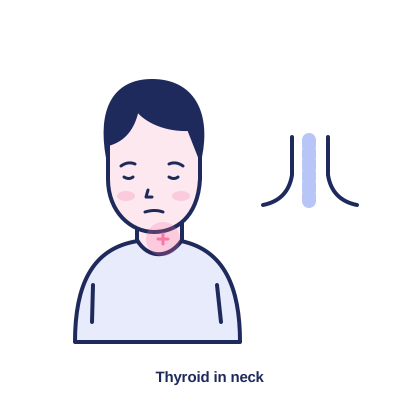
The thyroid is a small gland in the front of the neck. It makes hormones that affect energy use throughout the body, so thyroid problems can show up as changes in heart rate, weight, bowel habits, mood, and temperature tolerance. That is why the question is usually not only whether the thyroid is enlarged, but whether it is making too much or too little hormone.
Blood tests are the main tool. TSH is usually ordered first. Depending on the situation, a clinician may add T3, T4, or thyroid antibody tests. Imaging tests are different. Ultrasound, a thyroid scan, or a radioactive iodine uptake test can help show the size, shape, position, nodules, or cause of overactivity, but they are not the same thing as the blood tests.
- Blood tests are the main way thyroid function is checked.
- Imaging helps with structure or cause, not routine screening.
- The same test can be used for diagnosis, follow-up, or dose changes.
04 · Thyroid Function Tests
How to read TSH without overreading it
TSH is a signal, not a diagnosis, and it has to be matched with the rest of the picture.
TSH is made by the pituitary gland. When thyroid hormone is low, TSH often rises because the body is trying to push the thyroid harder. When thyroid hormone is high, TSH often drops because the body is trying to slow thyroid output. That pattern is helpful, but it does not explain every situation on its own.
A single abnormal TSH can be a starting point, not the final answer. A clinician may compare it with T4 or T3, your symptoms, recent illness, and medicines you take. For example, someone with symptoms of hyperthyroidism may have tremor, heat intolerance, nervousness, weight loss, frequent bowel movements, or a fast or irregular heartbeat. Someone with hypothyroidism may have fatigue, weight gain, constipation, dry skin, cold intolerance, a slowed heart rate, or a puffy face.
- High TSH often points toward underactive thyroid.
- Low TSH often points toward overactive thyroid.
- Symptoms and other tests can change how the result is interpreted.
05 · Thyroid Function Tests
What T3 and T4 add when TSH is not enough
T3 and T4 show the hormone levels in blood and help confirm whether the thyroid problem is underactive or overactive.
T4 is the main hormone the thyroid makes, and T3 is the more active form in the body. These tests are often ordered with TSH when a clinician wants a clearer answer than TSH alone can give. They are especially useful when symptoms and the first blood test do not line up neatly.
T3 and T4 can help make sense of overactive thyroid, where symptoms may include tremor, heat intolerance, nervousness, weight loss, diarrhea, and a fast or irregular heartbeat. They also help with underactive thyroid, where low hormone levels may fit fatigue, weight gain, constipation, dry skin, cold intolerance, or slowed heart rate. The test pattern matters more than any single number.
- T4 is the main hormone made by the thyroid.
- T3 is the more active hormone in the body.
- These tests are most useful when they are read with TSH and symptoms.
06 · Thyroid Function Tests
When antibody tests help explain the cause
Antibody tests can suggest autoimmune thyroid disease, but they do not tell the whole story on their own.
Thyroid antibody tests look for immune markers that may point to autoimmune thyroid disease. They can help distinguish common causes such as Hashimoto's disease in hypothyroidism and Graves' disease in hyperthyroidism. That matters because the cause can shape what treatment is chosen and how closely the thyroid needs to be followed.
A positive antibody test does not always mean a person needs immediate treatment. Some people have antibodies before hormone levels become clearly abnormal. Others have abnormal thyroid tests for different reasons, including thyroiditis, nodules, surgery, radiation, or too much iodine. Antibodies are best used as one part of the full picture.
- Antibodies can point to autoimmune thyroid disease.
- A positive result does not always mean urgent treatment.
- The result is read with TSH, T3, T4, and symptoms.
07 · Thyroid Function Tests
Why thyroid results can be abnormal for different reasons
An abnormal thyroid test can reflect disease, temporary inflammation, iodine exposure, or a medicine effect.
Hyperthyroidism and hypothyroidism are common reasons for abnormal tests, but they are not the only ones. Thyroiditis, which is inflammation of the thyroid, can temporarily release stored hormone and make results look overactive for a time. Hashimoto's disease, Graves' disease, nodules, surgery, and radiation can also change thyroid function.
Iodine matters too. Too much iodine can affect thyroid function, and it can come from medicines, cough syrups, seaweed, or seaweed-based supplements. If you already take thyroid medicine, taking extra iodine on your own can complicate treatment and may worsen the problem rather than help it. Tell the clinician about all prescription medicines, over-the-counter products, and supplements, even if they seem harmless.
- Too much iodine can change thyroid function.
- Seaweed-based supplements can be a source of iodine.
- Medication history helps separate disease from a temporary change.
08 · Thyroid Function Tests
What usually happens after the blood draw
Next steps depend on the result pattern, the cause, and whether you are already taking thyroid medicine.
If hypothyroidism is found, treatment often means thyroid hormone replacement. Follow-up blood tests are used to see whether the dose is right. In the supplied source, people who start treatment are checked about 6 to 8 weeks later, and the dose may be adjusted after that. Once the right dose is found, testing may become less frequent.
If hyperthyroidism is found, treatment can include antithyroid medicine, beta blockers for symptoms, radioactive iodine, or surgery depending on the cause and the person’s situation. Radioactive iodine is not used in pregnancy or while breastfeeding, so pregnancy status has to be checked before treatment is chosen. If surgery is needed, it is usually because a goiter is large or medicines are not the right choice.
If you already take thyroid medicine, do not stop it suddenly without medical guidance. A clinician may want to repeat labs after a dose change rather than relying on how you feel alone, because thyroid levels do not always shift immediately.
- Treatment depends on the cause, not just the number.
- Repeat blood tests are often needed after treatment starts or changes.
- Pregnancy changes which treatments are appropriate.
09 · FAQ
Questions people ask
Do thyroid tests usually require fasting?
Usually, no. Most thyroid blood tests do not require fasting, although a clinician or lab may give special instructions if other blood work is being done at the same time. Ask before the draw so you do not prepare the wrong way and end up repeating the test.
Can pregnancy change thyroid test results?
Yes. Pregnancy and the months after delivery can change thyroid needs and make thyroid disease more important to catch. Tell the clinician if you are pregnant, trying to get pregnant, or recently gave birth, because interpretation and treatment choices can change.
Should I worry if my neck looks swollen?
A swollen neck can be a goiter, which means an enlarged thyroid. It should be evaluated, especially if you also have trouble swallowing, breathing, hoarseness, or other thyroid symptoms. It is not always an emergency, but it should not be ignored.
Can I have thyroid disease with a normal test?
Sometimes symptoms and blood tests do not line up perfectly, especially early on or when another problem is affecting the result. If symptoms continue, a clinician may repeat testing, add different thyroid tests, or look for another cause instead of stopping at one normal lab.
What symptoms make thyroid testing worth discussing?
Ongoing fatigue, unexplained weight gain or loss, heat or cold intolerance, tremor, constipation, diarrhea, a fast or irregular heartbeat, mood changes, or a neck swelling are all reasonable reasons to ask about testing. The goal is to match the lab order to the symptom pattern, not to test without a reason.
Can iodine from supplements affect my thyroid?
Yes. Iodine-containing products, including kelp or seaweed supplements, can affect thyroid function and can complicate how results are read. Bring a full list of everything you take so the clinician can tell whether a supplement might be part of the problem.
10 · References
References and supporting evidence
These sources support the points identified below. Source checking is not clinical approval.
- S1: Thyroid TestsMedlinePlus / U.S. National Library of Medicine
Explains the purpose of thyroid function tests and the main categories of testing used in this article, including blood tests and imaging.
- S2: HyperthyroidismMedlinePlus / U.S. National Library of Medicine
Explains that iodine exposure, including seaweed-based supplements, can affect thyroid function and test interpretation.
- S3: HypothyroidismMedlinePlus / U.S. National Library of Medicine
Explains that follow-up blood testing is used after starting thyroid hormone replacement and that results are not expected to change instantly.
General information, not a diagnosis. This guide is not a substitute for care from a qualified healthcare professional. For an emergency, call 911 in the US or your local emergency number. Illustrations are conceptual and are not diagnostic images.