
01 · Overview
The short version
Symptoms can overlap with many conditions
Hoarseness, dizziness, nausea, swallowing trouble, and fainting may involve the vagus nerve, but they also happen with infections, dehydration, medicines, heart rhythm problems, and other illnesses.
Swallowing safety comes first
If swallowing feels unsafe, stop eating and drinking and get urgent medical advice, especially if you are choking, coughing with sips, or having trouble handling saliva.
Seizures are a brain problem, not a vagus nerve diagnosis
A seizure can happen for many reasons. If seizures last longer than 5 minutes or happen back-to-back without full recovery, that is a medical emergency.
Treatment depends on the cause
Some people need only treatment for a temporary illness or medicine side effect. In some people with epilepsy, an implanted vagus nerve stimulator may be part of treatment when medicines are not working well enough.
02 · Care guidance
When to get help
Emergency help
- Call 911 now for trouble breathing, chest pain, blue lips, sudden face weakness, speech trouble, severe confusion, seizure activity lasting 5 minutes or longer, or repeated seizures without waking up between them.
- Get emergency help right away for fainting with injury, severe allergic symptoms, or sudden inability to swallow saliva.
Get advice promptly
- Contact a clinician soon if you have new hoarseness, repeated dizziness, swallowing problems, unexplained fainting, ongoing nausea, or repeated episodes of slow pulse or near-fainting.
- Make a prompt appointment if symptoms started after surgery, a neck injury, a viral illness, or a new medicine.
If symptoms are mild but persistent, start with a primary care visit. Bring a list of symptoms, triggers, medicines, and when episodes happen so the clinician can sort out whether this seems nerve-related, heart-related, digestive, or something else.
03 · Vagus Nerve
What the vagus nerve does and why people notice it
The vagus nerve is a major communication line between the brain and several organs, so problems can show up in the throat, chest, or gut.
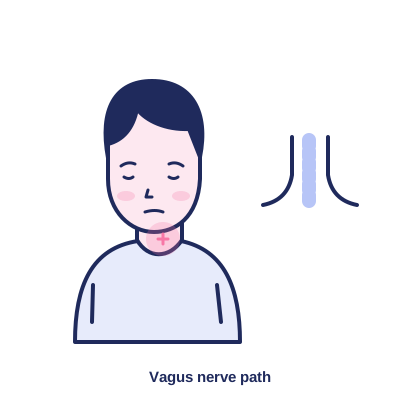
The vagus nerve runs from the brainstem through the neck into the chest and abdomen. It helps the brain and body share signals that affect swallowing, voice, heart rate, breathing patterns, and digestion.
That wide reach is why people sometimes blame the vagus nerve for many different symptoms. The better question is not only whether the nerve could be involved, but what changed first. A recent infection, surgery, injury, new medicine, or another medical problem may be the real starting point.
A single symptom rarely proves nerve damage on its own. Hoarseness, nausea, dizziness, and fainting all have other common causes, so the job of the visit is to sort out which pattern fits best.
- It can affect the throat, heart, lungs, and digestive tract.
- It is part of the autonomic system, which controls functions you do not consciously direct.
- A symptom by itself does not confirm a vagus nerve disorder.
04 · Vagus Nerve
Symptoms that can fit, and why they still need a wider check
Patterns matter more than one isolated symptom, because the same complaint can come from several systems.
Possible vagus nerve-related symptoms include hoarseness, trouble swallowing, choking with liquids, nausea, bloating, slowed stomach emptying, changes in heart rate, or faintness. Some people notice symptoms when standing up, coughing, after pain, or during stress.
Those clues can point in a direction, but they are not specific. Hoarseness can come from voice strain, infection, reflux, or vocal cord problems. Dizziness can come from dehydration, low blood pressure, anemia, or a heart rhythm problem. Nausea can come from a stomach bug, pregnancy, migraine, or medication side effects.
The most useful details are often practical ones: when the symptom started, whether it is getting worse, what was happening right before it began, and whether it came after surgery, a neck injury, a viral illness, or a new medicine.
- Track the trigger, time of day, body position, and how long symptoms last.
- Note whether the problem is new, recurring, or worsening.
- List recent procedures and all medicines, including over-the-counter drugs and supplements.
05 · Vagus Nerve
When to treat symptoms as urgent
Breathing problems, choking risk, stroke-like signs, and prolonged seizures need fast care.
Get emergency care for trouble breathing, chest pain, blue lips, sudden weakness on one side, or a new problem speaking clearly. Those symptoms can point to a seizure, stroke, heart problem, or airway issue, and they should not be waited out.
Swallowing changes need special caution. If swallowing feels unsafe, stop eating and drinking until you are medically assessed, especially if you are choking, coughing with sips, or having trouble handling saliva. That can help reduce the chance of aspiration or choking.
Fainting also deserves attention when it is new, repeated, or comes with injury. A person who faints and does not wake up quickly should be checked right away.
A seizure that lasts 5 minutes or longer, or repeated seizures without full recovery in between, is a medical emergency.
- Do not assume fainting is harmless.
- Do not keep eating if swallowing feels unsafe.
- Time the event if you can; duration matters.
06 · Vagus Nerve
How clinicians sort out the cause
The visit usually starts with the symptom story, then moves to an exam and targeted testing if needed.
A clinician will usually ask about voice changes, swallowing, fainting, nausea, heart symptoms, recent illness, surgery, injury, and medicines. They may also ask when the symptoms happen and whether they are linked to standing, pain, coughing, meals, or stress.
The exam may include the throat, neurologic function, pulse, and blood pressure in different positions. Depending on the story, testing can include an ENT exam, heart rhythm testing, imaging, or swallowing studies.
That approach matters because the problem may not be the nerve itself. The same symptom can come from the voice box, the heart, the digestive tract, or the brain, and the workup should follow the most likely path.
- Bring a symptom log and medicine list.
- Mention recent neck, chest, or abdominal procedures.
- Describe whether you had warning signs before fainting.
07 · Vagus Nerve
Treatment choices depend on what is causing the problem
Care may be simple symptom treatment, a change in medicine, or specialist treatment for epilepsy.
If the cause is a temporary illness, reflux, dehydration, inflammation, or a medicine side effect, treatment focuses on the underlying problem. Some people may need speech or swallowing therapy, hydration support, or a medicine change guided by a clinician.
If the symptom pattern points to epilepsy, the brain is the main concern. Seizures are symptoms of a brain problem, and they have many causes, including medicines, high fevers, head injuries, and certain diseases. For recurring seizures, doctors may use brain scans and other tests to diagnose epilepsy.
When medicines are not working well enough, surgery or implanted devices such as vagus nerve stimulators may help some people with epilepsy. That is a specialist decision, not a general wellness treatment.
- Do not stop a prescribed medicine on your own.
- Tell the clinician about any new medicine before assuming it is unrelated.
- Device therapy is considered after specialist review, not as a first step for most people.
08 · Vagus Nerve
What vagus nerve stimulation means in real care
Vagus nerve stimulation usually refers to an implanted device used in selected epilepsy cases.
In medical care, vagus nerve stimulation usually means an implanted device that sends electrical pulses to the nerve. It is sometimes used when seizure medicines are not working well enough for a person with epilepsy.
This is not the same as a wellness gadget or a home self-test. Online claims about devices, ear clips, or breathing methods should not be treated as proof of nerve disease or as a replacement for medical evaluation.
If someone brings up this therapy, ask what problem it is meant to improve, who will manage follow-up, and how the team decided it fits the seizure type and treatment history.
- It is a medical therapy, not a general calmness tool.
- It is not appropriate for every seizure disorder.
- Specialists decide whether the benefits outweigh the risks.
09 · FAQ
Questions people ask
Can a vagus nerve problem cause fainting?
It can be part of the picture, but it is only one possible cause. Dehydration, heart rhythm problems, low blood pressure, medication effects, and other issues can also cause fainting. New, repeated, or injury-causing fainting should be evaluated, especially if recovery is slow or you do not wake fully.
Is hoarseness always a vagus nerve issue?
No. Hoarseness is often caused by infection, voice strain, allergies, reflux, or vocal cord problems. If it lasts, keeps coming back, or happens with swallowing trouble or breathing symptoms, it needs medical review rather than guesswork.
Can I test my vagus nerve at home?
Not reliably. Online self-tests and wellness claims are not a substitute for medical evaluation. If you have symptoms like fainting, swallowing trouble, or voice changes, a clinician can check the likely cause more safely and accurately.
Are breathing exercises the same as vagus nerve treatment?
No. Slow breathing may help some people feel less stressed, but that is different from treating a nerve disorder. Breathing exercises can be a support tool, not a cure for seizures, airway problems, or heart symptoms.
Does vagus nerve stimulation help everyone with seizures?
No. It is considered for some people with epilepsy, usually when medicines are not controlling seizures well enough. It is not right for every seizure type, and a specialist should decide whether it fits the person’s situation.
What kind of doctor should I see first?
A primary care clinician is a good first step for many symptoms. Depending on the main problem, you may then need a neurologist, ENT specialist, cardiologist, gastroenterologist, or speech-language pathologist.
Can the vagus nerve cause anxiety?
The vagus nerve is involved in body signals that can affect how calm or stressed you feel, but anxiety is a mental health condition with many causes. It is not accurate to say that every anxious feeling means the vagus nerve is failing.
10 · References
References and supporting evidence
These sources support the points identified below. Source checking is not clinical approval.
- S1: EpilepsyMedlinePlus / U.S. National Library of Medicine
Explains that implanted vagus nerve stimulators can be part of epilepsy treatment when medicines are not working well enough.
- S2: SeizuresMedlinePlus / U.S. National Library of Medicine
Explains the emergency threshold for prolonged or repeated seizures without recovery.
General information, not a diagnosis. This guide is not a substitute for care from a qualified healthcare professional. For an emergency, call 911 in the US or your local emergency number. Illustrations are conceptual and are not diagnostic images.