
01 · Overview
The short version
Spinning is the key clue
Vertigo is the sensation that you or the room is moving. Feeling faint, woozy, or weak is different and can point to other causes such as dehydration, low blood pressure, or a medicine effect.
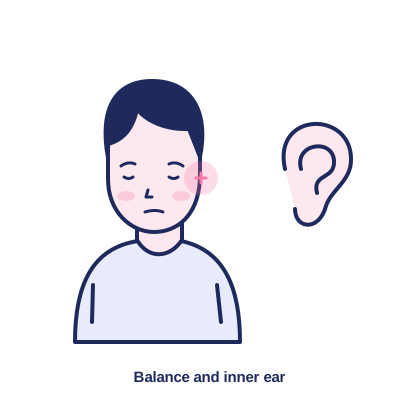
The inner ear is a common source
Many episodes come from balance trouble in the inner ear, including BPPV. Ear symptoms like ringing, pressure, hearing loss, or recent ear illness can help point in that direction.
Some symptoms need emergency care
Vertigo with weakness, slurred speech, vision changes, confusion, severe headache, chest pain, fainting, or trouble walking can be a sign of stroke or another urgent problem.
The cause shapes treatment
Some causes improve with movement-based exercises, some need medicine changes, and some need treatment for an ear, migraine, or circulation problem. The right plan depends on the diagnosis.
02 · Care guidance
When to get help
Emergency help
- Call 911 or your local emergency number right away if vertigo comes with weakness, numbness, slurred speech, confusion, severe headache, double vision, chest pain, fainting, or trouble walking.
- Get emergency help now if vertigo starts after a head injury, happens with a seizure, or comes with severe vomiting that keeps you from keeping fluids down.
Get advice promptly
- Make a prompt appointment if vertigo is new, keeps coming back, lasts more than a few days, happens often, or is causing falls, missed work, or trouble driving.
- Get checked soon if you also have ear pain, hearing loss, ringing in one ear, a recent viral illness, new migraine symptoms, or you recently started or changed a medicine that can affect balance.
If the spinning is mild and you are otherwise well, schedule a non-urgent visit so the cause can be sorted out and safe treatment options can be discussed. Bring a full medicine list, including over-the-counter products, and note what you were doing when the vertigo started.
03 · Vertigo
How vertigo is different from feeling faint
The word vertigo should be used for a false sense of motion, not every type of dizziness.
Vertigo usually feels like spinning, rocking, tilting, or being pulled to one side. Some people notice it only when they roll over in bed, look up, or turn their head. Others feel the motion for longer and also get nausea, vomiting, sweating, ringing in the ears, or trouble walking.
That is different from lightheadedness, which more often feels like you might pass out, get weak, or lose energy. The difference matters because lightheadedness can come from dehydration, blood pressure changes, or medicine side effects, while vertigo more often points to a balance problem.
- Pay attention to whether the room spins or whether you feel like you might faint.
- Notice if certain head movements trigger it.
- Write down nausea, hearing changes, headache, or vision changes.
04 · Vertigo
What usually causes the spinning
Most vertigo comes from the inner ear, medicine effects, migraine, blood pressure changes, or dehydration.
A common cause is BPPV, a type of inner-ear problem that often brings brief spinning when you change head position. Other inner-ear problems can also cause vertigo, including Meniere’s disease, infection, inflammation, ear surgery, or motion-related balance trouble.
Vertigo can also show up with migraines, a sudden drop in blood pressure, dehydration, head injury, or certain medicines. Less often, the cause is in the brain, heart, or blood circulation. In some people, more than one factor is involved, such as aging plus several medicines.
- Brief spinning with turning in bed often suggests an inner-ear cause.
- Ear pain, hearing change, or ringing can point toward an ear disorder.
- New vertigo after starting a medicine should be reviewed for side effects.
05 · Vertigo
What the visit usually focuses on
Doctors usually find the cause from the story, exam, and a few targeted tests rather than one single scan.
The clinician will usually ask when the vertigo began, how long each episode lasts, whether it is triggered by movement, and what symptoms come with it. Hearing loss, headache, nausea, ear pressure, trouble walking, blackouts, weakness, or vision changes are important clues.
Expect a medicine review as part of the visit. Over-the-counter drugs and supplements matter too, because balance symptoms can be affected by more than prescription medicine. The exam may include checking your walking, hearing, balance, and eye movements.
Testing depends on the story. Some people need blood tests, a hearing test, or imaging of the head and brain. Imaging is usually more likely if the clinician is worried about stroke, head injury, or another central nervous system problem.
- Bring every medicine you take, including sleep aids and supplements.
- Tell them whether the episodes last seconds, minutes, hours, or stay constant.
- Mention falls, fainting, speech trouble, or double vision right away.
06 · Vertigo
What to do while the spinning is happening
The first goal is to prevent a fall and avoid doing anything that makes the spinning worse.
During an episode, sit or lie down right away. Move slowly when getting out of bed or standing up, and keep paths clear so you do not trip. Good lighting, sturdy shoes, and a nearby chair or handhold can reduce the chance of falling.
Do not drive, climb ladders, or use tools until the spinning is under control. If dehydration may be part of the problem, sip fluids unless a clinician has told you to limit them. If the episode is brief and position-related, a clinician may suggest movement-based exercises instead of bed rest alone.
- Sit or lie down as soon as the spinning starts.
- Avoid driving and other risky tasks until you are steady.
- Ask about vestibular exercises if episodes keep returning.
07 · Vertigo
Why one treatment does not fit every cause
Some vertigo improves with exercises, some with medicine changes, and some by treating an ear, migraine, or circulation problem.
Some medicines can ease nausea or short-term symptoms, but they do not treat every cause of vertigo. A clinician may use medicine for symptom relief while also addressing the underlying problem, such as a balance disorder, migraine, or blood pressure issue.
For some people, balance exercises or physical therapy are helpful because the balance system needs retraining. If a medicine is part of the problem, the plan may need to be adjusted carefully. That is why it is important not to stop a prescribed drug on your own just because the spinning began after you started it.
- Short-term symptom relief is not the same as treating the cause.
- Vestibular rehab can help some balance problems.
- Medicines that make you sleepy can increase fall risk.
08 · Vertigo
When vertigo could involve the ear or brain
Hearing symptoms suggest the ear; weakness, speech trouble, or double vision raise concern for the brain.
Vertigo with hearing loss, ringing, ear pressure, or ear pain often points to an ear problem. That does not tell you the exact diagnosis, but it helps separate ear-related causes from faintness or circulation problems.
Vertigo with weakness, numbness, slurred speech, confusion, severe headache, double vision, chest pain, fainting, or trouble walking is different. Those symptoms can mean stroke or another urgent neurologic problem. New vertigo after a head injury also needs prompt medical attention. Multiple sclerosis is one possible neurologic cause, but it is not the usual explanation for most vertigo.
- Ear symptoms usually point toward a balance problem in the ear.
- Speech, strength, or vision changes are emergency warning signs.
- Head injury with vertigo should not be watched at home.
09 · FAQ
Questions people ask
Can vertigo go away on its own?
Yes, some episodes improve without treatment, especially if the cause is short-lived. Even so, vertigo that keeps returning, lasts more than a few days, or causes falls should be checked so the reason is not missed and the right treatment can be chosen.
Can dehydration cause vertigo?
Dehydration can cause lightheadedness and can make balance symptoms worse. It is one possible cause, especially if you have been vomiting, had diarrhea, or have not been drinking enough. If you cannot keep fluids down or have any emergency warning signs, you need medical evaluation.
Can medicines help vertigo?
Sometimes, but only for certain symptoms or certain causes. Some medicines can reduce nausea or short-term spinning, but they do not fix every reason for vertigo. The safer approach is to identify the cause first, because some medicines can also make you sleepy and raise fall risk.
What is the most common cause of vertigo?
BPPV, an inner-ear problem, is a common cause and is often triggered by head movement. Other common causes include migraine, blood pressure changes, dehydration, certain medicines, and other inner-ear disorders. The pattern of symptoms helps narrow which one is most likely.
When is vertigo an emergency?
It is an emergency if vertigo comes with weakness, numbness, slurred speech, confusion, severe headache, double vision, chest pain, fainting, or trouble walking. Those symptoms can signal stroke or another urgent problem and should not be watched at home.
Do I need a scan for vertigo?
Not always. Many cases are evaluated first with questions, a physical exam, and checks of walking, hearing, balance, and eye movements. Imaging is more likely if the clinician thinks stroke, head injury, or another brain-related problem could be involved.
10 · References
References and supporting evidence
These sources support the points identified below. Source checking is not clinical approval.
- S1: Dizziness and VertigoMedlinePlus / U.S. National Library of Medicine
Explains the core definition of vertigo and distinguishes it from broader dizziness. Explains that BPPV is a common inner-ear cause of vertigo. Explains emergency warning signs that need immediate care.
- S2: Balance ProblemsMedlinePlus / U.S. National Library of Medicine
Explains that vertigo can come from the ear, brain, heart, or circulation-related balance problems. Explains that evaluation can include hearing tests, blood tests, and targeted imaging when needed.
- S3: Multiple SclerosisMedlinePlus / U.S. National Library of Medicine
Explains that vertigo can be a symptom seen in multiple sclerosis, which is presented here as a possible neurologic cause rather than a common one.
General information, not a diagnosis. This guide is not a substitute for care from a qualified healthcare professional. For an emergency, call 911 in the US or your local emergency number. Illustrations are conceptual and are not diagnostic images.