
01 · Overview
The short version
A test can be positive before the location is known
A home pregnancy test can show pregnancy, but it cannot tell whether the pregnancy is in the uterus or outside it.
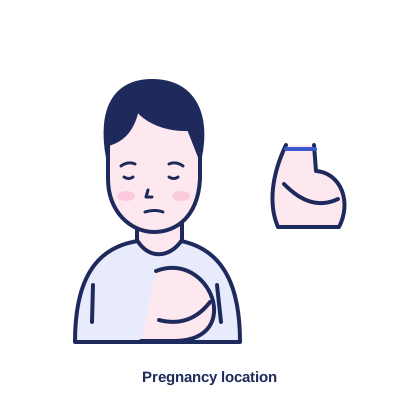
Pain, bleeding, and shoulder pain are the warning pattern
Light vaginal bleeding with pelvic pain can be an early sign. Severe one-sided pain, shoulder pain, dizziness, or fainting can mean internal bleeding.
Tubal damage raises risk
Past ectopic pregnancy, tubal surgery, pelvic inflammatory disease, certain sexually transmitted infections, smoking, infertility treatment, IUD pregnancy, and tubal ligation pregnancy can increase risk.
Diagnosis usually needs blood work and ultrasound
Clinicians usually use pregnancy testing, blood hCG, pelvic exam, and ultrasound together because no single home test can confirm the location.
02 · Care guidance
When to get help
Emergency help
- Call 911 or go to the nearest emergency department now if you might be pregnant and have severe one-sided abdominal or pelvic pain, shoulder pain, fainting, severe dizziness, heavy bleeding, or signs of shock.
- Do not wait for the pain to become unbearable if you are bleeding, feel faint, or have shoulder pain with possible pregnancy. Those can be signs of internal bleeding.
Get advice promptly
- Contact a clinician promptly if you might be pregnant and have spotting, new pelvic pain, pain with shoulder movement, or a history that raises ectopic pregnancy risk, even if the pain is mild.
- If you have been treated for a recent STI or pelvic inflammatory disease and now have pregnancy symptoms with pain or bleeding, you should be evaluated quickly.
If you are trying to conceive or have had a past ectopic pregnancy, tubal surgery, PID, or an IUD or tubal ligation failure, ask your clinician what follow-up or early pregnancy testing makes sense for you before symptoms start.
03 · Ectopic Pregnancy
Where the pregnancy is matters
Ectopic pregnancy means the pregnancy is growing outside the uterus, so it cannot continue normally.
In a typical pregnancy, the fertilized egg implants inside the uterus. In an ectopic pregnancy, it implants somewhere else, most often in a fallopian tube. It can also happen in the ovary, abdomen, or cervix.
Those locations are not built to stretch and support a growing pregnancy. That is why ectopic pregnancy cannot end in a healthy birth and why the main danger is bleeding and damage to nearby tissue if the pregnancy keeps growing.
- A positive test does not prove the pregnancy is in the uterus.
- Most ectopic pregnancies are in a fallopian tube.
- Bleeding inside the body can become life-threatening fast.
04 · Ectopic Pregnancy
Symptoms that can look mild at first
Early symptoms can resemble normal pregnancy, so new pain or bleeding is more important than the test alone.
Some people have no symptoms at first. Others notice missed periods, breast tenderness, or nausea, which can also happen in a normal early pregnancy. Later, light vaginal bleeding and pelvic pain may appear.
The pattern matters. One-sided pain, worsening pain, or pain with bleeding should be checked promptly. Shoulder pain, fainting, dizziness, or feeling weak can point to internal bleeding and should be treated as an emergency.
- Light bleeding can still be serious.
- One-sided pain is a common warning pattern.
- Shoulder pain can happen when blood irritates the diaphragm.
- Dizziness or fainting can mean significant blood loss.
05 · Ectopic Pregnancy
Risk factors that raise the odds
Anything that scars or changes the fallopian tubes can make ectopic pregnancy more likely.
Ectopic pregnancy often happens because the fallopian tubes have a problem, although sometimes no clear cause is found. Risk is higher after a previous ectopic pregnancy, tubal surgery, pelvic inflammatory disease, certain sexually transmitted infections, endometriosis, smoking, infertility treatment, pregnancy with an IUD in place, or pregnancy after a tubal ligation.
Chlamydia matters because it can spread to the uterus and tubes and lead to pelvic inflammatory disease. PID can scar the reproductive organs, and that scarring can increase the chance of ectopic pregnancy later.
- Past ectopic pregnancy raises future risk.
- Chlamydia and PID can damage the tubes.
- Pregnancy with an IUD or after tubal ligation is uncommon but needs quick evaluation.
- Risk factors do not confirm ectopic pregnancy.
06 · Ectopic Pregnancy
How doctors tell where the pregnancy is
The diagnosis usually needs more than one test because a home test cannot show the pregnancy’s location.
A clinician usually starts with a pregnancy test. If the test is positive, they may order blood hCG testing, do a pelvic exam, and use ultrasound to look for a pregnancy in the uterus.
Sometimes the answer is not immediate, especially very early in pregnancy. In that situation, follow-up testing matters. If the ultrasound does not clearly show a pregnancy in the uterus, repeating blood tests or imaging can help show whether the pregnancy is developing normally or needs urgent treatment.
- Home pregnancy tests do not locate the pregnancy.
- Blood hCG and ultrasound are usually needed.
- A pelvic exam can help find tenderness or a mass.
- Unclear results may require repeat testing.
07 · Ectopic Pregnancy
Treatment and why waiting can be dangerous
Treatment is meant to stop bleeding and protect your health, not to preserve the pregnancy.
An ectopic pregnancy needs treatment to stop damage to the organs. Depending on your condition and the pregnancy location, clinicians may use medicine or surgery to remove the ectopic tissue.
If the pregnancy has ruptured or there is heavy bleeding, emergency surgery may be needed. Waiting for severe pain is risky because rupture can happen after earlier mild symptoms. After treatment, follow-up matters until the clinician confirms the pregnancy tissue is resolving.
- Medicine or surgery may be used.
- Rupture can turn into a surgical emergency.
- Follow-up after treatment is important.
- Treatment cannot make an ectopic pregnancy viable.
08 · Ectopic Pregnancy
What this can mean for future pregnancies
Many people do become pregnant again later, but the next pregnancy may need earlier checks.
Having one ectopic pregnancy can raise the chance of another one, especially if the tubes are still damaged. That does not mean future pregnancy is impossible. Many people later have healthy pregnancies.
If you become pregnant again, tell the clinician early about the past ectopic pregnancy so the pregnancy location can be checked sooner. That earlier confirmation can reduce the chance that a new ectopic pregnancy is missed until symptoms become severe.
- Past ectopic pregnancy should be mentioned early in prenatal care.
- Early ultrasound may be used in the next pregnancy.
- Tubal health and STI prevention matter for future fertility.
09 · Ectopic Pregnancy
Why STI and PID history matters
Infections can matter because they can scar the tubes and make a later ectopic pregnancy more likely.
Chlamydia often has no symptoms, so a person can have it without knowing. If it spreads to the uterus and tubes, it can cause pelvic inflammatory disease. PID can cause scarring, and that scarring can increase the risk of ectopic pregnancy and infertility later.
Testing and treatment are important because antibiotics can cure chlamydia and treat many cases of PID, but they cannot undo damage that has already happened. If you have pelvic pain, bleeding, fever, or pain during sex after possible STI exposure, you need evaluation rather than watchful waiting.
- Chlamydia can be silent.
- PID can scar the reproductive organs.
- Antibiotics treat infection, but not existing scarring.
- Bleeding or pelvic pain after STI exposure needs evaluation.
10 · FAQ
Questions people ask
Can an ectopic pregnancy be saved if it is found early?
No. An ectopic pregnancy cannot develop into a healthy pregnancy because it is implanted outside the uterus. Finding it early still matters because treatment can prevent rupture, bleeding, and emergency surgery.
Can I have an ectopic pregnancy if I have no symptoms?
Yes. Some people have no symptoms at first or only normal early-pregnancy symptoms. That is why a pregnancy with unusual pain or bleeding should be checked, especially if you have risk factors.
Does spotting always mean ectopic pregnancy?
No. Spotting can happen for many reasons, including normal early pregnancy changes, miscarriage, or cervical irritation. But spotting with pelvic pain, dizziness, or a positive pregnancy test needs prompt medical evaluation.
If I have an IUD, is any pregnancy ectopic?
No, but pregnancy with an IUD in place is unusual and needs quick evaluation because ectopic pregnancy is one concern. If you think you are pregnant with an IUD, contact a clinician right away.
What is the difference between miscarriage and ectopic pregnancy?
Both can cause bleeding and cramping, but a miscarriage is a pregnancy loss from the uterus, while ectopic pregnancy is implantation outside the uterus. Only testing and ultrasound can tell the difference safely.
Why are shoulder pain and fainting such a big concern?
In ectopic pregnancy, shoulder pain can happen when internal bleeding irritates the diaphragm, and fainting can happen if blood loss lowers circulation. Those are emergency signs, not symptoms to watch at home.
11 · References
References and supporting evidence
These sources support the points identified below. Source checking is not clinical approval.
- S1: Ectopic PregnancyMedlinePlus / U.S. National Library of Medicine
Explains the definition and usual location of ectopic pregnancy.
- S2: Chlamydia InfectionsMedlinePlus / U.S. National Library of Medicine
Explains how chlamydia can lead to PID and tubal damage that raises ectopic pregnancy risk.
- S3: Pelvic Inflammatory DiseaseMedlinePlus / U.S. National Library of Medicine
Explains the link between PID-related scarring and later ectopic pregnancy risk.
General information, not a diagnosis. This guide is not a substitute for care from a qualified healthcare professional. For an emergency, call 911 in the US or your local emergency number. Illustrations are conceptual and are not diagnostic images.