
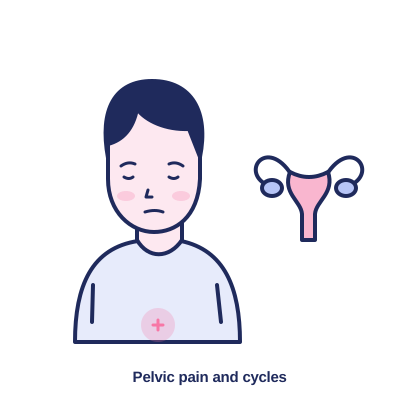
01 · Overview
The short version
The timing of pain matters
Pain that flares with periods, sex, bowel movements, or urination is a common clue. Keeping track of when it happens helps separate endometriosis from other causes of pelvic pain.
A scan can miss it
Ultrasound or MRI may help look for other problems, but a normal scan does not rule out endometriosis. Surgery is the only way to confirm it for sure.
Treatment is usually about control, not a cure
Pain relievers, hormone therapy, and sometimes surgery can reduce symptoms. Some people also need fertility treatment if pregnancy is a goal.
Pregnancy plus pain is a safety issue
One-sided pelvic pain, bleeding, dizziness, fainting, or shoulder pain with a possible pregnancy needs emergency evaluation because ectopic pregnancy can be life-threatening.
02 · Care guidance
When to get help
Emergency help
- Call 911 or go to the emergency department now for sudden severe pelvic or abdominal pain, fainting, shoulder pain with a possible pregnancy, heavy bleeding, or signs of shock.
- Get emergency help right away for one-sided pain with a positive pregnancy test, bleeding, dizziness, or fainting, because ectopic pregnancy can rupture and cause internal bleeding.
- Seek immediate care for severe abdominal pain with vomiting, bloating, and inability to pass gas, which can signal a bowel obstruction.
Get advice promptly
- Contact a clinician soon if your periods are becoming more painful, pain is affecting school, work, sex, or sleep, or you have bowel or bladder pain that flares with your cycle.
- Make an appointment if you have infertility concerns, pain after sex, heavy periods, or symptoms that keep returning despite over-the-counter pain relief.
If symptoms are mild and stable, keep a symptom diary with the date, bleeding, pain level, bowel or bladder symptoms, and what makes it better or worse, then bring it to a gynecology visit.
03 · Endometriosis
What endometriosis is, and where it can show up
Endometriosis is tissue like the uterine lining growing outside the uterus, which can irritate nearby organs and lead to pain, bleeding, and scarring.
Endometriosis happens when tissue similar to the lining of the uterus grows in places where it does not belong. Those patches are often called implants, nodules, or lesions. They are most often found on or under the ovaries, on the fallopian tubes, behind the uterus, on the tissues that hold the uterus in place, or on the bowels or bladder.
Because these patches can form in different places, symptoms can look different from person to person. Some people mainly notice period pain. Others feel pain during sex, pain with bowel movements or urination around their cycle, or a deep ache in the lower abdomen. Scar-like tissue, called adhesions, can also make organs stick together and contribute to pain or infertility.
- The disease can involve pelvic organs, bowel, or bladder.
- Scar-like adhesions can be part of the problem.
- Symptoms can involve more than one body system.
04 · Endometriosis
The symptom pattern that raises suspicion
The combination of cycle-linked pain, bleeding changes, fatigue, and fertility problems is often more useful than any single symptom.
The main symptoms of endometriosis are pelvic pain, painful menstrual cramps that may get worse over time, pain during or after sex, and infertility. Other possible symptoms include pain in the intestine or lower abdomen, pain with bowel movements or urination during your period, heavy periods, spotting or bleeding between periods, digestive symptoms, and fatigue or low energy.
Pain level does not always match how much disease is present. Some people with limited disease have severe pain, while others with more extensive disease have fewer symptoms. That is one reason a careful history matters. A clinician may ask when symptoms start, how long they last, whether they change with your cycle, and whether you have missed work, school, or sleep because of them.
- Track pain with the menstrual cycle.
- Note bleeding between periods or very heavy flow.
- Mention sex-related pain and infertility concerns.
05 · Endometriosis
When similar symptoms come from something else
Pelvic pain and bleeding are not specific to endometriosis, so the first step is to keep the differential broad.
Other problems can cause pain and bleeding that look a lot like endometriosis. Ovarian cysts, fibroids, pelvic inflammatory disease, bladder problems, bowel disorders, and pregnancy-related emergencies are all possible. Adhesions from prior surgery can also cause abdominal pain, bloating, vomiting, constipation, and bowel blockage.
That is why it helps to describe the pattern clearly. A fever, unusual discharge, a new pregnancy risk, one-sided pain, or sudden vomiting and bloating can shift attention away from endometriosis and toward a more urgent cause.
- Fibroids, cysts, and infection can overlap with endometriosis symptoms.
- Adhesions can cause bowel symptoms and sometimes infertility.
- Pregnancy-related emergencies must be considered if pregnancy is possible.
06 · Endometriosis
How the diagnosis is usually made
Diagnosis starts with your story, exam, and sometimes imaging, but laparoscopy is the only way to confirm endometriosis for sure.
A clinician will usually start by asking about your symptoms, your menstrual history, sex-related pain, bowel or bladder symptoms, and whether pregnancy is a concern. A pelvic exam may be done, and imaging tests may be used to look for other causes of pain or to find signs that support the diagnosis.
Normal imaging does not rule out endometriosis. The most common surgery used to diagnose it is laparoscopy, where a surgeon looks inside the abdomen with a small camera and may take a tissue sample. In some situations, treatment can begin based on symptoms even before surgery, especially if pain is affecting daily life.
- Bring dates and symptom notes to the visit.
- Ask what else could explain your pain.
- Tell the clinician if pregnancy or fertility is part of the picture.
07 · Endometriosis
Treatment choices, including fertility concerns
Care is usually aimed at easing pain, controlling symptoms, and matching treatment to your fertility goals.
There is no cure for endometriosis, but there are treatments for the symptoms. Common options include pain relievers such as nonsteroidal anti-inflammatory drugs, hormone therapy, and sometimes surgery. Hormone therapy can include birth control pills, progestin therapy, or medicines that stop the ovaries from making hormones. These medicines may slow the growth of endometrial tissue and may stop new areas from growing.
Some hormone medicines cause a temporary menopause while you are taking them, and periods usually start again after the medicine is stopped. Surgery may be used for severe pain or if other treatments do not help. For infertility, some people need laparoscopy to remove endometriosis patches, and some need in vitro fertilization. The right path depends on pain, age, where the disease is, and whether pregnancy is a near-term goal.
- Hormone treatment can reduce symptoms, but it is not a cure.
- Some medicines change ovulation and menstrual bleeding while you take them.
- Fertility treatment may be part of the plan if pregnancy is the goal.
08 · Endometriosis
When pelvic pain needs urgent care
Sudden severe pain, pregnancy-related symptoms, or bowel obstruction signs need immediate evaluation, not a wait-and-see approach.
Go to the emergency department right away for sudden severe pelvic or abdominal pain, fainting, shoulder pain with a possible pregnancy, heavy bleeding, or signs of shock. These symptoms can point to ectopic pregnancy or another emergency. Ectopic pregnancy cannot be diagnosed without blood tests and ultrasound, and it can become life-threatening if a fallopian tube bursts.
Get urgent care for severe abdominal pain with vomiting, bloating, constipation, and inability to pass gas. Adhesions can block the intestines, and a complete intestinal obstruction is life-threatening. If you look very ill, have a fever, or are too weak to stand, do not wait for a routine appointment.
- Pregnancy plus pain or bleeding is urgent.
- Bloating and inability to pass gas can signal bowel obstruction.
- Fainting or shoulder pain are emergency warning signs.
09 · FAQ
Questions people ask
Can endometriosis affect fertility even if I still get regular periods?
Yes. Regular periods do not rule it out. Endometriosis can make it harder to get pregnant in some people, partly because inflammation or adhesions can interfere with how eggs move and how pelvic organs work. Many people still conceive, but if pregnancy is a goal, it is worth bringing up early so the plan fits your timeline.
Is pain during or after sex a known symptom?
Yes. Pain with sex is a common symptom of endometriosis. It can happen because of lesions, inflammation, or scar-like tissue in the pelvis. If sex is painful, mention whether the pain is deep, during penetration, or afterward, because that detail can help guide the evaluation.
What should I write in a symptom diary?
Record the date, where the pain is, how bad it is, bleeding or spotting, bowel or bladder symptoms, pain with sex, and what you were doing when it started. It also helps to note whether symptoms line up with your cycle. That record gives your clinician a clearer picture than memory alone.
Can endometriosis come back after treatment?
Symptoms can return, especially after hormone treatment is stopped, because hormone therapy helps control symptoms rather than cure the disease. Surgery can also be followed by new symptoms later. If pain returns or changes, it deserves a fresh look instead of assuming the old plan still fits.
Do I need surgery right away if endometriosis is suspected?
Not always. Some people start treatment based on symptoms and exam before surgery is considered. Surgery is the only way to confirm the diagnosis for sure, but the next step depends on how severe your pain is, whether pregnancy is a concern, and whether other causes still need to be ruled out.
Should I worry about adhesions if I had prior abdominal surgery?
Prior abdominal surgery can lead to adhesions, which are bands of scar-like tissue that can make organs stick together. Some cause no problems, but others can cause pain, bloating, constipation, vomiting, or even bowel obstruction. If those symptoms are severe, they need urgent medical attention.
10 · References
References and supporting evidence
These sources support the points identified below. Source checking is not clinical approval.
- S1: EndometriosisMedlinePlus / U.S. National Library of Medicine
Explains the basic definition and location of endometriosis, plus related symptoms, diagnosis by history/exam with laparoscopy for confirmation, and treatment categories including pain relievers, hormone therapy, and surgery.
- S2: AdhesionsMedlinePlus / U.S. National Library of Medicine
Explains what adhesions are and that they can cause organs to stick together, sometimes leading to pain, vomiting, bloating, constipation, inability to pass gas, infertility, or bowel obstruction.
- S3: Ectopic PregnancyMedlinePlus / U.S. National Library of Medicine
Explains urgent ectopic pregnancy warning signs, the need for blood tests and ultrasound, and that ectopic pregnancy can become life-threatening if the tube bursts.
General information, not a diagnosis. This guide is not a substitute for care from a qualified healthcare professional. For an emergency, call 911 in the US or your local emergency number. Illustrations are conceptual and are not diagnostic images.