
01 · Overview
The short version
It starts at a hair follicle
Folliculitis is inflammation around a hair follicle. It can come from irritation, infection, or both, so a bump near a hair does not automatically mean a serious skin infection.
Several look-alikes can fit
Acne, ingrown hairs, boils, and friction bumps can look similar. The pattern, pain, and whether pus is present help narrow it down, but an exam may still be needed.
Gentle care matters
For small, mild bumps, warm compresses, loose clothing, and avoiding shaving over the area can help. Squeezing or scrubbing can push irritation deeper and raise the chance of scarring.
Worsening skin changes need care
Painful, spreading, or pus-filled bumps, or bumps with fever, may need prescription treatment or drainage if an abscess is forming.
02 · Care guidance
When to get help
Emergency help
- Call 911 or go to the ER now if you have rapidly spreading redness, severe swelling, fever with confusion, a large painful abscess on the face or near the spine, or signs of a serious allergic reaction such as trouble breathing or swelling of the lips or tongue.
Get advice promptly
- Contact a clinician promptly if the bumps are worsening after a few days of home care, are very painful, keep coming back, are on the beard area or scalp, or happen with diabetes, immune suppression, or a history of skin infections.
- Get urgent same-day care for a painful boil-like bump near the anus, genitals, or groin, because those problems can have different causes and may need faster treatment.
For mild, limited bumps, use gentle cleansing, avoid shaving or friction over the area, and watch for change over the next several days. If the rash keeps returning, a primary care clinician or dermatologist can help look for triggers and tailor treatment.
03 · Folliculitis
Where folliculitis starts and why that matters
The key question is whether the bump is simple irritation around a hair or a deeper infection that is building into a boil.
Hair grows from follicles, which are tiny openings in the skin. When one becomes inflamed, the skin can look like a red bump, a small whitehead, or a tender spot around a hair. Folliculitis can happen anywhere hair grows, including the scalp, beard area, chest, back, buttocks, and legs.
This matters because the next step is different for a mild surface problem than for a deeper infection. Some bumps settle with basic skin care and less friction. Others are deeper, more painful, and can become an abscess, which is a pocket of pus.
- A single bump does not always mean infection.
- A boil is usually deeper and more swollen than mild folliculitis.
- A worsening bump can mean a deeper skin infection.
04 · Folliculitis
What usually triggers it
Bacteria can be involved, but shaving, sweat, rubbing, and clogged pores can also set it off.
Folliculitis is not one single problem. It can happen when bacteria get into a small break in the skin. It can also follow shaving, heavy sweating, tight clothing, oily products, or repeated friction. That is why some people get it after sports, shaving, or wearing gear that rubs the skin.
The trigger matters because the fix depends on the cause. A bump caused by irritation may improve when the skin gets a break. A bacterial infection may need medical treatment, especially if the bumps keep spreading or returning.
- Shaving can irritate follicles and lead to ingrown hairs.
- Tight clothing and rubbing can keep bumps from healing.
- Repeated flares can point to a pattern that needs changing.
05 · Folliculitis
What the bumps can look and feel like
The appearance gives clues, but similar-looking bumps can come from different causes.
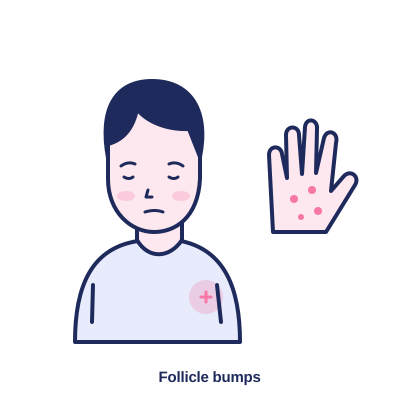
Mild folliculitis often looks like clusters of small red bumps or small whiteheads. The area may itch, sting, or feel a little sore. If the follicle is more inflamed, the skin can look puffier and hurt more to the touch.
That is why it helps to notice the pattern. Acne often comes with blackheads or whiteheads in oily areas. Ingrown hairs can show a trapped hair. Boils are deeper, larger, and more painful, and they can turn into abscesses.
- Centered around a hair follicle is a clue, not a final diagnosis.
- Drainage and increasing tenderness suggest stronger inflammation.
- Rapid growth means it may no longer be simple folliculitis.
06 · Folliculitis
Home care that helps mild cases settle
Gentle care can reduce irritation, but picking or harsh treatment can make the skin worse.
For small, mild bumps, wash the area gently with mild soap and water, then pat it dry. A warm compress can ease discomfort and may help a small bump drain on its own. It also helps to pause shaving until the skin calms down and to wear loose clothing if rubbing seems to be part of the problem.
Do not pick, squeeze, or scrub the bumps. That can spread bacteria, deepen inflammation, and leave scars. If a hair-removal product stings or seems to trigger new bumps, stop using it for now.
- Use warm, not hot, compresses.
- Keep razors, towels, and washcloths clean.
- Avoid squeezing or popping bumps.
07 · Folliculitis
When a prescription or drainage may be needed
More pain, spread, or repeat flare-ups are reasons a clinician may move beyond home care.
A clinician may suggest a topical antibiotic or another medicine if the bumps seem bacterial. If the infection is deeper, the problem may need drainage and sometimes oral antibiotics. The right treatment depends on whether the main issue is irritation, a surface infection, or an abscess.
It is not a good idea to start leftover antibiotics on your own. The wrong medicine can delay the right care, and not every rash-like bump is caused by bacteria.
- A large, fluctuant bump may be an abscess.
- Recurrent cases sometimes need a plan to reduce re-exposure.
- Antibiotics are not needed for every bump.
08 · Folliculitis
Why scalp, beard, and groin bumps deserve extra attention
These areas are high-friction and easy to irritate, so bumps there may keep coming back if the trigger stays in place.
Scalp folliculitis can be harder to notice because hair hides the bumps. If the scalp is itchy, sore, or crusted, pay attention to hats, helmets, hair products, and sweating. Beard-area bumps can be made worse by close shaving or dull blades.
In the groin or pubic area, folliculitis can be hard to tell from ingrown hairs, friction bumps, or other skin problems. Because the skin is sensitive and the area gets a lot of rubbing, persistent or painful bumps should be examined sooner.
- Pause shaving if the area is inflamed.
- Change sweaty clothes soon after exercise.
- Use gentle, fragrance-free skin products if products seem to irritate the skin.
09 · Folliculitis
How to reduce repeat flare-ups
Prevention is mostly about lowering irritation, moisture, and spread from shared items or skin-to-skin contact.
If folliculitis keeps returning, it helps to look for a pattern. Wash after heavy sweating when possible, avoid sharing razors or towels, and keep sports gear clean if it rubs the skin. If shaving seems to trigger bumps, use a careful technique and take breaks when the skin is inflamed.
A clinician may look for repeated friction, ongoing shaving irritation, or skin bacteria that keep coming back. That is often more useful than treating each flare the same way without finding the reason it returns.
- Replace dull razors.
- Shower soon after workouts when possible.
- Notice where flares happen so the trigger is easier to spot.
10 · Folliculitis
When the pattern is too concerning for home care
A bump that is spreading, feverish, or returning often needs a clinician to check whether it is an abscess or another condition.
A very large, very painful, or quickly growing bump may be a boil or abscess. A rash with many bumps in the same area can also come from acne, contact irritation, or another skin condition. If the same spot keeps coming back, it is worth an exam.
A clinician can look at the pattern, whether there is drainage, any shaving history, and whether fever is present. That helps separate a simple surface problem from a deeper infection that needs more than soap and warm compresses.
- Rapid growth changes the urgency.
- Fever raises concern for a deeper infection.
- An abscess may need drainage rather than creams alone.
11 · FAQ
Questions people ask
Is folliculitis contagious?
Sometimes the germ involved can spread by shared razors, towels, or skin contact, but many cases are more about irritation than person-to-person spread. Good hygiene matters, especially if there is drainage or an open sore.
Can folliculitis go away on its own?
Mild cases sometimes improve with gentle care, less friction, and time. If the bumps keep spreading, become painful, or do not start to settle after a few days, it is safer to get them checked.
How is folliculitis different from acne?
Folliculitis centers on a hair follicle and often looks like small, uniform bumps or pustules in hairy areas. Acne more often includes blackheads, whiteheads, and oily skin patterns, especially on the face, chest, and back.
When does folliculitis need antibiotics?
Antibiotics are more likely when a clinician thinks bacteria are driving the problem, especially if it is spreading, recurrent, or forming deeper infection. They are not needed for every bump, and the right type depends on the situation.
Can I use over-the-counter acne wash for folliculitis?
Sometimes a gentle acne-style cleanser may help some people, but strong products can irritate already inflamed skin. If the area burns, dries out badly, or gets worse, stop and ask a clinician which cleanser is appropriate.
Can folliculitis leave scars?
It can, especially if bumps are picked, squeezed, or become deeper infections. Avoiding manipulation and getting care when bumps are worsening can lower that risk.
12 · References
References and supporting evidence
These sources support the points identified below. Source checking is not clinical approval.
- S1: Hair ProblemsMedlinePlus / U.S. National Library of Medicine
Explains that hair and scalp problems can include infections, which fits the article's general scalp and hair-bearing-area context.
- S2: Bacterial InfectionsMedlinePlus / U.S. National Library of Medicine
Explains that bacteria can cause infections and that skin infections may spread into tissues, which supports cautious language about bacterial folliculitis and worsening skin infection.
- S3: AbscessMedlinePlus / U.S. National Library of Medicine
Explains the difference between a deeper pus-filled infection and milder bumps, and supports the article's guidance that a painful enlarging bump may need drainage and antibiotics.
General information, not a diagnosis. This guide is not a substitute for care from a qualified healthcare professional. For an emergency, call 911 in the US or your local emergency number. Illustrations are conceptual and are not diagnostic images.