
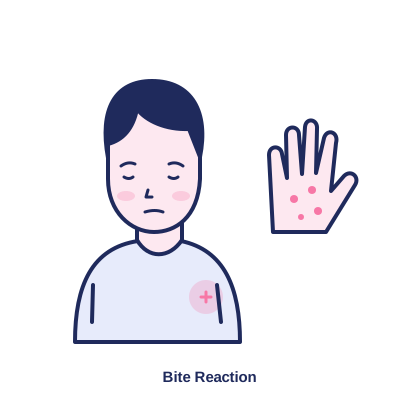
01 · Overview
The short version
Itch and pain point to different insects
Mosquito and flea bites usually itch. Bee, wasp, hornet, and fire ant bites or stings usually hurt more.
Swelling can be normal, but fast worsening is not
A small red bump or local swelling can happen after a bite. Trouble breathing, dizziness, or swelling of the face or throat can signal a severe allergic reaction and needs emergency help.
Not every rash is a bite
Hives, contact dermatitis, scabies, bedbugs, and other skin problems can look similar to an insect bite. A sore that gets hotter, drains pus, or keeps spreading may be infected.
Some bites can carry disease
Ticks, mosquitoes, and some other insects can spread infections. Fever, body aches, headache, or a new rash after exposure should be taken seriously, especially after travel.
02 · Care guidance
When to get help
Emergency help
- Call 911 now if a bite or sting is followed by trouble breathing, throat tightness, fainting, blue lips, or swelling of the tongue or face.
- Get immediate emergency care for sudden severe symptoms after a tick or mosquito exposure, chest pain, confusion, severe weakness, or signs of anaphylaxis.
- If a bite is on the genitals and there is sudden severe pain or swelling, or if severe belly pain comes with a possible insect-related illness during travel, seek urgent evaluation.
Get advice promptly
- Contact a clinician soon if redness is spreading, the area is getting warmer or more painful, there is pus, fever, red streaking, or the itching is severe enough to disturb sleep.
- Get prompt medical advice if you may have been exposed to ticks, if a rash expands over days, or if you were bitten while traveling and develop fever or body aches.
- Arrange an appointment if you often react strongly to bites, need repeated antihistamines, or are unsure whether the skin changes are from bites or another rash.
For a small, uncomplicated bite, clean the skin with soap and water, use a cold compress, avoid scratching, and watch for change over the next 24 to 48 hours. If bites keep happening at home, check for insects in bedding, pets, carpets, or outdoor areas.
03 · Insect Bites
Sorting out a simple bite from something else
The pattern of itch, pain, and how many spots appear can help, but the skin alone does not always tell the full story.
Many insect bites start as a small raised bump that becomes itchy within minutes or hours. Mosquito and flea bites usually fit that pattern. Bee, wasp, hornet, and fire ant stings are more likely to hurt right away. Some people also develop local swelling that looks dramatic but stays limited to the area around the bite.
The hard part is that several other skin problems can look similar. Hives, eczema, contact allergy, scabies, and bedbug bites can all leave red, itchy spots. If several people in the same home are itchy, the environment becomes important. If the rash keeps coming back or appears in places that do not fit a bite, the cause may be something else.
A single spot that keeps getting larger, more painful, or darker deserves more attention than a spot that slowly fades. That is because the skin may be reacting normally, or it may be irritated, infected, or misidentified.
- Itch without much pain often fits mosquito or flea exposure.
- Painful stings are more typical of bees, wasps, hornets, or fire ants.
- A rash that keeps spreading may not be a simple bite.
04 · Insect Bites
What to do for a mild bite at home
Clean the skin, cool it, and protect it from scratching so it can settle instead of turning into a longer problem.
For a small, uncomplicated bite, wash the skin with soap and water. That matters because clean skin is less likely to become infected if the area has been scratched. A cold compress can ease itching and swelling for short periods. Do not press hard or leave ice directly on the skin for a long time.
Scratching is one of the easiest ways to turn a minor bite into a bigger problem. It can break the skin and open the door to infection. Keeping nails short and using a plain moisturizer around, but not on, broken skin can help reduce extra irritation.
If you try an over-the-counter anti-itch product, stop if it burns or makes the redness worse. It is also reasonable to watch the spot for a day or two if symptoms are mild, since many bites improve on their own.
- Wash with soap and water.
- Use a cold compress for short periods.
- Avoid scratching or picking at the spot.
05 · Insect Bites
When swelling or itching is really an allergy problem
Trouble breathing, throat swelling, or fainting after a bite or sting is an emergency, not something to watch.
Some insect reactions stay local, but a severe allergic reaction can start quickly and involve the whole body. Warning signs include wheezing, trouble breathing, swelling of the lips, tongue, or throat, widespread hives, vomiting, dizziness, or passing out. These symptoms can get worse fast.
If a person has had anaphylaxis before, a clinician may have told them to carry an emergency epinephrine kit. Use it the way it was prescribed if serious symptoms begin, then get emergency help right away. Even if the symptoms improve after epinephrine, medical evaluation is still needed because symptoms can return.
- Breathing trouble after a sting is an emergency.
- Widespread hives with dizziness or throat swelling is high risk.
- A past severe reaction means future reactions can also be serious.
06 · Insect Bites
How to spot infection after scratching a bite
A bite that is getting warmer, more painful, or draining may need treatment for infection rather than more itch relief.
A bite can become infected when bacteria enter through scratching or broken skin. That is why a spot that used to mainly itch but now hurts more deserves closer attention. Signs include increasing redness, warmth, tenderness, swelling, or pus. Red streaks moving away from the area and fever are especially concerning.
Do not squeeze, pop, or pick at a bump that looks infected. That can push bacteria deeper into the skin and make the problem harder to treat. Keep the area clean and covered if it is open, and get medical advice if the redness is spreading or the pain is increasing.
Some skin infections need antibiotics, but not all red bumps do. The right treatment depends on what the clinician sees and whether there are signs that the skin infection is mild or more serious.
- Spreading redness or red streaks are warning signs.
- Pus and fever point more toward infection than simple irritation.
- Picking or squeezing can make infection more likely.
07 · Insect Bites
When a bite could be linked to an illness
Most bites do not spread serious disease, but fever or a new rash after insect or tick exposure should not be ignored.
Insects can spread disease. Some mosquitoes in the United States can spread West Nile virus, and travelers outside the United States may be at risk for malaria and other infections. A bite alone does not mean you are infected, but fever, body aches, headache, or a new rash after exposure should prompt medical advice.
Tick exposure deserves extra caution because tick-borne illness may start with vague symptoms that do not look dramatic at first. If you were in wooded, grassy, or brushy areas and then develop fever or a spreading rash, tell the clinician when and where the exposure happened. That timeline can matter more than the exact look of the skin spot.
If symptoms are severe, such as chest pain, confusion, or extreme weakness, emergency care is safer than waiting to see if the symptoms fade.
- Travel history changes the risk question.
- Fever after a bite is more concerning than itch alone.
- Tell the clinician where the exposure happened and when.
08 · Insect Bites
Why the insect type matters
Pain, itch, and the setting of the bite help narrow the cause, but a skin sore is not always a clear match.
People often use the word bite for any insect-related skin problem, but stings and bites are not the same. Bee, wasp, and hornet stings are usually painful because they inject venom. Mosquito and flea bites are usually itchy. Fire ant bites can hurt and may show up in clusters.
Spider bites are often blamed when the real cause is something else. A wound that becomes very painful, develops a blister or dark center, or worsens over time should be examined rather than assumed to be a spider bite. The appearance alone is not always enough to identify the cause.
- Painful stings and itchy bites often come from different insects.
- A worsening sore is not automatically a spider bite.
- Exposure history matters as much as appearance.
09 · Insect Bites
How to keep getting bitten less often
Repellent, protective clothing, and simple home checks can reduce repeat bites and make the next flare less likely.
Prevention starts with making yourself harder for insects to reach. Repellent and protective clothing help when you are outdoors, especially in places with a lot of insect activity. Food left out can attract insects, so being careful when eating outside also matters.
If bites keep showing up at home, look for clues in sleeping areas, pet bedding, carpets, and cracks around windows or baseboards. Repeat bites on waking up may point toward bedbugs, while bites around the ankles may suggest fleas. Finding and removing the source matters more than treating each itchy spot one at a time.
- Use repellent when you go outdoors.
- Wear long sleeves and pants when practical.
- Check bedding, pets, and carpets if bites keep happening at home.
10 · FAQ
Questions people ask
How long should a normal insect bite itch?
Many uncomplicated bites itch for a few days, and some linger longer if the skin keeps getting scratched. It should gradually improve, not keep spreading or getting more painful. If the area becomes hotter, more swollen, or starts draining, that is no longer a simple healing pattern.
Should I pop or squeeze an insect bite?
No. Squeezing can damage the skin and make infection more likely. If there is a blister, pustule, or crusted bump, leave it alone and keep the area clean. Get checked if the spot is getting larger, more painful, or looks infected.
Can I put ice directly on a bite?
A cold compress can help, but do not place ice directly on bare skin for a long time. Wrap it in a cloth and use it for short periods. This can reduce swelling and itching without risking skin injury from extreme cold.
Do all insect bites need antibiotics?
No. Antibiotics do not help ordinary itching or simple irritation. They are used only when a clinician thinks the skin has become infected or another bacterial problem is present. Most bites improve without them.
How do I know if it is a flea bite, mosquito bite, or something else?
The pattern can help, but it is not always certain. Mosquito bites often itch and can appear anywhere exposed skin is uncovered, while flea bites often show up on the ankles or lower legs. If many people in the home are itchy, think about the environment as well.
What symptoms after a tick bite are concerning?
Fever, body aches, headache, fatigue, or a rash that expands over days are worth prompt medical advice. Mention the tick exposure and when it happened. A tick bite that stays small and asymptomatic is less concerning, but new symptoms should not be ignored.
11 · References
References and supporting evidence
These sources support the points identified below. Source checking is not clinical approval.
- S1: Insect Bites and StingsMedlinePlus / U.S. National Library of Medicine
Explains the common pain-versus-itch pattern for different insect exposures and the general point that insects can spread disease.
- S2: Viral InfectionsMedlinePlus / U.S. National Library of Medicine
Explains that infections can be transmitted through insect bites, which supports caution about fever or new symptoms after exposure.
- S3: Bacterial InfectionsMedlinePlus / U.S. National Library of Medicine
Explains how bacterial infections can spread through damaged skin, which is relevant to bites that are scratched open and may become infected.
General information, not a diagnosis. This guide is not a substitute for care from a qualified healthcare professional. For an emergency, call 911 in the US or your local emergency number. Illustrations are conceptual and are not diagnostic images.