
01 · Overview
The short version
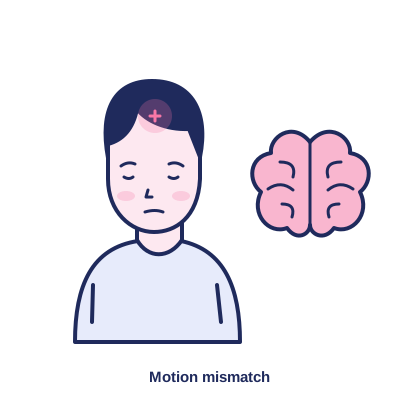
The problem is a signal mismatch
Motion sickness happens when the brain gets mixed messages from the eyes, inner ears, muscles, and joints. That is why reading or looking at a phone in a moving vehicle can make symptoms worse.
Symptoms can start fast
People often notice a queasy stomach first, then cold sweats, dizziness, nausea, and sometimes vomiting. Some people also feel unsteady or lightheaded.
Where you sit can matter
A smoother spot, like the front seat of a car, a forward train car, a higher boat deck, or a wing seat on a plane, may reduce symptoms for some people.
Other problems can look similar
Nausea and dizziness can also come from pregnancy, infections, migraines, dehydration, medicines, reflux, ulcers, bowel blockage, or inner-ear disorders.
02 · Care guidance
When to get help
Emergency help
- Call 911 or local emergency services now if dizziness or vomiting comes with trouble speaking, weakness, confusion, fainting, chest pain, a severe headache, stiff neck, or possible poisoning.
- Get emergency help right away for sudden or severe dizziness or vertigo with vision changes, slurred speech, or weakness because these can be signs of a stroke or another urgent problem.
Get advice promptly
- Contact a clinician promptly if you cannot keep fluids down, symptoms last longer than a day, you have repeated vomiting, you may be pregnant, or motion sickness is new or much worse than usual.
- Get urgent medical advice if you have severe belly pain, blood in vomit, dehydration signs such as dark urine or very little urination, or sudden vertigo with hearing changes.
For repeated motion sickness, ask a clinician or pharmacist about prevention options before travel, review whether any medicines may be contributing, and plan travel habits that reduce triggers.
03 · Motion Sickness
What motion sickness is doing to the body
Motion sickness is a real physical response to movement signals that do not match.
Motion sickness can happen in cars, buses, trains, airplanes, boats, and amusement rides. It can also show up when someone is reading a phone or book while moving. The brain is trying to sort out motion information from the eyes, inner ears, muscles, and joints, and symptoms can start when those signals disagree.
That mismatch is why symptoms can feel confusing. A person may first feel queasy or sweaty, then dizzy, then nauseated, and sometimes they vomit. Some people describe the feeling as lightheadedness, while others notice a spinning or rocking sensation. The label matters less than the pattern: it tends to happen with motion and gets better when the motion stops.
- A moving vehicle can trigger symptoms even if the ride seems normal to other people.
- Looking down at a close screen can be harder on the brain than looking into the distance.
- Symptoms can build as the trip continues.
04 · Motion Sickness
Who tends to get it more often
Some people are more sensitive to motion, but a new pattern can also point to another problem.
Anyone can get motion sickness, but it is more common in children, pregnant people, and people taking certain medicines. It can also show up more often in people who already get migraines or other dizziness problems. One person may only feel sick on rough roads or boat trips, while another may be fine in a car and sick on a plane.
Day-to-day factors can change how easy it is to trigger symptoms. Not sleeping enough, being dehydrated, smelling strong odors, or starting a trip with a very full stomach can make nausea easier to set off. That does not mean the cause is emotional. It means the body may already be more sensitive before the motion starts.
- Children are affected more often than adults.
- Pregnancy can make nausea easier to trigger.
- Some medicines and migraine history can raise the odds of dizziness or nausea during travel.
05 · Motion Sickness
What to change before and during the trip
Simple travel changes can lower the chance that symptoms start or worsen.
Seat choice can help. In a car, the front seat may feel smoother than the back. On a train, a forward car can be easier. On a boat, the upper deck may feel steadier. On a plane, a seat near the wing may feel less bouncy. These are not cures, but they can reduce the amount of motion the body has to handle.
What you look at matters too. Focusing on a faraway stable point can help your brain match what your body feels. Reading, gaming, or scrolling on a phone can do the opposite because your eyes are locked onto something close that does not move the way your body does. If you start to feel sick, stop the close-up task if you can and keep your head as still as possible.
- Look out at the horizon or another distant fixed point.
- Avoid reading or using a close screen if those usually trigger symptoms.
- Fresh air and avoiding strong smells may help some people.
06 · Motion Sickness
Food, fluids, and what to do after symptoms start
Mild symptoms may settle with small, simple changes, but vomiting shifts the focus to hydration.
If you know travel usually makes you sick, a lighter meal before the trip may be easier to tolerate than a heavy, greasy, or very spicy one. Some people do better with small, familiar foods than with a large meal before riding. Going completely hungry is not always better, because an empty stomach can also make nausea worse for some people.
If nausea has already started, the goal is to avoid making it worse. Small amounts of clear fluid are usually easier to manage than big drinks. Strong smells may be harder to tolerate, so moving away from food odors or fuel smells can help. If you begin vomiting, the priority is keeping up fluids, because dehydration can make dizziness and nausea worse.
- Choose bland foods if eating seems to help, not heavy or greasy foods.
- Use small sips if drinking feels difficult.
- Stop the motion trigger when possible, even for a short break.
07 · Motion Sickness
Prevention medicines and what to watch for
Some medicines can help, but the right choice depends on alertness, other medicines, and your health history.
Clinicians sometimes use medicines to help prevent motion sickness, especially when symptoms are predictable before travel. Some antihistamines and scopolamine are commonly discussed for this purpose. These medicines can help some people, but they can also cause sleepiness, dry mouth, blurred vision, constipation, or confusion in some situations.
Because of those side effects, these medicines are not a good fit for every trip or every person. They need extra caution if you are pregnant, older, or taking several other medicines. They also may not be a good idea if you must stay alert, such as when driving, traveling alone, or caring for a child. It is important not to mix products casually or use someone else's prescription patch or pills.
- Some prevention medicines can make you sleepy or less alert.
- Check for interactions if you already take medicines that cause drowsiness.
- Ask a pharmacist or clinician before using a new prevention plan, especially if the trip is important or long.
08 · Motion Sickness
When it may not be motion sickness
Nausea and dizziness outside travel, or with warning signs, need a broader look.
Motion sickness is only one cause of nausea and dizziness. Pregnancy, gastroenteritis, food poisoning, migraine, reflux, ulcers, bowel obstruction, dehydration, low blood pressure, some medicines, and inner-ear problems can all cause similar symptoms. Vertigo is a different feeling from general dizziness: it is the sense that you or the room is spinning, and it can also come with hearing changes or balance trouble.
The pattern gives important clues. If nausea happens when you are not moving, if it lasts a long time, or if it comes with severe belly pain, a severe headache and stiff neck, blood in the vomit, or signs of dehydration, it should not be treated as simple motion sickness. Sudden severe dizziness with weakness, slurred speech, or vision problems needs emergency care because it may be a stroke or another urgent problem.
- Symptoms outside travel deserve a wider evaluation.
- Hearing changes with vertigo point away from simple motion sickness.
- Weakness, speech trouble, or confusion are emergency warning signs.
09 · Motion Sickness
When to get medical help
Get help sooner if the pattern is new, severe, or mixed with warning signs.
A clinician should hear about motion sickness if it is new, getting worse, or affecting work, school, driving, or travel. You may need help choosing a prevention plan or checking whether another condition is contributing. This matters even more if you might be pregnant, because treatment choices need extra care.
Vomiting that continues for more than 24 hours, not being able to keep fluids down, or having signs of dehydration should not be ignored. A visit may include questions about when symptoms start, what triggers them, your medicines, and whether there are related symptoms such as ear ringing, headache, abdominal pain, or neurologic changes. That helps separate motion sickness from a stomach illness, an inner-ear problem, or something more urgent.
- Bring a list of all medicines and supplements.
- Be ready to describe exactly when symptoms happen and what seems to trigger them.
- Seek emergency care for stroke-like symptoms or possible poisoning.
10 · FAQ
Questions people ask
Why does looking at a phone make motion sickness worse?
A close screen can make the eyes focus on something that seems still while the body and inner ears sense movement. That mismatch can confuse the brain and trigger nausea, dizziness, or sweating. Looking into the distance usually helps because it gives the brain a steadier motion signal.
Is vertigo the same as motion sickness?
No. Motion sickness is usually tied to travel or other motion, while vertigo is the feeling that you or the room is spinning. They can overlap, but vertigo also has other causes, including inner-ear disorders and some neurologic problems. If spinning happens without travel, it deserves a medical check.
Can children get motion sickness?
Yes. Children can get motion sickness, and it is more common in children than in adults. Seat choice, looking outside, and avoiding screens can help, but medicine choices for children should be discussed with a pediatric clinician or pharmacist because not every product is appropriate for every age.
Should I be worried if I feel sick after a boat ride?
Seasickness is a common type of motion sickness, and symptoms often improve after the motion stops. But if vomiting is severe, you cannot keep fluids down, or the symptoms are unusual for you, it is worth getting medical advice. That helps prevent dehydration and makes sure something else is not causing the problem.
What should I bring up if I see a clinician for this?
Tell them when the symptoms happen, what kind of motion triggers them, whether you have vomiting or vertigo, and whether you have started any new medicine. A medication list matters because some medicines can contribute to dizziness or nausea, and the visit may focus on finding the cause rather than only treating the symptoms.
Does motion sickness always mean something is wrong with my inner ear?
No. Motion sickness usually comes from a mismatch between what your eyes, inner ears, and body are sensing during movement. Inner-ear problems can also cause dizziness or vertigo, but they are not the same thing. If symptoms happen outside travel or come with hearing changes, a broader evaluation is more important.
11 · References
References and supporting evidence
These sources support the points identified below. Source checking is not clinical approval.
- S1: Motion SicknessMedlinePlus / U.S. National Library of Medicine
Explains the basic cause of motion sickness as a mismatch between movement signals from the eyes and inner ear/body.
- S2: Nausea and VomitingMedlinePlus / U.S. National Library of Medicine
Lists common non-motion-sickness causes of nausea and vomiting and supports the need to think broadly when symptoms are not tied to travel.
- S3: Dizziness and VertigoMedlinePlus / U.S. National Library of Medicine
Explains the difference between dizziness and vertigo and supports the article's cautions about spinning symptoms and other dizziness causes.
General information, not a diagnosis. This guide is not a substitute for care from a qualified healthcare professional. For an emergency, call 911 in the US or your local emergency number. Illustrations are conceptual and are not diagnostic images.