
01 · Overview
The short version
Pollen is the usual trigger
Seasonal allergies happen when the immune system reacts to airborne pollen from trees, grasses, or weeds. Symptoms often return in the same season each year.
Itching and sneezing point toward allergies
Itchy eyes, itchy nose, repeated sneezing, and a clear runny nose fit allergies better than a viral infection. Fever and body aches are less typical.
Breathing symptoms are a different level of concern
Wheezing, chest tightness, and shortness of breath can mean asthma or a serious allergic reaction, not just simple nasal allergies.
Some medicines need extra caution
Over-the-counter allergy medicines can still cause drowsiness or dryness, and decongestants are not a fit for everyone, especially people with certain medical conditions or pregnancy.
02 · Care guidance
When to get help
Emergency help
- Call 911 or local emergency services now if symptoms include trouble breathing, swelling of the lips or tongue, fainting, severe wheezing, blue lips, confusion, chest pain, or a rapid worsening reaction.
- Get emergency help right away for signs of anaphylaxis after exposure to a sting, food, medicine, or other trigger.
Get advice promptly
- Contact a clinician soon if symptoms last through most of the season, disrupt sleep or school/work, or do not improve with standard over-the-counter treatment.
- Get medical advice if you have frequent sinus pressure, repeated ear pain, asthma symptoms, or you are not sure whether this is allergies, a cold, or something else.
For mild, predictable symptoms, start with exposure reduction and symptom relief. If symptoms keep coming back, a primary care clinician or allergist can help decide whether testing or longer-term treatment makes sense.
03 · Seasonal Allergies
Why pollen can make you feel sick without an infection
Seasonal allergies are an immune reaction to outdoor allergens, most often pollen.
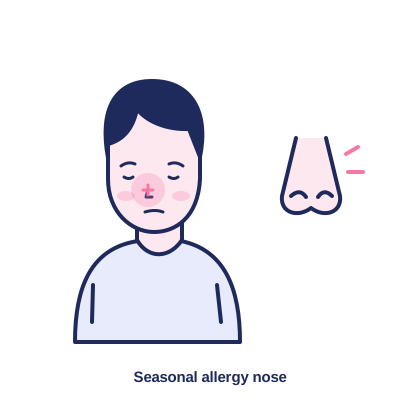
Seasonal allergies, also called hay fever or seasonal allergic rhinitis, happen when your immune system treats harmless pollen like a threat. That false alarm can irritate the nose, eyes, throat, and sometimes the lungs. The result is usually sneezing, clear drainage, itching, and congestion rather than a body-wide illness.
Tree pollen often shows up earlier in the year, grass pollen later in spring and summer, and weed pollen in late summer and fall. The exact season depends on where you live, but the pattern is often the clue. If symptoms rise and fall with the calendar, pollen becomes more likely than a random cold.
- Pollen is a common airborne trigger.
- Symptoms often repeat during the same months each year.
- Allergies can affect more than one body part at once.
04 · Seasonal Allergies
The pattern that fits allergies best
Itching and repeated sneezing point more toward allergies than a simple cold.
Common seasonal allergy symptoms include sneezing, a clear runny nose, nasal congestion, itchy or watery eyes, itchy nose or throat, and postnasal drip. Some people also notice fatigue, poor sleep, or a dull pressure feeling in the face when the nose stays blocked for a while.
What matters is the pattern. Allergy symptoms often come on around the same time each year and are worse after outdoor exposure, yard work, or windy days. They may linger as long as the pollen stays in the air. A cold usually feels different because it is more likely to bring fever, body aches, sore throat, or that overall sick feeling.
- Itching is a strong clue for allergies.
- Clear nasal drainage is more typical than thick mucus.
- Fever and body aches point more toward infection.
05 · Seasonal Allergies
When it is not just seasonal allergies
Not every stuffy, sneezing nose is a seasonal allergy.
A cold or flu can cause congestion and runny nose, but these infections usually come with fever, body aches, sore throat, or a more general sense of being sick. Irritants such as smoke, strong odors, pollution, or dry air can also inflame the nose without a true allergy. One example is nonallergic rhinitis, where the nose reacts but the immune system allergy pathway is not the main issue.
Sinus infection, medication side effects, and structural problems inside the nose can also make breathing through the nose difficult. If blockage is severe on one side, if symptoms stay longer than expected, or if the story does not fit a seasonal pattern, it is worth looking beyond pollen.
- Infection often brings fever or body aches.
- Irritants can mimic allergy symptoms.
- One-sided or persistent blockage deserves attention.
06 · Seasonal Allergies
How to lower pollen exposure without putting life on hold
Less exposure usually means fewer symptoms.
You cannot avoid every pollen exposure, but you can often cut down how much gets into your eyes, nose, hair, clothes, and home. Keeping windows closed on high-pollen days, using air conditioning when possible, and showering or changing clothes after time outside can help remove pollen before it spreads around the house.
A nasal saline rinse can wash pollen out of the nose after being outdoors, which matters because pollen sitting on the lining of the nose can keep symptoms going. Sunglasses may help reduce eye irritation, and planning outdoor exercise for times when pollen is lower may also make a difference.
- Shower after outdoor exposure.
- Change clothes before spending time indoors or in bed.
- Use simple cleaning steps to keep pollen from building up.
07 · Seasonal Allergies
Which treatments match which symptoms
The right medicine depends on your main symptom and how often it happens.
People often use non-sedating antihistamines, nasal steroid sprays, saline rinses, or eye drops for seasonal allergies. These are not all doing the same job. Antihistamines help with histamine-driven symptoms like sneezing and itching. Nasal steroid sprays reduce swelling and congestion over time. Eye drops may help when itching and tearing are the biggest problem.
Over-the-counter products can still cause sleepiness, dry mouth, or trouble with tasks that need alertness. Decongestants may raise blood pressure and cause jitteriness, and they may not be a good choice for people with high blood pressure, heart disease, glaucoma, prostate problems, or pregnancy. Because combination products can hide more than one active ingredient, reading the label matters.
- Choose treatment based on the symptom you want to target.
- Check labels so you do not double up on ingredients.
- Decongestants are not appropriate for everyone.
08 · Seasonal Allergies
When testing or longer-term treatment is worth discussing
Testing can help identify triggers when symptoms are frequent or hard to control.
If symptoms show up most years or you cannot tell what is setting them off, a clinician may suggest allergy testing. Skin tests or blood tests can help identify specific triggers such as tree, grass, or weed pollen. That information can guide avoidance steps and treatment choices, especially when symptoms are affecting sleep, school, or work.
For some people, allergy shots or another form of immunotherapy may reduce symptoms over time. These treatments are usually considered when allergies are persistent, clearly identified, and not well controlled with standard medicines or avoidance measures. They are a medical plan, not a quick fix, and they are usually managed by an allergy specialist.
- Testing is most useful when symptoms follow a clear pattern.
- Long-term control is worth discussing when symptoms keep breaking through.
- Immunotherapy takes planning and follow-up.
09 · Seasonal Allergies
When breathing changes the situation
Nasal allergy symptoms and breathing trouble are not the same problem.
Some people with allergies also have asthma, and pollen can trigger coughing, wheezing, or chest tightness. If breathing gets harder during allergy season, do not assume it is only congestion. A clinician may need to check whether asthma treatment is needed or whether another problem is contributing.
A severe allergic reaction, called anaphylaxis, is an emergency and can include swelling, trouble breathing, dizziness, or collapse. Seasonal allergies themselves usually do not cause anaphylaxis, but severe reactions can happen after stings, foods, or medicines. Any sudden severe reaction needs immediate emergency care.
- Wheezing or shortness of breath needs prompt evaluation.
- Swelling of the tongue or throat is an emergency.
- Sudden severe reactions should be treated as emergencies.
10 · Seasonal Allergies
What to bring up at a visit
Good timing and a short symptom record can make the visit more useful.
If seasonal symptoms are predictable and mild, starting preventive steps before your usual season begins may help. If you are not sure whether your symptoms fit allergies, jotting down when they start, what makes them worse, and whether itching is present can help a clinician see the pattern more clearly.
It is also reasonable to seek care sooner if over-the-counter products make you too sleepy, do not help, or seem to make symptoms worse. Bring a list of everything you take, including medicines and supplements, because that can affect which treatment is safest.
- Track timing, triggers, and symptom pattern.
- Bring a full medicine list to the visit.
- Ask whether testing or a stronger long-term plan would help.
11 · FAQ
Questions people ask
Why do seasonal allergies seem worse at night or in the morning?
Pollen can collect on hair, skin, clothing, and bedding during the day, then bother you later when you lie down or wake up. Indoor allergens can add to the problem, too. Showering after being outside, changing clothes, and keeping the sleeping area cleaner can reduce the buildup.
Can seasonal allergies cause a cough?
Yes, a cough can happen when postnasal drip from nasal inflammation irritates the throat. But coughing can also come from asthma, infection, reflux, or other causes. If the cough is frequent, worsening, or linked with wheezing, it should be checked.
Why are my eyes so itchy during pollen season?
Pollen can irritate the surface of the eyes and trigger an allergic response. That can cause itching, redness, tearing, and a gritty feeling. Rinsing pollen off after being outdoors and using allergy-friendly eye treatments may help.
Can I keep exercising outdoors if I have seasonal allergies?
Often yes, but it helps to think about timing and symptom control. Some people feel better exercising when pollen counts are lower, such as after rain or later in the day, and showering afterward can remove pollen. If exercise triggers coughing, wheezing, or chest tightness, get medical advice because asthma may be involved.
Do allergy shots work for seasonal allergies?
They can help some people with confirmed allergies that are frequent or hard to control. Allergy shots are a long-term treatment plan, not a quick fix, and they are usually managed by an allergy specialist. Whether they are worthwhile depends on your symptoms, triggers, and goals.
When should I see a clinician instead of just trying another OTC product?
Seek care if symptoms last through most of the season, disrupt sleep or daily life, do not improve with standard over-the-counter treatment, or keep happening in the same pattern every year. A clinician can help decide whether the problem is seasonal allergies, another kind of rhinitis, asthma, or a sinus issue.
12 · References
References and supporting evidence
These sources support the points identified below. Source checking is not clinical approval.
- S2: AllergyMedlinePlus / U.S. National Library of Medicine
Explains that allergies are immune reactions and gives the general basis for why pollen can trigger seasonal symptoms. Explains the symptom range used in the guide, including nose, eye, and breathing-related allergy symptoms. Explains why sudden severe swelling, trouble breathing, dizziness, or collapse are treated as emergencies. Explains the broad treatment categories used in the guide: avoidance, medicines, and immunotherapy.
- S3: Flu ShotMedlinePlus / U.S. National Library of Medicine
Supports the distinction that some respiratory symptoms may come from flu and that higher-risk groups merit closer medical attention; the guide uses this cautiously when discussing non-allergy illness patterns.
General information, not a diagnosis. This guide is not a substitute for care from a qualified healthcare professional. For an emergency, call 911 in the US or your local emergency number. Illustrations are conceptual and are not diagnostic images.