
01 · Overview
The short version
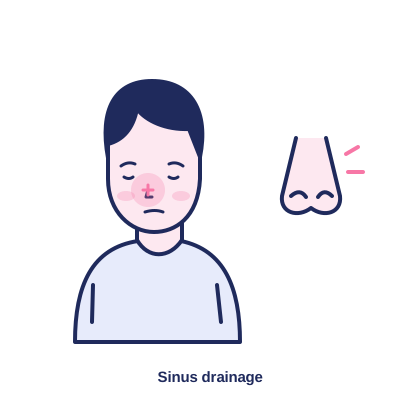
Sinusitis is swelling plus blocked drainage
The sinuses are air spaces around the nose. When the lining swells, mucus cannot drain well and pressure, pain, and congestion can build.
Timing helps separate short illness from longer problems
Symptoms that improve in a few days may fit a viral illness. Symptoms that last, return, or worsen after improving need closer attention.
Home care can ease many mild cases
Saline spray, fluids, rest, heat, and a humidifier may reduce pressure and help mucus move, but they do not replace care for severe or persistent symptoms.
Eye and brain warning signs need urgent care
Trouble breathing, swelling around the eye, vision changes, confusion, stiff neck, or a very ill appearance should not be watched at home.
02 · Care guidance
When to get help
Emergency help
- Call 911 or local emergency services now if you have trouble breathing, swelling of the eye or face with vision changes, confusion, severe weakness, or you look or feel seriously ill.
- Get emergency care for sudden severe headache, stiff neck, high fever with a rash, or signs of a severe allergic reaction such as lip or tongue swelling.
Get advice promptly
- Contact a clinician promptly if sinus symptoms last more than 10 days without improvement, get worse after improving, keep returning, or come with fever, thick drainage, or facial pain that is not easing.
- Reach out soon if you have asthma, a weakened immune system, diabetes, or a history of sinus surgery and your symptoms are changing.
If symptoms are mild and you are otherwise well, start with supportive care and watch for improvement over the next several days. If they linger, ask a primary care clinician, urgent care clinician, or ENT specialist for guidance.
03 · Sinusitis
What sinusitis actually is
Sinusitis is inflammation in the sinuses that blocks drainage, not just a feeling of pressure.
Your sinuses are hollow air spaces in the bones around the nose. They make mucus that normally drains into the nose. When the lining inside those spaces swells, drainage slows down and pressure can build. That is sinusitis. The swelling can come from a virus, allergies, nasal problems, or certain diseases, so the cause is not always an infection.
People often say “sinus infection” for any sinus problem, but that wording can hide the real issue. A short run of congestion after a cold is not the same as months of ongoing swelling. One person may need time and home care, while another may need treatment for allergies, a structural problem, or a bacterial infection.
- Swelling blocks the normal flow of mucus.
- Pressure can build even when the cause is not bacterial.
- The same symptoms can come from more than one problem.
04 · Sinusitis
Signs that point toward sinusitis, and signs that point elsewhere
Congestion plus pressure, drainage, and reduced smell are common, but they overlap with colds, allergies, and dental problems.
Typical symptoms include nasal congestion, thick or discolored mucus, postnasal drip, facial pressure, headache, cough, fatigue, and sometimes fever. Some people also notice bad breath. That can happen because mucus and mouth breathing change the way the mouth feels and smells. Symptoms may feel worse when bending forward or lying down.
These symptoms are not unique to sinusitis. A cold, seasonal allergies, migraine, dental problems, or dry air can overlap. Colored mucus alone does not prove a bacterial infection. Fever and weakness can happen with infection, but they do not settle the question by themselves.
- Sneezing, itching, and a clear runny nose lean more toward allergies.
- Bad breath can come from sinus drainage, but dental and mouth causes are also common.
- A headache by itself does not prove the sinuses are the source.
05 · Sinusitis
Why the length of symptoms changes the meaning
The time course helps separate a short episode from chronic or recurring sinusitis.
Clinicians often describe sinusitis by how long it lasts. Acute sinusitis lasts up to 4 weeks. Subacute sinusitis lasts 4 to 12 weeks. Chronic sinusitis lasts more than 12 weeks. Recurrent sinusitis means several separate attacks in a year. These labels matter because the likely cause and treatment approach can change with time.
A short episode after a cold is often different from long-lasting sinus inflammation caused by allergies, nasal structure problems, or another ongoing condition. If symptoms keep returning, the goal is not only to calm the current flare. It is also to look for reasons the sinuses keep getting blocked.
- Up to 4 weeks is acute.
- 4 to 12 weeks is subacute.
- More than 12 weeks is chronic.
06 · Sinusitis
What can set it off or keep it going
Anything that swells the nose or blocks drainage can start or prolong sinusitis.
Many cases start with a viral cold that inflames the nose and sinuses. Allergies can also swell the lining and block drainage. Other causes include nasal polyps, a deviated septum, smoke exposure, and some long-term health conditions. In some people, sinus symptoms are caused by a mix of problems rather than one single trigger.
Bacterial sinusitis can happen after drainage is blocked, but not every flare is bacterial. That is why clinicians ask how long symptoms have lasted, whether they improved and then worsened, and whether you have had repeated episodes. If allergies are part of the picture, treating the allergic inflammation can matter just as much as treating the pressure.
- Colds can start the swelling.
- Allergies can keep the lining inflamed.
- Anatomy and smoke can make drainage harder.
07 · Sinusitis
How clinicians sort out routine sinusitis from something else
History and exam do most of the work, and imaging is reserved for selected cases.
A clinician usually starts with your symptom history and an exam of the nose and face. They may ask how long symptoms have lasted, whether they improved and then returned, whether you have fever or dental pain, and whether you have allergy symptoms. They may also look for swelling, tenderness, drainage, or signs of another problem.
Imaging tests are sometimes used, especially for severe, repeated, or chronic cases, or if symptoms do not fit a simple infection. A test is not always needed for routine cases. If your symptoms are unusual, one-sided, or linked to vision changes, severe headache, or swelling around the eye, that changes the urgency and the workup.
- The exam matters more than any one symptom.
- Imaging is not automatic for routine sinusitis.
- Severe or unusual symptoms change the plan.
08 · Sinusitis
What can help at home, and when medicine enters the picture
Supportive care can ease mild symptoms, but it should not delay care for warning signs or prolonged illness.
Supportive care can include saline nasal spray or rinse, drinking enough fluids, rest, and warm compresses over painful areas. These steps may ease swelling and help mucus move. Heat pads and a humidifier or vaporizer can also make symptoms feel less intense for some people. Pain relievers may help with headache or facial discomfort if they are safe for you to take.
Clinicians may recommend antibiotics in certain cases, especially when a bacterial infection is suspected. Decongestants or other medicines may sometimes be used, but they are not appropriate for everyone. Ask a clinician or pharmacist before using over-the-counter products if you are pregnant, have high blood pressure, heart disease, glaucoma, prostate problems, or are caring for a child, since some medicines are not safe or are not recommended at certain ages. Do not stop prescribed medicines on your own without medical advice.
- Saline and fluids may help mucus drain.
- Warm compresses and heat can ease pressure.
- OTC cold and sinus products are not one-size-fits-all.
09 · Sinusitis
When the real issue may be allergies, a mouth problem, or repeated blockage
Repeated sinus symptoms often need a broader search for the cause than infection alone.
Allergies can cause a runny nose, sneezing, itching, congestion, and swelling that make sinus drainage worse. If those symptoms are a major part of your pattern, treating the allergy may reduce sinus flares. People can also have multiple sensitivities, so the trigger may not be obvious right away.
Bad breath, mouth dryness, or pressure in the face does not always mean infection. Dental disease, dry air, smoking, and mouth breathing can overlap with sinus symptoms. If episodes are frequent or long-lasting, a clinician may look for nasal shape problems, polyps, or other reasons the sinuses are not draining well. That helps guide treatment beyond short-term symptom relief.
- Allergies can keep the nose swollen.
- Dental and mouth problems can mimic sinus symptoms.
- Recurring symptoms may need a search for blockage or inflammation.
10 · Sinusitis
When sinus symptoms need faster medical attention
Eye symptoms, neurologic symptoms, and worsening illness are the main reasons not to wait.
Get urgent help if you have swelling around the eye, double vision, trouble moving the eye, severe headache, confusion, stiff neck, or a very high fever with a toxic or very ill appearance. These symptoms can signal spread beyond the sinuses or a different serious problem.
Seek prompt medical care if your symptoms last more than 10 days without improving, get worse after seeming better, or come back often. Also check in sooner if you have diabetes, a weakened immune system, or severe facial pain. The goal is to avoid waiting too long when the pattern suggests a complication or a non-routine cause.
- Eye changes are an emergency concern.
- A worse-after-better pattern matters.
- Long-lasting or repeated symptoms deserve evaluation.
11 · FAQ
Questions people ask
Why does bending forward make sinus pressure worse?
Bending forward can make trapped pressure and mucus feel more noticeable in the inflamed sinuses. That sensation is common, but it is not proof of a bacterial infection. If the pain is severe, one-sided, or tied to eye swelling or vision changes, the reason needs urgent attention rather than simple home treatment.
Can sinusitis cause bad breath?
Yes, it can. Postnasal drip and mouth breathing can change the way breath smells. That said, bad breath also commonly comes from the mouth itself, including gum disease, dry mouth, cavities, or poor brushing and flossing. If bad breath is the main issue, a dental cause needs to be considered too.
Do yellow or green mucus colors mean I need antibiotics?
No. Thick or colored mucus can happen with viral illness, allergies, or bacterial infection. Color alone does not tell you which one it is. The more useful clues are how long symptoms have lasted, whether they worsened after improving, and whether you also have fever or significant facial pain.
Is chronic sinusitis just a longer cold?
Not usually. Chronic sinusitis lasts more than 12 weeks and often points to ongoing inflammation or repeated blockage rather than a single short infection. A clinician may look for allergies, nasal polyps, or structural problems when symptoms keep coming back or never fully clear.
Can allergies and sinusitis happen at the same time?
Yes. Allergies can swell the nose and block drainage, which can trigger sinus symptoms at the same time. If sneezing, itching, and a clear runny nose are common for you, allergy treatment may be an important part of preventing repeat sinus flares.
When should I stop treating this as a simple cold?
If symptoms last more than 10 days without improving, get worse after a brief improvement, or keep returning, the pattern is less like a simple cold. Fever, facial pain that is not easing, or thick drainage that keeps going also make a closer look more important.
12 · References
References and supporting evidence
These sources support the points identified below. Source checking is not clinical approval.
- S1: SinusitisMedlinePlus / U.S. National Library of Medicine
Explains the basic definition of sinusitis and that it can come from infection or noninfectious causes. Supports the time-based categories used to distinguish acute, subacute, and chronic sinusitis. Supports listing common symptoms such as congestion, cough, fatigue, weakness, and fever. Supports the statement that history and physical exam are the main tools for diagnosis. Supports that imaging may be used in selected cases rather than for every patient. Supports that medicine options may include antibiotics, decongestants, and pain relievers in appropriate cases. Supports the home-care measures of heat, saline spray, and vaporizers for symptom relief.
- S2: AllergyMedlinePlus / U.S. National Library of Medicine
Supports the allergy-related symptom pattern used to distinguish allergies from sinusitis.
- S3: Bad BreathMedlinePlus / U.S. National Library of Medicine
Supports that sinus or nasal problems can contribute to bad breath.
General information, not a diagnosis. This guide is not a substitute for care from a qualified healthcare professional. For an emergency, call 911 in the US or your local emergency number. Illustrations are conceptual and are not diagnostic images.