
01 · Overview
The short version
Most nosebleeds start where the nose is easiest to dry out
The lining inside the nose helps warm and moisten air, so it can get irritated quickly. Dry rooms, colds, allergies, nose picking, and rough blowing are common reasons small vessels break.
Forward position and steady pressure are the main first-aid steps
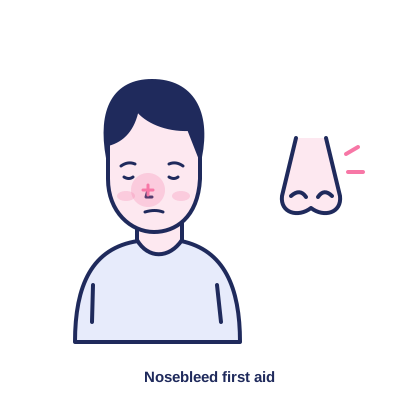
Sit upright, lean slightly forward, and pinch the soft part of the nose below the bony bridge. That keeps blood from running down the throat and gives the clot a chance to form.
Heavy or hard-to-stop bleeding needs faster help
A nosebleed that stays heavy or does not slow after repeated firm pressure, or one with faintness, weakness, trouble breathing, or serious injury, should be treated as urgent.
Repeat episodes can point to medicines or a body-wide problem
Frequent nosebleeds are sometimes tied to blood thinners, aspirin-type medicines, clotting problems, or liver disease. Easy bruising or bleeding from other places makes that more important to check.
02 · Care guidance
When to get help
Emergency help
- Seek emergency care right away if the bleeding is heavy and does not slow after repeated firm pressure, or if the person feels faint, has trouble breathing, seems very weak, or has other signs of serious illness or injury.
- Get emergency help right away for a nosebleed after a serious head or facial injury, or if there is blood plus signs of stroke, severe illness, or a major allergic reaction.
Get advice promptly
- Contact a clinician soon if nosebleeds happen often, last a long time, follow a new medicine change, happen on both sides repeatedly, or come with easy bruising or other unexplained bleeding.
- Arrange prompt care if you have high blood pressure that is not controlled, known liver disease, or a bleeding disorder and you start having new or worse nosebleeds.
If the bleeding stops and you feel well, focus on prevention: humidify dry indoor air, avoid nose picking, and use gentle saline or clinician-recommended nasal moisturizing care if it is safe for you.
03 · Nosebleeds
What a nosebleed usually is, and why it looks worse than it is
A nosebleed is bleeding from inside the nose, usually from a small irritated area near the front.
A nosebleed happens when blood vessels inside the nose break and leak blood. The nose is lined with tissue that warms and moistens the air you breathe, so it can be sensitive when air is dry or when the lining is inflamed. That is why a cold, allergies, or a dry room can lead to bleeding even without a big injury.
The amount of blood can look dramatic because blood may drip out of the nostril, run into the throat, or soak tissues quickly. A small smear of blood after blowing the nose is not the same thing as a heavy bleed. The better clue is whether the bleeding stops with pressure and whether there are other warning signs.
- Minor irritation can cause a brief bleed.
- Blood in mucus is not always a major nosebleed.
- The pattern matters more than the color alone.
04 · Nosebleeds
Why the nose starts bleeding in the first place
Dryness and irritation are the most common reasons the nose bleeds.
Dry indoor air, winter heat, air conditioning, and low humidity can dry out the nose. When the lining gets brittle, tiny vessels are easier to crack. Frequent nose blowing, rubbing, or picking can reopen the same spot before it heals.
Colds and allergies can also raise the risk because they make the nose inflamed and congested. Some people get bleeding after a mild bump, a fall, or another nose injury. Less often, a structural issue such as a deviated septum or a growth in the nose can make one area bleed again and again.
- Dry air can make the lining crack.
- Picking or rough blowing can restart a healing spot.
- An injury makes the bleed more concerning than simple dryness.
05 · Nosebleeds
What to do right away when blood starts flowing
Lean forward and pinch the soft part of the nose with steady pressure.
First, sit upright and lean slightly forward. This keeps blood from running down the throat, which can trigger coughing, choking, or nausea. Then pinch the soft part of the nose, just below the bony bridge, and hold it firmly without letting go to check too soon.
The pressure step matters because it gives the leaking vessel a chance to seal. A cold pack can be used for comfort, but it does not replace pressure. Once the bleeding seems to stop, stay gentle for a while because blowing, rubbing, or bending over can knock the clot loose.
- Do not tilt your head back.
- Do not keep peeking while holding pressure.
- Be gentle after it stops so the clot stays in place.
06 · Nosebleeds
When a nosebleed is more than a home-care problem
Heavy, persistent, or injury-related bleeding needs urgent attention.
Get urgent care if the bleeding is still active after repeated firm pressure, especially if it has gone on for 15 to 20 minutes or more. Also get help sooner if the person feels faint, weak, short of breath, confused, or looks unusually pale. Those signs can mean the blood loss is more than a simple nuisance.
A nosebleed after a serious head or facial injury should be treated with extra caution. Blood in the throat, vomiting blood, or other signs of serious illness or injury are reasons not to wait. When you are unsure whether the bleeding is stopping normally, it is safer to be seen.
- Heavy bleeding that does not slow with pressure is urgent.
- Faintness, weakness, or breathing trouble are red flags.
- Head or face injury changes the level of concern.
07 · Nosebleeds
Why nosebleeds keep coming back
Repeated bleeds can mean irritation, a medicine effect, or a clotting problem.
If nosebleeds keep happening, the usual reason is that the same area in the nose keeps getting irritated or never fully heals. Dry air, allergies, frequent blowing, and picking can all keep the cycle going. A nasal spray used the wrong way can also irritate the septum and make bleeding easier to repeat.
Medicines that affect clotting can make bleeding easier to start or harder to stop. Blood thinners are a common example. Aspirin and similar medicines can matter for some people too. Do not stop a prescribed medicine on your own, but if the bleeding started after a new medicine or dose change, that deserves a prompt conversation with the prescriber.
- Track how often it happens and which side bleeds.
- Note new medicines or dose changes.
- Report easy bruising, gum bleeding, or heavy menstrual bleeding if present.
08 · Nosebleeds
How to lower the chance of another nosebleed
Moisture and gentle habits help the nose heal and stay closed.
The nose heals better when it stays moist and is not repeatedly scraped. A humidifier can help if your room air is dry. Gentle saline spray or a clinician-recommended nasal moisturizer may also help some people, as long as you use it as directed and it is appropriate for you.
Try not to pick at crusts, rub the inside of the nose, or blow hard when the nose feels irritated. If allergies or a cold are making you wipe or blow your nose constantly, treating the irritation can reduce repeated bleeding. If one side keeps bleeding, that side may need an exam to look for a sore spot or another local cause.
- Use humidity to fight dryness.
- Avoid picking and rough blowing.
- Ask about safe moisturizing options if bleeding keeps returning.
09 · Nosebleeds
What a clinician may check if the bleeding keeps happening
The visit focuses on the bleeding pattern, the nose itself, and any sign of a broader problem.
A clinician may ask how often the nosebleeds happen, how long they last, whether one side is worse, and what seems to trigger them. They may look for a dry or injured spot, a structural problem, or a growth inside the nose. They will also ask about medicines, including blood thinners and pain relievers that can affect bleeding.
If the pattern suggests more than a local nose problem, testing may be needed to look for anemia, a clotting issue, or liver disease. Cirrhosis can be linked with easy bruising, nosebleeds, and other bleeding problems because the liver helps make proteins the body needs for clotting.
- Bring a medicine list, including over-the-counter products.
- Mention bruising, gum bleeding, or heavy periods if relevant.
- Share whether the bleeding started after an injury or medicine change.
10 · FAQ
Questions people ask
Can aspirin or blood thinners cause nosebleeds?
Yes. Medicines that affect clotting can make bleeding easier to start or harder to stop. Do not stop a prescribed blood thinner on your own. If nosebleeds are new, more frequent, or harder to stop after a medicine change, contact the prescriber so the bleeding can be handled safely.
Is a nosebleed after a bump or fall more serious?
It can be. A nosebleed after a significant face or head injury deserves more caution than bleeding from dryness alone. If the bleeding is heavy, there is swelling or deformity, or there are symptoms like confusion, faintness, or trouble breathing, get urgent help rather than watching it at home.
Can liver disease cause nosebleeds?
Yes, liver disease can be one reason repeated bleeding happens, especially if there is also easy bruising, bleeding gums, swelling, or yellowing of the skin or eyes. The nosebleed is not proof of liver disease by itself, but it is a reason to mention the symptom pattern if liver problems are already known or suspected.
Why does blood sometimes seem to go down my throat?
That can happen when bleeding is coming from higher in the nose or when you are lying back. Sit upright and lean forward with pressure on the soft part of the nose so the blood comes out the front. If you are choking, vomiting blood, or cannot keep up with the bleeding, get urgent help.
What should I do after a nosebleed stops?
Be gentle for a while. Avoid hard blowing, rubbing, or bending over right away because the clot can come loose. Then focus on prevention: keep the air from getting too dry, avoid nose picking, and use saline or a clinician-recommended moisturizer if it is safe for you.
When do frequent nosebleeds need to be checked?
Frequent nosebleeds should be checked if they happen often, last a long time, affect both sides repeatedly, follow a new medicine, or come with easy bruising or other unexplained bleeding. Those patterns can point to irritation, a medicine effect, or a bleeding problem that is worth sorting out.
11 · References
References and supporting evidence
These sources support the points identified below. Source checking is not clinical approval.
- S1: Nose Injuries and DisordersMedlinePlus / U.S. National Library of Medicine
Explains why the nose lining dries and gets irritated easily, which helps explain common nosebleed triggers. Supports mention that local nose conditions can be part of the cause pattern and that nosebleeds are a recognized nose problem.
- S2: BleedingMedlinePlus / U.S. National Library of Medicine
Explains why steady pressure matters: it helps the body form a clot to stop bleeding. Supports caution that repeated or hard-to-stop bleeding can reflect a clotting problem rather than only local irritation. Supports emergency framing for severe bleeding and other serious symptoms.
- S3: CirrhosisMedlinePlus / U.S. National Library of Medicine
Supports the statement that liver disease can be associated with nosebleeds and easy bruising. Explains why liver disease can affect clotting and bleeding tendency.
General information, not a diagnosis. This guide is not a substitute for care from a qualified healthcare professional. For an emergency, call 911 in the US or your local emergency number. Illustrations are conceptual and are not diagnostic images.