
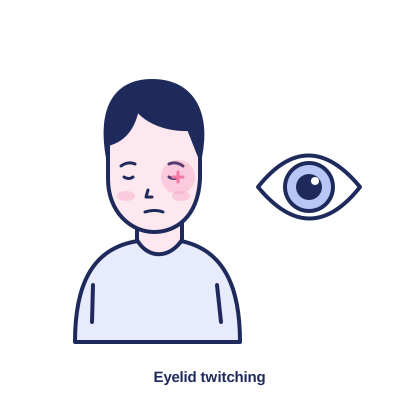
01 · Overview
The short version
Most eyelid twitching is minor
A small eyelid twitch is often called myokymia. It often comes and goes on its own and is linked to fatigue, stress, caffeine, or eye strain.
Irritation can keep it going
Dry eyes, allergies, blepharitis, and a stye can irritate the eyelid and make it twitch or feel fluttery.
Facial weakness changes the meaning
Eye twitching is a symptom, not a diagnosis. If it comes with drooping, facial weakness, or trouble speaking, it needs prompt medical attention.
Not every twitch is the same thing
A brief lid twitch is different from a painful swollen lid, a drooping eyelid, or a forceful blinking pattern that is hard to control.
02 · Care guidance
When to get help
Emergency help
- Call 911 or local emergency services now if eye twitching happens with sudden facial weakness, trouble speaking, severe headache, loss of vision, a drooping face, or other stroke-like symptoms.
- Get emergency help right away for eye swelling with trouble breathing, lip or tongue swelling, or a severe allergic reaction.
Get advice promptly
- Contact a clinician soon if twitching lasts more than a few weeks, keeps returning, spreads to other facial muscles, or comes with redness, pain, discharge, light sensitivity, or blurred vision.
- Get prompt medical advice if you have a new drooping eyelid, new facial weakness, or twitching after starting a new medicine.
If the twitch is mild and you otherwise feel well, try rest, fewer screen breaks, and cutting back on caffeine for a short time. If it does not improve or keeps coming back, make an appointment so someone can check for dry eye, eyelid inflammation, or a different cause.
03 · Eye Twitching
What an eyelid twitch usually means
A brief eyelid twitch is often a minor muscle spasm, not a sign that the eye itself is being damaged.
Eye twitching usually means small, involuntary movements of the eyelid. It may happen in one eye or, less often, in both. Many episodes are short and fade without treatment.
The important distinction is between a simple twitch and other changes that look similar. A twitch is not the same as a droopy eyelid, a swollen red eyelid, or a facial spasm that pulls part of the face. Those patterns can point to a different problem and deserve a closer look.
- Short-lived twitching is often minor.
- A twitch is a symptom, not a diagnosis.
- Different lid movements can have different causes.
04 · Eye Twitching
Common triggers that make twitching more noticeable
Sleep loss, stress, caffeine, and eye strain often make an eyelid twitch easier to trigger or harder to ignore.
Many people notice twitching more when they are tired, under stress, or using their eyes for long periods. Screens, reading, and other close work can leave the eyes feeling overworked. Caffeine can also make twitching more noticeable for some people.
These triggers do not prove something serious is happening. They do explain why the same twitch may show up after a short night, a busy day, or extra coffee. If the twitch settles when those triggers calm down, that points toward a simple muscle irritability pattern.
Hydration is fine for general wellness, but it is not the main fix for most eyelid twitching. The more useful first steps are rest, less eye strain, and noticing whether caffeine or stress makes the twitch worse.
- Poor sleep can make twitching easier to notice.
- Stress and screen time can keep the lid irritable.
- Caffeine can be a trigger for some people, but not everyone.
05 · Eye Twitching
When the eyelid itself is irritated
Redness, crusting, pain, or a lump can point to a lid problem rather than a simple twitch.
Blepharitis can make the eyelids red, itchy, burning, or crusty at the lashes. A stye is a small, red, painful bump caused by infection in an oil gland. A chalazion is a painless lump that may form after a stye.
These problems can make the lid feel pulsing or hard to ignore, even if the twitch is not the main issue. The eye may also feel gritty, watery, or irritated. When twitching comes with a lump or clear lid inflammation, treatment has to match the lid problem, not just the twitch.
Less commonly, eyelid movement can be part of blepharospasm, which is a pattern of blinking or twitching that a person cannot control well. That pattern is different from a brief, occasional twitch and may need specialist care if it keeps happening.
- Painful bump: think stye.
- Crusting, burning, or itchy lids: think blepharitis or similar irritation.
- Hard-to-control blinking: ask whether this could be blepharospasm.
06 · Eye Twitching
When twitching points beyond the eyelid
Twitching plus facial weakness, a drooping eyelid, or vision symptoms needs faster evaluation.
Most eyelid twitching is not an emergency, but some patterns need prompt care. If the twitch comes with a drooping eyelid, facial weakness, trouble smiling, slurred speech, vision loss, or a severe headache, the concern is no longer only the eyelid. Those symptoms can suggest a neurologic problem.
Bell's palsy is one reason facial weakness gets attention. It is the most common cause of facial paralysis and usually affects one side of the face. It can include twitching, drooping of the eyelid or corner of the mouth, dry eye, or trouble tasting. That is different from a simple isolated eyelid twitch, which by itself is not a typical Bell's palsy pattern.
If the eye itself is very red, painful, swollen, or you have fever, infection may be a concern. Swelling that affects breathing is an emergency.
- Facial weakness changes the urgency.
- A new droopy eyelid needs prompt attention.
- Trouble breathing with swelling is an emergency.
07 · Eye Twitching
What a clinician will ask and look for
The exam focuses on the eyelid, the eye surface, and signs that the problem is more than a mild twitch.
A clinician usually starts with how long the twitch has been happening, whether it is one eye or both, and whether you also have redness, dryness, pain, blurred vision, a lump, or discharge. They will also ask about sleep, stress, caffeine, screen time, and any new medicines or eye products.
An eye exam can look for dry eye, eyelid inflammation, a stye, a chalazion, or other surface irritation. If the twitch is unusual, persistent, or linked with facial weakness or other neurologic symptoms, the clinician may look for a cause outside the eye.
Bringing a medicine list matters because a new symptom after starting a medicine changes the conversation. The goal is not just to label the twitch, but to find the trigger that best fits the whole pattern.
- Write down how long it has been happening.
- Note whether it is constant or comes and goes.
- Mention any new medicine, eye drop, or facial symptom.
08 · Eye Twitching
Simple steps that can help a mild twitch settle
Rest, less eye strain, and avoiding eye rubbing are the safest first steps for a mild twitch.
If the twitch is mild and you otherwise feel well, start with rest and reducing strain. Get enough sleep, take breaks from screens, and notice whether caffeine seems to make the twitch worse. If your eyes feel dry or gritty, clinician-recommended lubricating eye drops may help.
If the eyelid itself feels irritated, eyelid hygiene can matter. Warm compresses can be soothing for a stye or lid inflammation, and gentle lid cleaning may help with blepharitis. Do not rub the eye, because rubbing can make irritation worse.
These steps are meant for a mild, otherwise uncomplicated twitch. If home care makes the eye more painful, red, or sensitive to light, stop and get checked.
- Sleep and screen breaks reduce common triggers.
- Warm compresses can help some lid problems.
- Avoid rubbing, which can worsen irritation.
09 · Eye Twitching
If it keeps happening
Ongoing twitching needs a cause-based plan, not guesswork.
Treatment depends on what is causing the twitch. A stye, chalazion, or blepharitis may need warm compresses, eye drops, ointments, or other treatment aimed at the eyelid problem. Dry eye treatment focuses on reducing surface irritation.
If twitching is part of blepharospasm or another movement disorder, the treatment approach may be different and usually needs specialist input. If a medicine seems linked to the twitch, a clinician should review it before any changes are made. Do not stop a prescribed medicine on your own.
If the twitch keeps returning, a short symptom log can help. Write down when it happens, how long it lasts, whether you were tired or stressed, and whether screen time, eye makeup, or caffeine seemed involved. That can make the appointment more useful.
- Treatment should match the cause.
- Persistent symptoms deserve a closer look.
- A symptom log can help reveal patterns.
10 · FAQ
Questions people ask
Why is only one eye twitching?
One eye is very common. A single eyelid can react to dryness, irritation, a stye, blepharitis, or simple muscle irritability. One-sided twitching is not automatically dangerous, but if it is persistent or paired with facial weakness, a drooping eyelid, or vision changes, it should be checked.
Can dry eyes cause eyelid twitching?
Yes. Dryness and irritation can make the eyelid feel jumpy or fluttery. People often also notice burning, gritty discomfort, or a feeling that something is in the eye. If dry-eye symptoms are common, an eye exam can help sort out the right treatment.
Can a stye feel like twitching?
Yes. A painful bump on the eyelid can make the lid feel irritated, pulsing, or hard to ignore. A stye often causes tenderness, redness, and swelling, while a chalazion is usually a less painful lump. Either one can make the eyelid seem like it is twitching.
What should I tell my clinician about eye twitching?
Tell them how long it has been happening, whether it is one eye or both, and whether you also have dryness, pain, redness, discharge, a lump, facial weakness, or vision changes. It also helps to mention sleep, stress, caffeine, screen time, and any new medicines or eye products.
Can stress really cause eye twitching?
Yes. Stress is a common trigger for minor eyelid twitching, especially when it also affects sleep, screen time, or caffeine use. Stress alone does not explain every case, though, so ongoing symptoms should not be blamed on stress without considering other causes.
When does twitching need urgent help?
Get urgent help if twitching happens with sudden facial weakness, trouble speaking, severe headache, loss of vision, a drooping face, or other stroke-like symptoms. Also get emergency help for eye swelling with trouble breathing or swelling of the lips or tongue.
11 · References
References and supporting evidence
These sources support the points identified below. Source checking is not clinical approval.
- S1: Eyelid DisordersMedlinePlus / U.S. National Library of Medicine
Explains that eyelid symptoms can come from a range of eyelid disorders, not just one cause. Supports the statement that a mild eyelid twitch is often linked to fatigue or stress. Supports the description of a stye as a painful eyelid bump that can mimic or contribute to irritation. Supports the explanation that blepharitis causes lid irritation and crusting. Supports the repeated point that treatment should match the underlying cause rather than the twitch alone. Supports advice that sleep and caffeine changes are reasonable self-care steps for eyelid symptoms.
- S2: Bell's PalsyMedlinePlus / U.S. National Library of Medicine
Supports identifying Bell's palsy as a facial-weakness condition that changes triage when facial drooping is present. Supports the statement that Bell's palsy begins suddenly, which matters for urgent evaluation of new facial weakness. Supports the fact that twitching can occur with Bell's palsy, along with weakness and drooping, rather than as an isolated lid twitch.
General information, not a diagnosis. This guide is not a substitute for care from a qualified healthcare professional. For an emergency, call 911 in the US or your local emergency number. Illustrations are conceptual and are not diagnostic images.