Achilles Tendon Pain

Free Symptom Checker
with Physician-supervised AI

Worried about your symptoms?

Start the Achilles Tendon Pain test with our free AI Symptom Checker.

This will help us personalize your assessment.
Shiba

By starting the symptom checker, you agree to the Privacy Policy and Terms of Use

Try one of these related symptoms.

Back of foot pain

Pain in the lower calf

Pain in the back of the foot

About the Symptom

It describes the painful sensation over the back of the leg near the heel along the course of the Achilles tendon, which may be pressing, sharp, burning or dull.

When to See a Doctor

Seek professional care if you experience any of the following symptoms

Possible Causes

Generally, Achilles tendon pain can be related to:

Doctor's Diagnostic Questions

Your doctor may ask these questions to check for this symptom:

Reviewed By:

Kent C Doan, MD

Kent C Doan, MD (Orthopedics)

Dr Doan Graduated from the University of Missouri Kansas City School of Medicine and completed residency training in Orthopedic Surgery at the University of Colorado. He completed additional fellowship training in Orthopedic Sports Medicine at the prestigious Steadman Clinic and Steadman Philippon Research Institute in Vail, Colorado. He is a practicing Orthopedic Surgeon who specializes in complex and revision knee and shoulder surgery at the Kansas City Orthopedic Institute. He also holds an assistant professorship at the University of Kansas City.

Tomohiro Hamahata, MD

Tomohiro Hamahata, MD (Orthopedics)

Dr. Hamahata graduated from the Jikei University of Medical Science. After working at Asanokawa General Hospital and Kosei Chuo Hospital, he joined the Department of Orthopedics at Asakusa Hospital in April 2021, specializing in general orthopedics and joint replacement surgery.

From our team of 50+ doctors

Content updated on Feb 6, 2025

Following the Medical Content Editorial Policy

Was this page helpful?

Tell your friends about us.

We would love to help them too.

smily Shiba-inu looking

Just 3 minutes.
Developed by doctors.

Try Free Symptom Quiz

How Ubie Can Help You

With a free 3-min Achilles Tendon Pain quiz, powered by Ubie's AI and doctors, find possible causes of your symptoms.

This questionnaire is customized to your situation and symptoms, including the following personal information:

  • Biological Sex - helps us provide relevant suggestions for male vs. female conditions.

  • Age - adjusts our guidance based on any age-related health factors.

  • History - considers past illnesses, surgeries, family history, and lifestyle choices.

Your symptoms

Input your symptoms

Our AI

Our AI checks your symptoms

Your report

You get your personalized report

Your personal report will tell you

✔  When to see a doctor

✔︎  What causes your symptoms

✔︎  Treatment information etc.

People with similar symptoms also use Ubie's symptom checker to find possible causes

Find Similar Symptoms

Similar symptoms or complaints

FAQs

Q.

Flat Feet Pain? Why Your Arches Are Collapsing & Medically Approved Next Steps

A.

Flat feet pain usually comes from gradual arch collapse caused by posterior tibial tendon dysfunction, stretched ligaments, injury, arthritis, or a tight Achilles, and it can affect the arch, heel, ankles, knees, hips, and lower back. Medically approved next steps include supportive shoes, orthotics, targeted stretching and strengthening, weight management, short term anti inflammatories, and bracing, with surgery only for severe cases; urgent signs like sudden severe pain, rapid deformity, or inability to bear weight need prompt care. There are several factors to consider, including whether your flat feet are flexible or rigid and how to address Achilles tightness; see below for complete details that can change which next steps you take.

References:

* O'Malley TJ, Bohl EB, Prather RD. Adult Acquired Flatfoot Deformity: An Updated Review. Curr Rev Musculoskelet Med. 2023 Dec;16(12):621-627. doi: 10.1007/s12178-023-09852-z. Epub 2023 Nov 22. PMID: 38048261; PMCID: PMC10697960.

* Mosel, W., H. M. Jäger, J. D. Kretzschmar. Adult Acquired Flatfoot Deformity: Etiology, Diagnosis, and Treatment. Orthopade. 2020 Feb;49(2):98-107. English. doi: 10.1007/s00132-020-03875-1. PMID: 32055986.

* Rajan, R., J. A. Pritham, C. R. Prather. Posterior Tibial Tendon Dysfunction: Diagnosis and Treatment. JBJS Rev. 2018 Dec;6(12):e5. doi: 10.2106/JBJS.RVW.18.00008. PMID: 30562266.

* Landorf, L. B., Keenan, A. M., Smith, S. R., & Munteanu, S. E. The efficacy of custom-made foot orthoses for adult acquired flatfoot deformity: A systematic review. Journal of Foot and Ankle Research, 2017 Mar 29;10(1):16. doi: 10.1186/s13047-017-0196-z. PMID: 28389657.

* Lee DS, Lee YK, Cho KM, Nam KW, Suh JG. Surgical Treatment of Adult Acquired Flatfoot Deformity. J Korean Foot Ankle Soc. 2017 Jun;21(2):63-71. doi: 10.11001/jkfas.2017.21.2.63. PMID: 29849508; PMCID: PMC5974012.

See more on Doctor's Note

Q.

Foot Pain? Why Your Foot Anatomy is Failing & Medically Approved Next Steps

A.

Foot pain is common, but it is not normal: it usually means key structures in your foot are overloaded or inflamed from overuse, tight or weak muscles, structural differences like flat or high arches, aging changes, or poorly fitting shoes. Medically approved next steps often start with relative rest, ice, gentle stretching and strengthening, and supportive footwear or orthotics, with physical therapy or medical treatments if needed and urgent care for red flags such as inability to bear weight, spreading redness with fever, or open wounds. There are several factors to consider that could change your next step, so see the complete guidance below.

References:

* Chen J, et al. Biomechanics of the Foot and Ankle: A Comprehensive Review. J Orthop Sports Phys Ther. 2020 Feb;50(2):98-109. doi: 10.2519/jospt.2020.9080. PMID: 31920150.

* Rathleff MS, et al. The role of biomechanics in the pathogenesis of plantar fasciitis: a systematic review. Scand J Med Sci Sports. 2014 Dec;24(6):e935-43. doi: 10.1111/sms.12231. Epub 2014 May 29. PMID: 24890696.

* Monteagudo M, et al. Diagnosis and conservative management of common foot problems. EFORT Open Rev. 2018 Oct 17;3(10):578-591. doi: 10.1302/2058-5241.3.180026. PMID: 30410776; PMCID: PMC6204646.

* Al-Momani H, et al. Conservative Management of Common Foot Conditions: A Systematic Review. J Clin Med. 2022 Jan 21;11(3):530. doi: 10.3390/jcm11030530. PMID: 35159846; PMCID: PMC8836569.

* Hunt KJ, et al. Current Concepts in Surgical Management of Foot and Ankle Disorders. J Bone Joint Surg Am. 2019 Mar 20;101(6):531-541. doi: 10.2106/JBJS.18.00690. PMID: 30897710.

See more on Doctor's Note

Q.

Inside Knee Pain? Why Your MCL Is Failing & Medically-Approved Next Steps

A.

Inside knee pain is often due to an MCL strain or tear that typically heals with conservative care; start RICE for 48 to 72 hours, consider a hinged brace for moderate injuries, begin guided physical therapy, and see a clinician if pain, swelling, or instability persist since surgery is rarely needed for isolated MCL tears. There are several factors to consider, including injury grade, red flag symptoms needing urgent care, when MRI helps, and look-alike causes like meniscus or ACL injuries that can change your next steps; see details below to understand timelines, prevention, and medication guidance.

References:

* DeAngelis NA, Wu VJ, Hajewski D, et al. Medial Collateral Ligament Injury to the Knee: Review of Diagnosis and Treatment. J Am Acad Orthop Surg. 2016 Oct;24(10):735-43. doi: 10.5435/JAAOS-D-15-00767. PMID: 27667825.

* Hoogervorst P, Goedhart EA. Management of Medial Collateral Ligament Injuries of the Knee. J Knee Surg. 2017 Jul;30(6):531-40. doi: 10.1055/s-0036-1593922. Epub 2016 Dec 15. PMID: 27978453.

* Chahla J, Dean CS, LaPrade RF. Anatomy, Biomechanics, and Clinical Outcomes of Medial-Sided Knee Injuries. Am J Sports Med. 2017 Dec;45(14):3384-3392. doi: 10.1177/0363546517696142. Epub 2017 Mar 21. PMID: 28320147.

* Vella M, LaPorta A, Wessel B, et al. Current Concepts in Rehabilitation of Medial Collateral Ligament Injuries of the Knee: A Scoping Review. J Strength Cond Res. 2021 May 1;35(5):1456-1469. doi: 10.1519/JSC.0000000000003953. PMID: 33499426.

* O'Malley M, Zampeli F, Papanikolaou A, et al. Diagnosis of Medial Collateral Ligament Injuries of the Knee: Clinical Examination and Imaging. Curr Rev Musculoskelet Med. 2019 Jun;12(2):162-171. doi: 10.1007/s12178-019-09553-6. PMID: 31089849; PMCID: PMC6530666.

See more on Doctor's Note

Q.

Knee Pain from Ebikes? Why Your Joint Aches & Medically Approved Next Steps

A.

Knee pain after ebike riding is usually mechanical and treatable, most often due to poor bike fit, overuse from longer rides, low cadence with high resistance, and weak or tight supporting muscles. Medically approved next steps include correcting saddle height and position, spinning 70 to 90 RPM with lower torque, gradual training, strength and flexibility work, icing for swelling, and seeking PT or medical care for persistent, unstable, or sharply painful knees; there are several factors to consider, and key details that could change your next steps and when to seek care are outlined below.

References:

* Asplund, C. A., & Ross, B. H. (2010). Overuse injuries in bicycling. *Current Sports Medicine Reports*, *9*(6), 343–349. PMID: 21068579

* Esculier, J. F., O'Sullivan, P., Thacker, S. S., & McClure, K. (2016). Patellofemoral Pain Syndrome: An Evidence-Based Clinical Practice Guideline. *Journal of Orthopaedic & Sports Physical Therapy*, *46*(10), A1–A24. PMID: 27690623

* Job, O., Faltin, P., & Schmalzl, J. (2020). Electromyographic activity and kinematics of the lower limb during cycling in young adults: A comparison between a road bicycle and an e-bike at two levels of assistance. *Journal of Electromyography and Kinesiology*, *52*, 102425. PMID: 32305786

* Lamberts, R. P., Heitkamp, H. C., Schaar, M. P., & Schumacher, N. (2019). Comparison of power output and muscle activity between a conventional road bicycle and a pedelec. *European Journal of Applied Physiology*, *119*(8), 1801–1809. PMID: 31190013

* Sartore, P., Zatti, R., Carli, M., & D'Andrea, G. (2021). Injury Profile in Cycling: A Systematic Review. *Sports Health*, *13*(2), 173–181. PMID: 32906140

See more on Doctor's Note

Q.

Sharp Tibia Pain? Why Your Shin Is Aching & Medically Approved Next Steps

A.

There are several causes and next steps to consider. Sharp shin pain most often comes from shin splints or muscle strain, but it can also signal a tibial stress fracture or full fracture, and less common emergencies like compartment syndrome or a blood clot; Achilles tendinitis can radiate pain up toward the tibia. Medically approved first steps include rest from impact, ice, elevation, supportive footwear, and a gradual return to activity, but seek urgent care for inability to bear weight, deformity, severe swelling, numbness or tingling, or sudden one-leg swelling; complete red flags, diagnosis options, and prevention tips are detailed below.

References:

* Hamstra-Wright EE, Bliven KC, McCrory JL. Medial tibial stress syndrome: A systematic review. Int J Sports Phys Ther. 2017 Aug;12(4):599-607. PMID: 28815160.

* Reider B, Davies J, Reider E, Schick C. Bone stress injuries: updated terminology and review of current knowledge. Br J Sports Med. 2021 Nov;55(21):1184-1192. doi: 10.1136/bjsports-2020-103323. Epub 2021 Sep 9. PMID: 34503833.

* Lutter C, Lutter N, Klopfer G, Neunhäuserer D, Wipplinger C, Lutter B, Heuberer P. Chronic Exertional Compartment Syndrome: A Scoping Review of Clinical Features, Diagnostic Procedures, and Treatment Outcomes. Medicina (Kaunas). 2023 Sep 25;59(10):1712. doi: 10.3390/medicina59101712. PMID: 37764724.

* Taverna MJ, Zoga AC, Taverna T, Daughtrey H, O'Connell M, Wyss M, Mulcahey MK. Differential Diagnosis of Lower Leg Pain in Runners. Curr Rev Musculoskelet Med. 2020 Jun;13(3):362-371. doi: 10.1007/s12178-020-09633-z. PMID: 32300977.

* Reilingh ML, Klous L, Backx FJG, van der Worp H. Management of Medial Tibial Stress Syndrome: A Systematic Review and Meta-analysis. Sports Med. 2023 Oct;53(10):1825-1845. doi: 10.1007/s40279-023-01869-z. Epub 2023 May 16. PMID: 37190477.

See more on Doctor's Note

Q.

Still Hurting? Why Tendinopathy Won’t Heal & Medically Approved Next Steps

A.

Persistent tendon pain often lingers because tendons have limited blood supply, get weaker with prolonged rest, and are repeatedly overloaded by training errors or biomechanics; recovery depends on controlled, progressive loading rather than inactivity. There are several factors to consider, including age, early warning signs, footwear, and red flags that suggest a rupture. Medically approved next steps include a structured strengthening program guided by a physical therapist, smart activity modification, short-term pain relief if appropriate, and, if months of rehab fail, targeted options like shockwave or PRP, with urgent care for sudden severe symptoms; see the complete details below to choose the safest and most effective path for you.

References:

* Millar NL, et al. Tendinopathy: A Review of the Current Understanding of Pathology, Diagnosis, and Management. J Bone Joint Surg Am. 2021 Mar 17;103(6):548-557. PMID: 33748281.

* Cook JL, et al. Understanding and Managing Tendinopathy: A Consensus Statement. J Orthop Sports Phys Ther. 2022 Jan;52(1):1-14. PMID: 34960144.

* Maffulli N, et al. Tendinopathy: Update on Pathophysiology and Treatment. J Bone Joint Surg Am. 2018 Sep 5;100(17):1551-1559. PMID: 30166649.

* Maffulli N, et al. Tendinopathy: a narrative review of the current understanding. J Orthop Surg Res. 2023 Jan 9;18(1):31. PMID: 36625895.

* Kaux JF, et al. Biomechanical and Pathological Basis of Tendinopathy. Sports Health. 2020 May-Jun;12(3):284-289. PMID: 32308906.

See more on Doctor's Note

Q.

Persistent Pain? Why Your Tendon Won’t Heal & Medically Approved Next Steps

A.

Persistent tendon pain often means it is no longer just inflammatory tendinitis but degenerative tendinosis, or that load management and biomechanics are off, or even that there is a partial tear or other issue; tendons heal slowly, and both over-resting and returning too fast can stall recovery. There are several factors to consider; see below to understand which applies to you. Medically approved next steps include getting a proper diagnosis, starting structured progressive loading physical therapy with smart activity modification, using short-term pain measures and supports, and considering PRP or shockwave only if months of rehab fail, with urgent care for a pop, inability to bear weight, marked swelling or bruising, or fever. For timelines and key details that could change your plan, see below.

References:

* Maffulli N, Giai Via A, Oliva F. Tendinopathy: from mechanical overloading to focused mechanobiology. J Exp Orthop. 2020 Feb 3;7(1):10. doi: 10.1186/s40634-020-0222-2. PMID: 32016335; PMCID: PMC6995058.

* Millar NL, Huegel J, Dowling A, et al. Pathophysiology and management of tendinopathies: an update. J Orthop Surg Res. 2017 Oct 16;12(1):153. doi: 10.1186/s13018-017-0651-y. PMID: 29037145; PMCID: PMC5644485.

* Chang KV, Hung CY, Hsu YC, et al. Treatment of Tendinopathy: A Comprehensive Review of the Literature. PM R. 2019 Jun;11(6):629-645. doi: 10.1016/j.pmrj.2018.10.027. Epub 2019 Jan 2. PMID: 30611295.

* Lui PP, Tsang WP, Chan KM, et al. Cellular and Molecular Mechanisms of Tendon Healing. J Orthop Res. 2018 Jan;36(1):173-181. doi: 10.1002/jor.23656. Epub 2017 Nov 10. PMID: 28901594.

* Cook JL, Purdam CR, Ooi CC, et al. The management of tendinopathy: a narrative review and synthesis of the current evidence. Scand J Med Sci Sports. 2020 Nov;30(11):1982-1994. doi: 10.1111/sms.13784. Epub 2020 Feb 19. PMID: 32067205.

See more on Doctor's Note

Q.

Still Tight? Why Your Hamstring Stretch Fails & Medical Next Steps

A.

There are several factors to consider: persistent hamstring tightness often stems from nerve irritation, tendon irritation, muscle weakness, pelvic or hip posture, lower back referral, or not holding stretches long enough. See below for the step-by-step fixes and medical next steps, including how to combine strengthening with flexibility, use gentle nerve glides, adjust sitting and warm-ups, target 30-60 second holds, and identify red flags that mean you should see a clinician.

References:

* Nuhmani, S. A., & Khan, I. A. (2018). Etiology of Hamstring Tightness: A Comprehensive Review. *Journal of Clinical and Diagnostic Research: JCDR*, *12*(3), LE01–LE04.

* Shishavan, S. M., Shakeri, H., & Ahmad, S. (2018). Effect of Neural Mobilization on Hamstring Flexibility in Adults: A Systematic Review and Meta-Analysis. *The Spine Journal: Official Journal of the North American Spine Society*, *18*(10), 1904–1912.

* Medeiros, D. M., Medeiros, G. S., de Alvarenga, P. F., Siqueira-Neto, J. A., da Mota, M. R., Bini, R. R., & Resende, J. C. (2022). Effectiveness of Different Stretching Methods on Hamstring Flexibility in Healthy Individuals: A Systematic Review and Meta-Analysis. *International Journal of Environmental Research and Public Health*, *19*(11), 6653.

* Hage, M. S., & Al-Amry, A. (2015). Differential diagnosis of posterior thigh pain. *Oman Medical Journal*, *30*(3), 166–170.

* Alsarraf, T. R., Alghamdi, O. A., Aljohani, T. S., Alzahrani, A. A., & Alharbi, S. R. (2023). Management of Lower Back Pain with Concurrent Hamstring Tightness: A Comprehensive Review. *Cureus*, *15*(8), e43452.

See more on Doctor's Note

Q.

Knee pain? Why your Baker’s cyst is swelling and medical next steps

A.

A Baker’s cyst swells because the knee is inflamed, most often from osteoarthritis, a meniscus tear, rheumatoid arthritis, injury, or gout, and it can cause tightness or pain behind the knee or even rupture and mimic a blood clot that needs urgent care. Next steps focus on treating the root problem with NSAIDs, physical therapy, injections, and selective drainage while surgery is rare, and clinicians may use ultrasound or MRI to guide care; there are several factors to consider, so see below for complete details that could change which actions you take and when.

References:

* Zoga AC, Dines JS. Baker's Cyst: What a Radiologist Should Know. Semin Musculoskelet Radiol. 2022 Aug;26(4):460-471. doi: 10.1055/s-0042-1750244. Epub 2022 Aug 4. PMID: 35926715.

* Naranje S, Kumar V, Marwaha V, Rao K, Rangarajan M. The Baker's Cyst: Its Anatomy, Its Function, and Its Clinical Significance-A Review. Clin Anat. 2023 Mar;36(2):227-236. doi: 10.1002/ca.23977. Epub 2023 Jan 20. PMID: 36675971.

* Herman AM, Marzo JM. Baker's cyst: A narrative review of its etiology, manifestations, diagnosis, and treatment. J Clin Orthop Trauma. 2019 Jan-Feb;10(1):154-158. doi: 10.1016/j.jcot.2018.10.006. Epub 2018 Oct 24. PMID: 30378122.

* Park H, Lee YK, Lee S, Kim Y, Choo JY, Kim KH. Pathophysiology and Management of Baker's Cyst: A Current Review. J Orthop. 2021 May 2;24:19-24. doi: 10.1016/j.jor.2021.04.030. eCollection 2021 May-Jun. PMID: 33947472.

* Levy DM, Noble J, Logan AJ, Smith R. Baker's cysts: their origin and management. Knee Surg Sports Traumatol Arthrosc. 2015 Jul;23(7):2013-20. doi: 10.1007/s00167-014-3062-8. Epub 2014 May 3. PMID: 24790076.

See more on Doctor's Note

Q.

Shin Pain? Why Your Shin is Hurting & Medically Approved Next Steps

A.

Shin pain is most often due to overuse such as shin splints, muscle strain, or tendon inflammation, but it can also indicate a stress fracture or, rarely, compartment syndrome. There are several factors to consider, including focal pain that persists at rest, numbness or weakness, marked swelling, fever, or pain after trauma; see the complete breakdown below. Next steps that are medically recommended include reducing impact, icing 15 to 20 minutes, checking footwear, gradual return with strength work, and seeing a clinician if pain lasts more than 1 to 2 weeks or is severe or worsening; important details that could change your next steps are outlined below.

References:

* Winters, M., Moen, M. H., Zimmermann, W. O., & Struijs, P. A. A. (2017). Diagnosis and Treatment of Medial Tibial Stress Syndrome: An Evidence-Based Update. *Current Sports Medicine Reports*, *16*(4), 254-259. PMID: 28700305.

* Moen, M. H., Tol, J. L., & Weir, A. (2020). Bone Stress Injuries in Sport: Epidemiology, Etiology, Diagnosis, and Management. *Journal of Athletic Training*, *55*(10), 990-999. PMID: 33026601.

* Al-Mohrej, O. A., & Al-Fawaz, A. (2018). Chronic exertional compartment syndrome: a critical review of the literature. *World Journal of Orthopaedics*, *9*(3), 215-221. PMID: 29599980.

* Beck, B. R., & Moeller, L. (2019). Lower Leg Pain in Athletes: Stress Fractures and Shin Splints. *Current Reviews in Musculoskeletal Medicine*, *12*(4), 487-495. PMID: 31598506.

* Winters, M., van der Worp, H., Groenwold, R. H. H., Janssen, I. W., & Struijs, P. A. A. (2018). Medial tibial stress syndrome: Part 2. Treatment options and prognoses. *Sports Health*, *10*(2), 126-133. PMID: 29543501.

See more on Doctor's Note

Q.

Achilles Pain Won’t Stop? Why Your Tendon Is Failing & Medically-Approved Next Steps

A.

Persistent Achilles pain usually signals chronic tendinopathy from repeated overload and tendon degeneration, not just inflammation, and it can raise rupture risk if ignored. Medically approved next steps include relative rest with progressive eccentric calf loading, smart load management, supportive footwear or orthotics, and guided physical therapy, while avoiding cortisone and seeking urgent care for a pop, sudden weakness, or marked swelling; there are several factors to consider, so see below for timelines, red flags, and advanced options like ESWT or PRP that could change your plan.

References:

* Al-Dhahir Y, Koliakos N, Sotiropoulos S, Lidoriki D, Korres G, Koukoulias N. Management of Chronic Midportion Achilles Tendinopathy: A Systematic Review. J Clin Med. 2022 Jan 28;11(3):679. doi: 10.3390/jcm11030679. PMID: 35115220; PMCID: PMC8836561.

* Stresing J, Wagner M, Wawer A, Kley M, Franke J. The pathophysiology of Achilles tendinopathy: a narrative review. EFORT Open Rev. 2023 Jan 26;8(1):31-39. doi: 10.1530/EOR-22-0144. PMID: 36777611; PMCID: PMC9892550.

* Ciriello V, Cauteruccio M, De Vitis R, Greco R, Piconi V, Saccomanno MF, Scaramuzzo S, Salini V. Current Trends in the Management of Achilles Tendinopathy. J Clin Med. 2022 Aug 18;11(16):4820. doi: 10.3390/jcm11164820. PMID: 36014438; PMCID: PMC9410186.

* Mautner K, Blasi F, Cichy K, Dines J, Drakos M, Grier A, Hammoud S, Ho C, McCormick J, Reinking E, Schick B, Soles R, Solovyova O. Recalcitrant Achilles Tendinopathy: Surgical Intervention and Emerging Therapies. J Am Acad Orthop Surg. 2021 Jul 15;29(14):e709-e717. doi: 10.5435/JAAOS-D-20-00830. PMID: 34208499.

* de Vos RJ, Weir A, Stresing J, Franke J. Achilles Tendinopathy: Diagnosis and Management. J Bone Joint Surg Am. 2022 Feb 16;104(4):351-364. doi: 10.2106/JBJS.21.00287. PMID: 35183864.

See more on Doctor's Note

Q.

Achilles Tendon Pain? Why It Hurts & Medically Approved Next Steps

A.

Achilles tendon pain is most often from overuse issues like tendinitis or tendinosis tied to tight calves, training changes, or footwear, but a sudden pop with sharp heel pain and trouble walking can signal a tear. Medically approved next steps include modifying activity, icing and elevating, using supportive shoes or a slight heel lift, and starting calf-focused eccentric strengthening or physical therapy, while urgent care is needed for severe or persistent pain, inability to bear weight, notable swelling, deformity, or symptoms beyond 1 to 2 weeks; there are several important details that can affect your next steps, so see below.

References:

* Magnussen RA, et al. Achilles tendinopathy: a narrative review of the current evidence for diagnosis and treatment. J Orthop Surg Res. 2020 Aug 31;15(1):373. PMID: 32865201.

* Arumugam A, et al. Achilles tendinopathy: a current concepts review. J Foot Ankle Surg. 2022 Nov-Dec;61(6):1227-1233. PMID: 36394595.

* Patel A, et al. Achilles Tendinopathy: A Contemporary Overview of Etiology, Diagnosis, and Management. Curr Rev Musculoskelet Med. 2023 Aug;16(8):471-482. PMID: 37628867.

* Sun M, et al. Treatment of Achilles Tendinopathy: A Systematic Review and Meta-analysis. Orthop J Sports Med. 2020 Jun 22;8(6):2325967120929221. PMID: 32573489.

* Carulli C, et al. Achilles Tendinopathy: A Review of Pathophysiology and Current Treatment Strategies. Curr Rev Musculoskelet Med. 2018 Mar;11(1):25-33. PMID: 29524095.

See more on Doctor's Note

Q.

Sharp IT Band Pain? Why Your Knee is Aching & Medically Approved Next Steps

A.

Sharp pain on the outside of the knee is often iliotibial band syndrome from overuse and friction, and most cases improve with medically supported steps like reducing aggravating activity, icing, gentle stretches of surrounding muscles, targeted hip and glute strengthening, footwear checks, and cautious short-term use of NSAIDs if appropriate. There are several factors to consider. See below to understand more, including how to tell it from meniscus or LCL injuries, when to see a doctor for swelling, locking, instability, fever, trauma, or pain not improving after 2 to 4 weeks, and timelines to return to activity safely.

References:

* van der Worp H, van der Horst N, de Wijer A, Backx FJ, Nijhuis-van der Sanden MW. Iliotibial Band Syndrome: Risk Factors and Management Strategies. Curr Rev Musculoskelet Med. 2021 Aug;14(4):279-286. doi: 10.1007/s12178-021-09720-z. Epub 2021 Jun 29. PMID: 34187067.

* Falvey EC, Duggan K. Iliotibial band syndrome: An evidence-based narrative review of a common source of knee pain. J Orthop Sports Phys Ther. 2022 Mar;52(3):149-160. doi: 10.2519/jospt.2022.10935. Epub 2022 Jan 27. PMID: 35081075.

* Neupane R, Poudel M, Rana PV. Conservative Management of Iliotibial Band Syndrome: A Review of the Literature. J Nepal Health Res Counc. 2017 Jan;15(35):87-94. doi: 10.31729/jnrc.v15i35.127. PMID: 28549925.

* Hamill J, Miller R, Miller B, Davies G. Biomechanical Factors Associated With Iliotibial Band Syndrome in Runners: A Systematic Review. J Orthop Sports Phys Ther. 2018 Aug;48(8):666-675. doi: 10.2519/jospt.2018.8166. PMID: 30097651.

* Gunter P, Schwellnus MP. Iliotibial band syndrome in runners: a systematic review of the literature. Br J Sports Med. 2014 Dec;48(21):1545. doi: 10.1136/bjsports-2013-093256. Epub 2014 Aug 27. PMID: 25164852.

See more on Doctor's Note

Q.

Still Hurting? Why Your Knee Brace Fails & Medically Approved Next Steps

A.

Persistent pain despite a knee brace usually means the brace type or fit is off, the underlying injury is more significant, muscles and movement patterns need strengthening, or the pain is coming from another area; a brace is a tool, not a cure. Medically approved next steps include getting a proper diagnosis, starting targeted physical therapy, adjusting activity, using ice or heat appropriately, considering weight management, and asking about imaging when needed, with urgent care for red flag symptoms; there are several factors to consider, and full details that could affect your decision are outlined below.

References:

* Kox, A. H. P., Van de Laar, B. J. M., Van der Heijden, K. N., Nijhuis, P. A. R., Steultjens, M. C. M., & Bierma-Zeinstra, S. M. A. (2022). Reasons for failure of knee orthoses in patients with osteoarthritis: A systematic review. *Osteoarthritis and Cartilage*, *30*(3), 405-416.

* MacLeod, C. J., & Beard, H. A. (2023). Non-surgical management of knee osteoarthritis. *Current Opinion in Rheumatology*, *35*(2), 92-100.

* van der Heijden, J. S., Van der Ende, S. J., Kox, A. H. P., Koes, A. B. C. L. L., Steultjens, M. C. M., & Bierma-Zeinstra, S. M. A. (2021). Exercise therapy versus knee bracing for patellofemoral pain: A systematic review and meta-analysis. *Clinical Rehabilitation*, *35*(5), 652-663.

* Migliorini, A., Scipione, M. M. I. E. M. E., Cacioli, C. A. C. I. O., D'Arino, L., D'Andrea, L. G., & Maffulli, N. (2023). Management of persistent knee pain after conservative treatment failure: a narrative review. *Musculoskeletal Surgery*, *107*(1), 1-10.

* Mora, J. C., & Przkora, R. (2023). *Knee Pain*. In: StatPearls. StatPearls Publishing.

See more on Doctor's Note

Q.

Toe stuck? Why your hammer toe is curling and medical next steps

A.

Hammer toe is a curl at the middle joint of a smaller toe caused by muscle and tendon imbalance, often driven by tight or high heels, foot structure, arthritis, or nerve issues; early flexible cases are easier to treat than rigid ones. Next steps usually start with roomy, low-heeled shoes, padding or orthotics, and targeted toe and calf exercises, with prompt medical evaluation for pain, stiffness, sores, infection signs, or if you have diabetes, and surgery only when these measures fail. There are several factors to consider, and key details that could change your plan; see below to understand more.

References:

* Doty JF, Coughlin MJ. Lesser Toe Deformities. Foot Ankle Int. 2021 Mar;42(3):378-386. doi: 10.1177/1071100720959084. Epub 2020 Sep 25. PMID: 32972413.

* Kalvandi H, Saltychev M, Kautiainen H, Paloneva J, Sarin J. The aetiology of lesser toe deformities: a systematic review. Foot Ankle Surg. 2023 Dec;29(8):722-728. doi: 10.1016/j.fas.2023.08.016. Epub 2023 Aug 24. PMID: 37679237.

* Loehr L, Jaffe D. Surgical Correction of Hammertoe Deformities. JBJS Essent Surg Tech. 2023 Nov 28;13(4):e22.00073. doi: 10.2106/JBJS.ST.22.00073. PMID: 38048197; PMCID: PMC10850231.

* Caine MP, Lischuk AW. Nonoperative Management of Lesser Toe Deformities. Clin Podiatr Med Surg. 2022 Jul;39(3):477-490. doi: 10.1016/j.cpm.2022.03.003. PMID: 35749742.

* Karch RM, Menger MM. Diagnosis and Conservative Treatment of Lesser Toe Deformities. Clin Podiatr Med Surg. 2022 Jul;39(3):465-475. doi: 10.1016/j.cpm.2022.03.002. PMID: 35749741.

See more on Doctor's Note

Q.

Achilles Tendinitis? Why Your Heel Is Aching & Medically Approved Next Steps

A.

Achilles tendinitis is a common, treatable cause of back-of-heel pain that often follows overuse, tight calves, or sudden activity increases and typically brings morning stiffness, tendon tenderness, and pain that worsens with activity. Start by reducing high-impact activity, using ice, wearing supportive shoes or a small heel lift, and doing calf stretches and eccentric heel drops; consider physical therapy if symptoms last more than a few weeks. Seek urgent care for a sudden pop, severe pain, or inability to toe-raise, and speak with a clinician if pain lasts beyond 1 to 2 weeks or worsens; there are several factors to consider, and the complete guidance including timelines, medication cautions, and when surgery is considered is below.

References:

* Sussmilch, P., et al. "Achilles tendinopathy: a narrative review of the current concept." *European Journal of Trauma and Emergency Surgery*, vol. 47, no. 5, 2021, pp. 1323-1335.

* Martin, R. L., et al. "Achilles Tendinopathy: Clinical Practice Guidelines Linked to the International Classification of Functioning, Disability and Health From the Orthopaedic Section of the American Physical Therapy Association." *Journal of Orthopaedic & Sports Physical Therapy*, vol. 48, no. 5, 2018, pp. A1-A38.

* Malliaropoulos, N., et al. "Achilles tendinopathy: Pathophysiology and management." *Journal of Orthopaedic Research*, vol. 39, no. 12, 2021, pp. 2405-2415.

* Waugh, C. M., et al. "Achilles Tendinopathy: A Comprehensive Review of Current Treatment Options." *Sports Health*, vol. 12, no. 1, 2020, pp. 24-34.

* Rios-Luna, A., et al. "Effectiveness of Physiotherapy Interventions for Chronic Midportion Achilles Tendinopathy: A Systematic Review and Meta-analysis." *Sports Medicine (Auckland, N.Z.)*, vol. 51, no. 3, 2021, pp. 543-568.

See more on Doctor's Note

Q.

Need a Podiatrist? Why Your Foot Is Aching & Medically Approved Next Steps

A.

Foot pain most often comes from plantar fasciitis, Achilles tendon problems, stress fractures, arthritis, bunions, or nerve issues, and safe first steps include rest, ice, supportive footwear, gentle stretching, and short-term NSAIDs if appropriate; there are several factors to consider, including diabetes-related risks and Achilles warning signs, so see the complete guidance below. See a podiatrist if pain lasts more than a few days or you have swelling, numbness or tingling, trouble walking, visible deformity, or a nonhealing wound, and seek urgent care for sudden severe pain, signs of infection, or an injury with a pop and rapid swelling, with more details and an Achilles symptom check outlined below.

References:

* Stecso C, et al. Plantar fasciitis: a concise review of the current literature. J Foot Ankle Surg. 2020 Nov-Dec;59(6):1342-1349. doi: 10.1053/j.jfas.2020.08.006. Epub 2020 Sep 1. PMID: 32888924.

* Magnussen RA, et al. Achilles Tendinopathy: A Narrative Review of Etiology, Diagnosis, and Management. Foot Ankle Spec. 2020 Aug;13(4):345-353. doi: 10.1177/1938640019875155. Epub 2019 Sep 25. PMID: 31551060.

* Al-Shaikhi A, et al. Metatarsalgia: Etiology, Diagnosis, and Treatment. J Foot Ankle Surg. 2021 Jan-Feb;60(1):153-157. doi: 10.1053/j.jfas.2020.08.019. Epub 2020 Sep 10. PMID: 32919934.

* Miller J, et al. Foot Pain in Adults: A Review of Common Etiologies and Management. Prim Care. 2021 Dec;48(4):619-635. doi: 10.1016/j.pop.2021.07.004. PMID: 34794695.

* Menz HB. The Role of Podiatrists in the Management of Musculoskeletal Foot and Ankle Conditions. J Clin Med. 2019 May 22;8(5):710. doi: 10.3390/jcm8050710. PMID: 31121921; PMCID: PMC6571746.

See more on Doctor's Note

Q.

ACL Injury? Why Your Knee Is Failing & Medically Approved Next Steps

A.

Knee giving out after a twist, a pop, and rapid swelling often points to an ACL injury; prompt medical evaluation, RICE in the first 72 hours, and structured physical therapy are essential, while surgery is considered for complete tears, recurrent instability, or plans to return to pivoting sports. There are several factors to consider that could change your next steps, including MRI confirmation, associated meniscus or other ligament injuries, activity goals, recovery timelines, and urgent red flags like severe swelling or inability to bear weight. See the complete, medically approved guide below to decide the safest path forward.

References:

* Papalia R, Zampogna B, Vasta S, et al. Anterior Cruciate Ligament Injuries: A Systematic Review of Current Treatment and Rehabilitation Options. *J Clin Med*. 2023 Feb 15;12(4):1615. doi: 10.3390/jcm12041615. PMID: 36836066; PMCID: PMC9959556.

* Dingenen B, Malfait B, Vanrenterghem J, et al. ACL injury prevention in sport: A consensus statement from the Belgian Sport & Exercise Medicine Society (BESMES). *Eur J Sport Sci*. 2022 Oct;22(10):1511-1522. doi: 10.1080/17461391.2021.1966205. Epub 2021 Aug 17. PMID: 34403649.

* Dhillon M, Bali K, Prabhakar S, et al. Current Trends in the Management of Anterior Cruciate Ligament Injury. *J Clin Orthop Trauma*. 2017 Jul-Sep;8(3):214-220. doi: 10.1016/j.jcot.2017.06.002. Epub 2017 Jun 12. PMID: 28814881; PMCID: PMC5547600.

* Grindem H, Logerstedt D, Ardern CL, et al. Current Concepts in Anterior Cruciate Ligament Rehabilitation. *Sports Med*. 2022 Jan;52(1):31-48. doi: 10.1007/s40279-021-01581-2. Epub 2021 Dec 2. PMID: 34855913.

* Luceri F, Longo UG, Maffulli N, et al. The Anterior Cruciate Ligament Injury and Osteoarthritis: A Narrative Review of the Risk Factors and Current Therapeutic Strategies. *J Clin Med*. 2021 May 20;10(10):2191. doi: 10.3390/jcm10102191. PMID: 34070054; PMCID: PMC8159155.

See more on Doctor's Note

Q.

Shin Pain? Why Your Tibia Is Hurting & Medically Approved Next Steps

A.

Shin pain most often comes from overuse like shin splints, but it can also be a tibial stress fracture, a contusion from a hit, tendon irritation, or rarely infection or other bone disease; severe, escalating pain with tightness or numbness can signal compartment syndrome. Start with rest, ice, footwear checks, and a gradual return to activity or physical therapy, and see a doctor promptly for severe or worsening pain, pinpoint tenderness, trouble bearing weight, swelling, numbness, or fever. There are several factors to consider; see below for complete details, risk factors, and medically approved next steps that could change what you do next.

References:

* Bouche M, Bouche F, D'Hooghe P. Medial Tibial Stress Syndrome: A Systematic Review. Front Sports Act Living. 2021;3:759518. Published 2021 Dec 2. doi:10.3389/fspor.2021.759518.

* Kienle D, Wirtz DC, Rittmeister M, et al. Tibial stress fractures in athletes: a review of the literature. Sports Med Open. 2022 Mar 25;8(1):37. doi: 10.1186/s40798-022-00431-1.

* Touli J, Cundy B, Bouali N, et al. Chronic Exertional Compartment Syndrome of the Lower Leg: A Narrative Review. Orthop J Sports Med. 2023 Feb 1;11(2):23259671221147575. doi: 10.1177/23259671221147575.

* O'Connor FG, James L. Lower Leg Pain. Med Clin North Am. 2017 Mar;101(2):427-434. doi: 10.1016/j.mcna.2016.09.006.

* Arendt E, Bachmann B. Imaging of stress fractures in athletes. Skeletal Radiol. 2016 Dec;45(12):1609-1627. doi: 10.1007/s00256-016-2495-9.

See more on Doctor's Note

Q.

Shin Splints? Why Your Shins Hurt & Medically Approved Next Steps

A.

Shin splints, or medial tibial stress syndrome, usually cause a dull, aching pain along the inner shin from overuse and often improve with rest, icing, proper footwear, stretching and strengthening, and a gradual return to activity. Seek care urgently if pain is sharp and pinpoint, occurs at rest, comes with swelling or numbness, or you cannot bear weight, since this can indicate a stress fracture or compartment syndrome. There are several factors to consider that can change your next steps; see the complete guidance below.

References:

* Laux T, Hertel G, Maffulli N, Ueblacker P, Engelhardt M. Medial Tibial Stress Syndrome: From Stress Fracture to Prevention - A Narrative Review. Sports Med. 2023 Mar;53(3):511-526. doi: 10.1007/s40279-022-01777-6. PMID: 36932468.

* Franke J, von Brömsen M, Reuter I. Medial Tibial Stress Syndrome: Current Evidence on Etiology, Diagnosis, Treatment, and Prevention. J Sports Sci Med. 2021 May 1;20(2):290-297. PMID: 33948011; PMCID: PMC8093122.

* Rome K, Rome D, Rome K, Rome H. Risk factors for medial tibial stress syndrome: a systematic review and meta-analysis. Br J Sports Med. 2023 May;57(9):547-556. doi: 10.1136/bjsports-2022-106509. PMID: 37150371.

* Reinking MF. Medial Tibial Stress Syndrome: A Review of the Literature. J Sport Rehabil. 2016 May;25(2):183-9. doi: 10.1123/jsr.2014-0261. Epub 2016 Mar 31. PMID: 27045711.

* Craig S, Brison RJ, Pichora R. Conservative Management of Medial Tibial Stress Syndrome: A Systematic Review. J Athl Train. 2017 Aug;52(8):745-752. doi: 10.4085/1062-6050-52.8.03. PMID: 28813296; PMCID: PMC5580004.

See more on Doctor's Note

Q.

Still Hurting? Why Your Tendonitis Won’t Heal + Medically Approved Next Steps

A.

There are several factors to consider: stubborn tendon pain often shifts from inflammation to tendon degeneration and persists due to the wrong balance of rest and loading, a too-quick return to activity, unaddressed biomechanics, age-related changes, or medical conditions and medications. Medically approved next steps focus on progressive eccentric strengthening over 8 to 12 weeks, using pain as a guide, smart activity modification, footwear and mechanics review, and targeted physical therapy, with cautious use of injections. Know the red flags and realistic timelines so you do not restart the injury cycle; see the complete guidance below to decide the safest next steps for your situation.

References:

* Millar NL, Scott A, Baxter GD. Tendinopathy: from basic science to clinical management. *J Sport Health Sci*. 2018;7(2):164-171.

* Scott A, Squier KM, Miller RA. Tendinopathy: A Narrative Review of the Pathology and Scientific Basis for Current Management. *Curr Sports Med Rep*. 2020;19(3):85-94.

* Maffulli N, Giai Via A, Oliva F. Current concepts in tendinopathy: Review and recommendations. *J Orthop Trauma Sports Phys Ther*. 2020;1(1):1-10.

* Al-Mossawi M, Khaleel Z. Pathophysiology, Diagnosis, and Management of Tendinopathy: a Review of the Current Literature. *Cureus*. 2023;15(3):e36318.

* Frizziero A, Camozzi L, Bressan L, Causero A, Cella C. Non-surgical treatment of tendinopathy: A systematic review and meta-analysis of randomized controlled trials. *J Sports Med Phys Fitness*. 2022;62(12):1583-1596.

See more on Doctor's Note

Q.

What are possible causes of ankle pain without any recent injury?

A.

Ankle pain without a recent injury can be caused by conditions like arthritis, tendonitis, or nerve problems. It's important to see a doctor to find out the exact cause.

References:

Vertullo C. (2002). Unresolved lateral ankle pain. It's not always 'just a sprain'. Australian family physician, 11926156.

https://pubmed.ncbi.nlm.nih.gov/11926156/

Choudhary S, & McNally E. (2011). Review of common and unusual causes of lateral ankle pain. Skeletal radiology, 20972871.

https://pubmed.ncbi.nlm.nih.gov/20972871/

Wukich DK, & Tuason DA. (2011). Diagnosis and treatment of chronic ankle pain. Instructional course lectures, 21553785.

https://pubmed.ncbi.nlm.nih.gov/21553785/

See more on Doctor's Note

Q.

What could be the reasons for experiencing pain at the back of the ankle?

A.

Pain at the back of the ankle might be due to problems like Achilles tendinosis, bursitis, or other conditions affecting the ankle area.

References:

Hamilton WG. (1995). Differential diagnosis and treatment of posterior ankle pain .... Journal of back and musculoskeletal rehabilitation, 24572264.

https://pubmed.ncbi.nlm.nih.gov/24572264/

Stern SH. (1988). Ankle and foot pain. Primary care, 3068697.

https://pubmed.ncbi.nlm.nih.gov/3068697/

Okewunmi J, Guzman J, & Vulcano E. (2020). Achilles Tendinosis Injuries-Tendinosis to Rupture (Getting .... Clinics in sports medicine, 32892973.

https://pubmed.ncbi.nlm.nih.gov/32892973/

See more on Doctor's Note

Q.

What might cause a weird feeling in the ankle?

A.

A weird feeling in the ankle could be due to issues with the sacroiliac joint, lasting effects of an Achilles injury, or even unusual activities like bungee jumping.

References:

Murakami E, Aizawa T, Kurosawa D, & Noguchi K. (2017). Leg symptoms associated with sacroiliac joint disorder and .... Clinical neurology and neurosurgery, 28410481.

https://pubmed.ncbi.nlm.nih.gov/28410481/

Olsson N, Nilsson-Helander K, Karlsson J, Eriksson BI, Thomée R, Faxén E, & Silbernagel KG. (2011). Major functional deficits persist 2 years after acute Achilles .... Knee surgery, sports traumatology, arthroscopy : official journal of the ESSKA, 21533539.

https://pubmed.ncbi.nlm.nih.gov/21533539/

Young CC, Raasch WG, & Boynton MD. (1998). After the fall: symptoms in bungee jumpers. The Physician and sportsmedicine, 20086815.

https://pubmed.ncbi.nlm.nih.gov/20086815/

See more on Doctor's Note

Ubie is supervised by 50+ medical experts worldwide

Our symptom checker AI is continuously refined with input from experienced physicians, empowering them to make more accurate diagnoses.

Maxwell J. Nanes, DO

Maxwell J. Nanes, DO

Emergency Medicine

Waukesha Memorial Hospital, Waukesha Wisconsin, USA

Caroline M. Doan, DO

Caroline M. Doan, DO

Internal Medicine

Signify Health

Benjamin Kummer, MD

Benjamin Kummer, MD

Neurology, Clinical Informatics

Icahn School of Medicine at Mount Sinai

Charles Carlson, DO, MS

Charles Carlson, DO, MS

Psychiatry

U.S. Department of Veterans Affairs

Dale Mueller, MD

Dale Mueller, MD

Cardiothoracic and Vascular Surgery

Cardiothoracic and Vascular Surgery Associates

Ravi P. Chokshi, MD

Ravi P. Chokshi, MD

Obstetrics and gynecology

Penn State Health

Ubie is recognized by healthcare and tech leaders

Newsweek 2024

“World’s Best Digital
Health Companies”

Newsweek 2024

Google Play Best of 2023

“Best With AI”

Google Play Best of 2023

Digital Health Awards 2023

“Best in Class”

Digital Health Awards 2023 (Quarterfinalist)
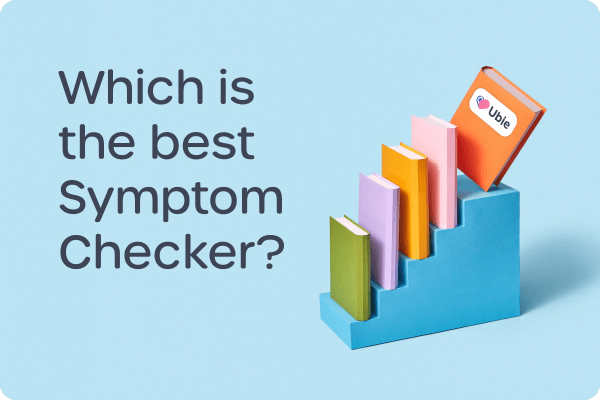
Which is the best Symptom Checker?

Which is the best Symptom Checker?

Ubie’s symptom checker demonstrated a Top-10 hit accuracy of 71.6%, surpassing the performance of several leading symptom checkers in the market, which averaged around 60% accuracy in similar assessments.

Link to full study:

https://www.medrxiv.org/content/10.1101/2024.08.29.24312810v1

References