Can't Wake Up in the Morning
Free Symptom Checker
with Physician-supervised AI
Worried about your symptoms?
Start the test with our free AI Symptom Checker.
This will help us personalize your assessment.
By starting the symptom checker, you agree to the Privacy Policy and Terms of Use
Try one of these related symptoms.
Difficulty waking up in the morning
Hard to wake up in the morning
Sleep inertia
I can't get out of bed in the morning
Can't wake up in the morning
Hard to get up in the morning
Tired in the morning
About the Symptom
Trouble waking up in the mornings is a common symptom. It can involve oversleeping or ongoing sleepiness that makes it hard to wake up.
When to See a Doctor
Seek professional care if you experience any of the following symptoms
- Disorder of consciousness
- Suicidal thought
- Fainting with loss of consciousness
- Difficulty breathing / breathlessness
- Recent weight loss
- Decrease in sleeping desire
Possible Causes
Generally, Can't wake up in the morning can be related to:
- Depression
Depression is a mental illness that leads to low mood, reduced energy levels, and changes in sleep. This affects everyday activities like attending school and work. As the condition worsens, patients might have suicidal thoughts. Although stress and past trauma can cause depression, it can take time to identify and address causes, and genetic factors may also be at play.
- Orthostatic Dysregulation
Orthostatic dysregulation (OD) is a general term that describes abnormal blood pressure changes triggered by sitting up or standing, most commonly resulting in low (orthostatic hypotension) or, less commonly, high blood pressure (orthostatic hypertension). OD is most common in the elderly, and can be due to certain medications (e.g. anti-depressants and anti-hypertensives), certain diseases affecting the nervous system (e.g. diabetes, Parkinson disease, multiple sclerosis), and can be seen in certain sleep disorders.
- Sleep Disorder
Sleep disorders are conditions that affect the quality, timing, or duration of your sleep, impacting your ability to function when you're awake. There are many types of sleep disorders, including disturbances in sleep quality or quantity, excessive daytime sleepiness, abnormal behaviors during sleep, sleep disorders related to mental disorders, and more. Narcolepsy is one such disorder, often grouped under hypersomnias - a category of conditions characterized by excessive daytime sleepiness - and can be mistaken for or coexist with other sleep disorders like sleep apnea. Accurate diagnosis is essential for effective treatment.
- Bipolar Disorder
- Adjustment Disorder
- Migraine
- Tension Headache
Doctor's Diagnostic Questions
Your doctor may ask these questions to check for this symptom:
- Do you struggle to wake up on time each morning?
- How long have you had difficulty waking up in the morning, morning sluggishness, and tiredness?
Reviewed By:

Unnati Patel, MD, MSc (Family Medicine)
Dr.Patel serves as Center Medical Director and a Primary Care Physician at Oak Street Health in Arizona. She graduated from the Zhejiang University School of Medicine prior to working in clinical research focused on preventive medicine at the University of Illinois and the University of Nevada. Dr. Patel earned her MSc in Global Health from Georgetown University, during which she worked with the WHO in Sierra Leone and Save the Children in Washington, D.C. She went on to complete her Family Medicine residency in Chicago at Norwegian American Hospital before completing a fellowship in Leadership in Value-based Care in conjunction with the Northwestern University Kellogg School of Management, where she earned her MBA. Dr. Patel’s interests include health tech and teaching medical students and she currently serves as Clinical Associate Professor at the University of Arizona School of Medicine.

Yoshinori Abe, MD (Internal Medicine)
Dr. Abe graduated from The University of Tokyo School of Medicine in 2015. He completed his residency at the Tokyo Metropolitan Health and Longevity Medical Center. He co-founded Ubie, Inc. in May 2017, where he currently serves as CEO & product owner at Ubie. Since December 2019, he has been a member of the Special Committee for Activation of Research in Emergency AI of the Japanese Association for Acute Medicine. | | Dr. Abe has been elected in the 2020 Forbes 30 Under 30 Asia Healthcare & Science category.
Content updated on Feb 6, 2025
Following the Medical Content Editorial Policy
Was this page helpful?
Tell your friends about us.
We would love to help them too.

Just 3 minutes.
Developed by doctors.
Try Free Symptom QuizHow Ubie Can Help You
With a free 3-min quiz, powered by Ubie's AI and doctors, find possible causes of your symptoms.
This questionnaire is customized to your situation and symptoms, including the following personal information:
Biological Sex - helps us provide relevant suggestions for male vs. female conditions.
Age - adjusts our guidance based on any age-related health factors.
History - considers past illnesses, surgeries, family history, and lifestyle choices.
Your symptoms

Our AI

Your report
Your personal report will tell you
✔ When to see a doctor
✔︎ What causes your symptoms
✔︎ Treatment information etc.
People with similar symptoms also use Ubie's symptom checker to find possible causes
- I can't get up in the morning even if I do my best
- Waking up in the morning is so hard
- DIfficulty with getting up every morning
- So hard to wake up in the morning
Find Similar Symptoms
Symptoms from similar body parts
Ubie is supervised by 50+ medical experts worldwide
Our symptom checker AI is continuously refined with input from experienced physicians, empowering them to make more accurate diagnoses.


Ubie is recognized by healthcare and tech leaders

“World’s Best Digital
Health Companies”
Newsweek 2024

“Best With AI”
Google Play Best of 2023
“Best in Class”
Digital Health Awards 2023 (Quarterfinalist)
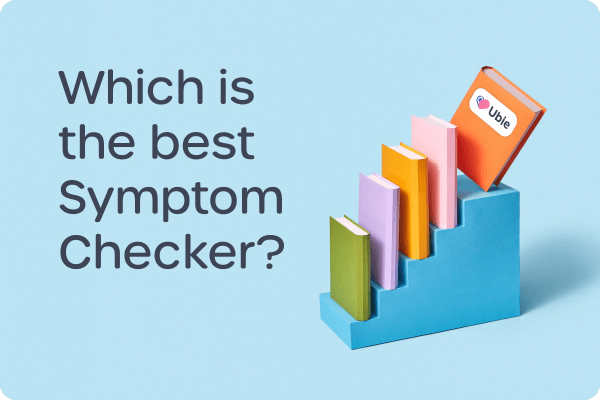
Which is the best Symptom Checker?
Ubie’s symptom checker demonstrated a Top-10 hit accuracy of 71.6%, surpassing the performance of several leading symptom checkers in the market, which averaged around 60% accuracy in similar assessments.
Link to full study:
https://www.medrxiv.org/content/10.1101/2024.08.29.24312810v1